Best Oils for Low Porosity Hair: Lightweight Picks That Actually Absorb
All recommendations on The Glow Genius are independently researched by our editors to help you make the best beauty decisions.
You smooth oil through your strands, and it just sits there. Your hair looks shiny for an hour, then greasy by evening. That is not your fault. It is not a sign you are doing your hair routine wrong.
It usually means you have low porosity hair, and it needs specific, lightweight oil with small molecules. Most oils are simply too heavy to get past the tightly closed hair cuticle.
Once you understand your hair porosity, everything changes. You stop guessing and start choosing products that actually work with your strands.
This guide breaks down the exact oils for low porosity hair that absorb instead of sitting on top, plus the techniques that make them work even better. Here is the complete guide.
What Is Low Porosity Hair and How Do You Know You Have It?
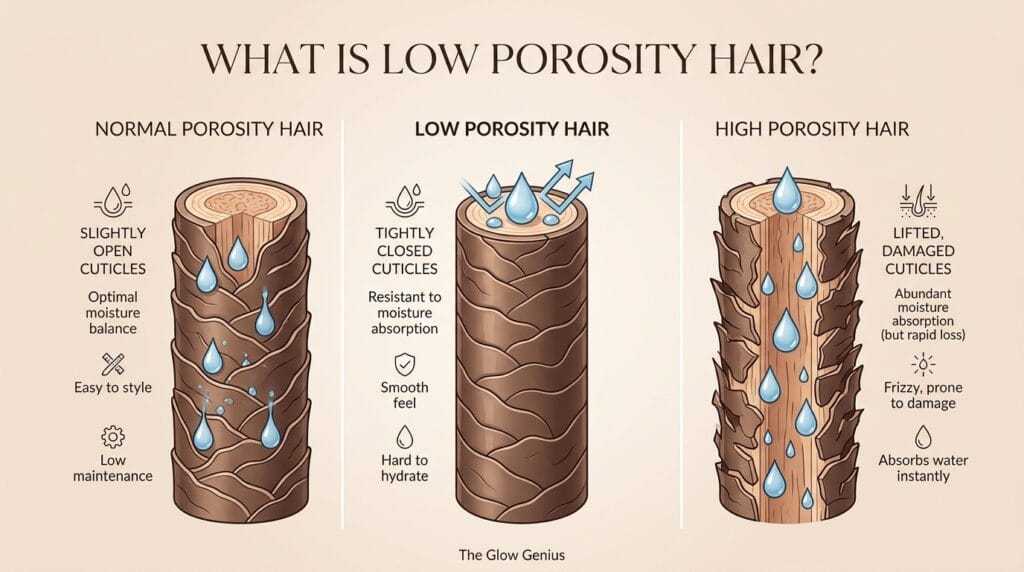
Hair porosity simply describes how easily your hair shaft absorbs and releases moisture. It depends on how open or closed your hair cuticle is. With low porosity hair, the hair cuticle lies flat and tightly shut. Consequently, moisture and oils struggle to get inside the strand at all.
Because of this, products often sit on the surface. As a result, you get product buildup rather than real hydration. Common signs include water beading on your hair instead of soaking in. Additionally, your hair takes forever to get wet in the shower and just as long to dry afterward.
You might also notice product buildup happening quickly, even after just one or two uses. Styling products can feel like they are coating your strands rather than sinking in.
Try the float test to confirm it. Drop a clean, dry strand into a glass of water and watch what happens. If it floats near the top, you likely have low porosity hair. If it sinks slowly, your hair porosity is medium, and if it sinks instantly, it is high.
Why Most Oils Sit on Top Without Absorbing — The Science
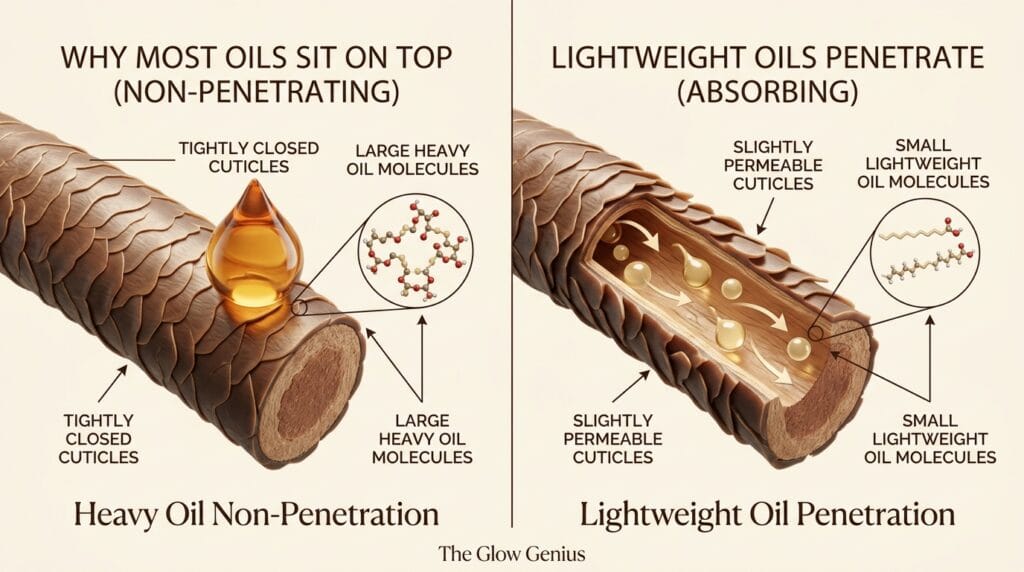
Think of your hair cuticle as tiny shingles on a roof. When they lie flat and closed, almost nothing can slip underneath.
Heavier oils have larger molecules, so they simply cannot squeeze between those tightly shut shingles. Instead, they stay stuck on the surface of your strand.
That surface layer feels greasy because it never actually penetrates the hair shaft. Over time, this creates frustrating product buildup that weighs hair down.
A lightweight oil, however, has a smaller molecular structure. Therefore, it can slip through tiny gaps in the cuticle and reach the moisture already inside.
This is exactly why the right oils for low porosity hair feel different. They absorb quickly instead of leaving a heavy film behind.
The 8 Lightweight Oils That Actually Penetrate Low Porosity Hair
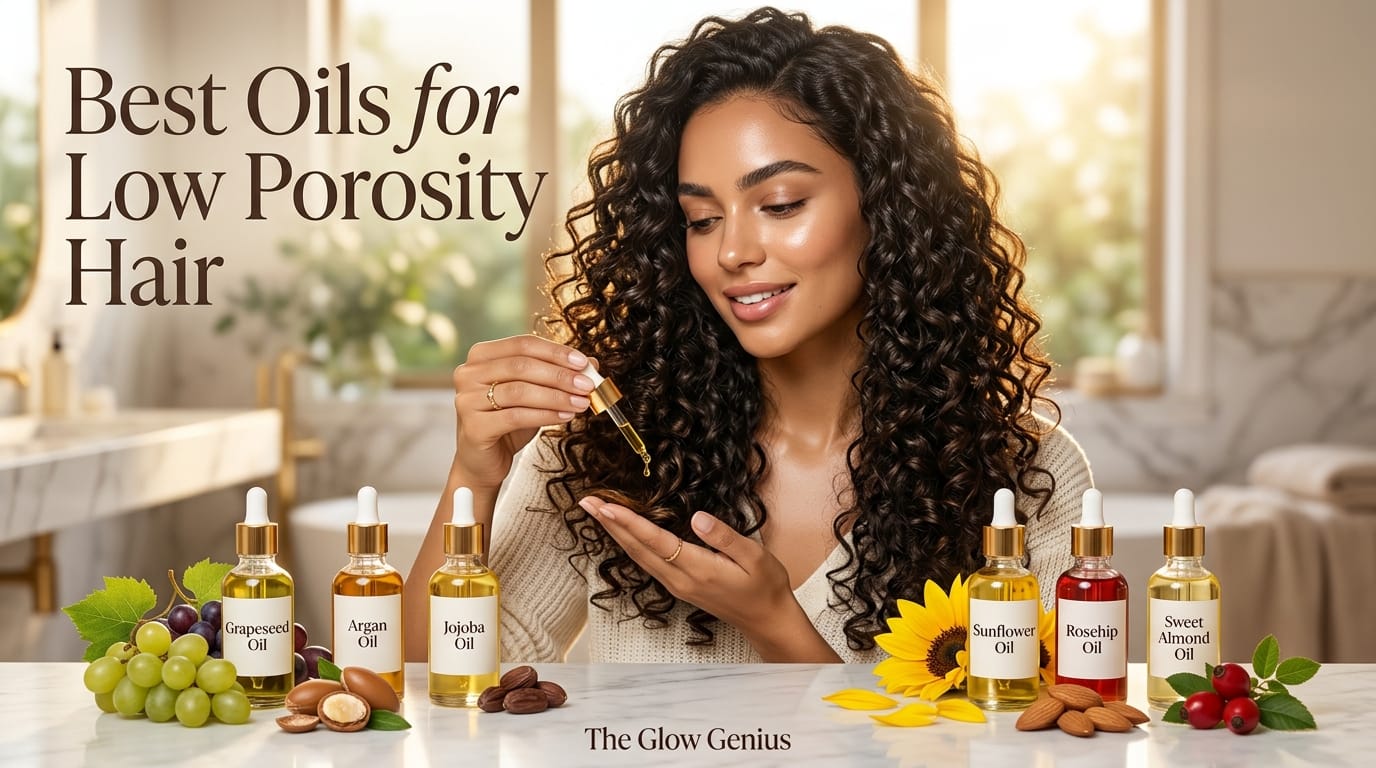
These are the confirmed oils for low porosity hair that genuinely absorb instead of coating the surface. Each lightweight oil for hair on this list earns its place for a different reason.
Grapeseed oil is one of the lightest oils available, and it is rich in linoleic acid. This grapeseed oil for hair absorbs without leaving residue while adding shine and controlling frizz. Antioxidant properties make it a smart everyday pick. Use two to three drops on damp hair ends after washing.
Meanwhile, argan oil for low porosity hair has earned the nickname “liquid gold” for good reason. It combines lightweight vitamin E with ferulic acid, and it genuinely penetrates the hair shaft. It smooths frizz and adds a natural glow without weighing curls down. Warm one to two drops between your palms, then work it through towel-dried mid-lengths to ends.
On the other hand, jojoba oil for hair stands out because it closely resembles your scalp’s natural sebum. This similarity essentially tricks the scalp into balancing its own oil production. It also adds gentle shine along the length of each strand. Apply a small amount directly to your scalp and through your ends.
Sweet almond oil offers a lightweight formula packed with nourishing vitamins. Its standout feature is the incredible slip it provides for detangling. It softens strands while making brushing far less painful. Smooth three to four drops onto damp hair before you begin detangling.
Next, avocado oil brings small molecules along with vitamins A, D, and E plus omega fatty acids. It genuinely penetrates the shaft to deliver real hydration. Rather than sitting on the surface, it works from within the strand. Mix a few drops into your conditioner or use it as a pre-shampoo treatment on damp hair.
By contrast, sunflower oil delivers an ultra-lightweight, almost weightless finish often called a dry oil. It is affordable and easy to find in most stores. It seals in moisture right after washing and disappears almost instantly. Use it as your go-to everyday sealing oil once your wash routine is complete.
Similarly, baobab oil carries vitamins A, D, E, and F while staying surprisingly lightweight. It nourishes and strengthens strands without any heavy residue. This makes it a wonderful blending partner for other lightweight oils. Combine a few drops with another favorite from this list for an extra boost.
Finally, rosehip oil is rich in vitamins A and E, and it forms a light protective barrier. It works especially well on damaged or splitting ends. Its repairing qualities make it ideal for strand protection. Apply it directly onto your ends as a targeted protective treatment.

How to Use Lightweight Oils Correctly for Maximum Absorption
Technique matters just as much as the oil itself. Even the best oils for low porosity hair will disappoint you if applied the wrong way.
Small mistakes in application can undo all the benefits of a great oil choice. Fortunately, the fixes are simple once you know them.
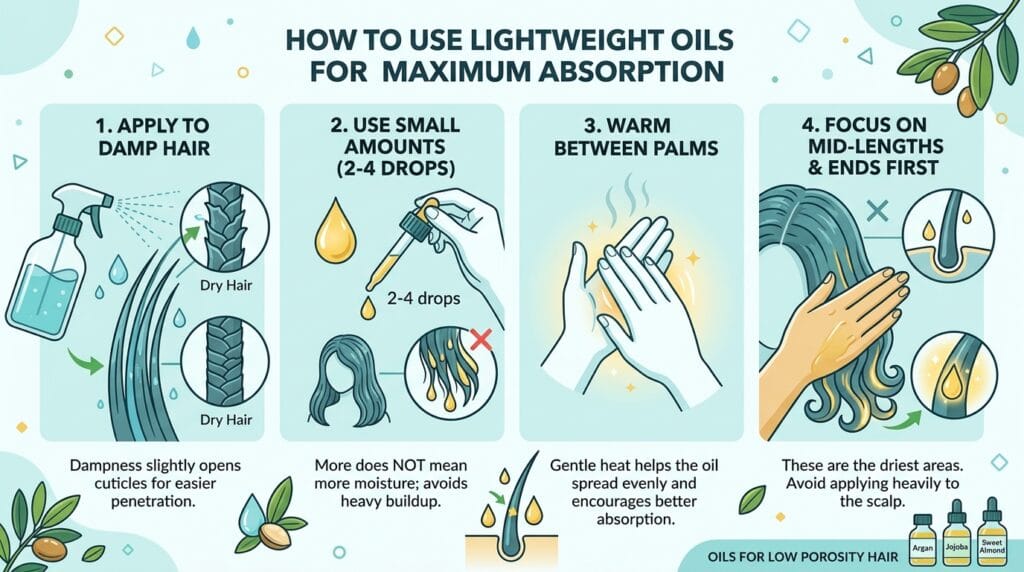
Always apply oil to damp hair rather than dry hair. Damp strands allow the hair cuticle to sit slightly more open, which helps absorption.
Additionally, use small amounts only, around two to four drops per application. More oil does not mean more moisture; it usually just means more buildup.
Warm the oil between your palms before applying it. Gentle heat helps the oil spread evenly and encourages better penetration into the hair shaft.
Furthermore, focus application on your mid-lengths and ends first, not your roots. These areas are typically drier and benefit most from oils for low porosity hair.
The LCO Method for Low Porosity Natural Hair — Why Order Matters
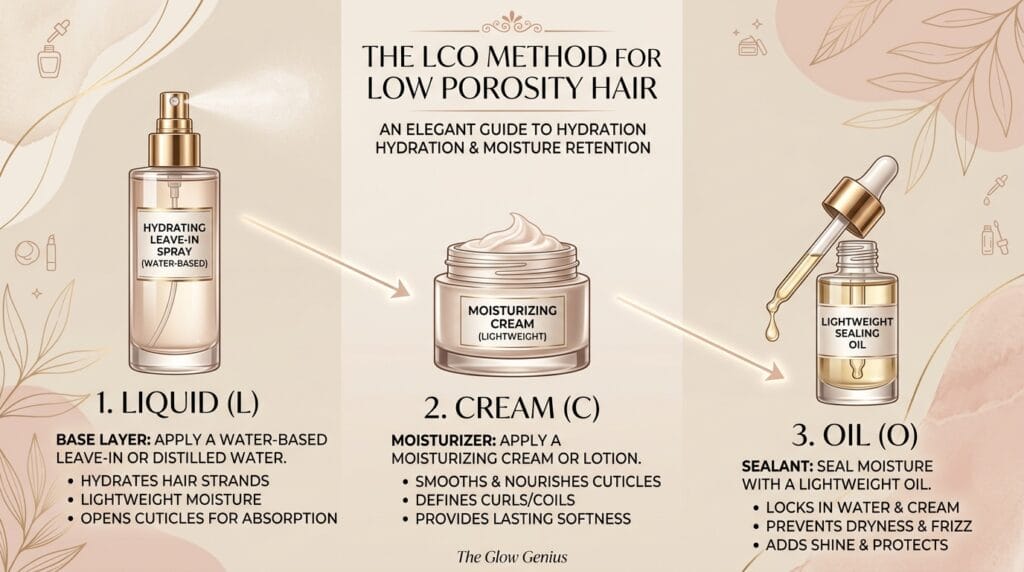
Application order changes everything for low porosity hair care. The LCO method stands for Liquid, then Cream, then Oil.
This is the foundation of the LCO method natural hair routines rely on for real results. First, apply a water-based liquid or leave-in to hydrate the strand. Next, layer on a cream or moisturiser to lock that hydration into place.
Finally, seal everything with a lightweight oil as the very last step. The oil creates a protective barrier over the moisture underneath.
This differs from the LOC method, which places oil before cream instead of after. LOC tends to suit high porosity hair better, since those cuticles are already more open.
For low porosity hair, applying oil before cream creates too much of a barrier too soon. The cream then struggles to penetrate at all, leaving strands under-moisturised.
Following the correct LCO method ensures each layer does its job. Hydration goes in first, and the oil simply seals it in place.
The Heat Method — How Warmth Opens the Cuticle for Better Absorption
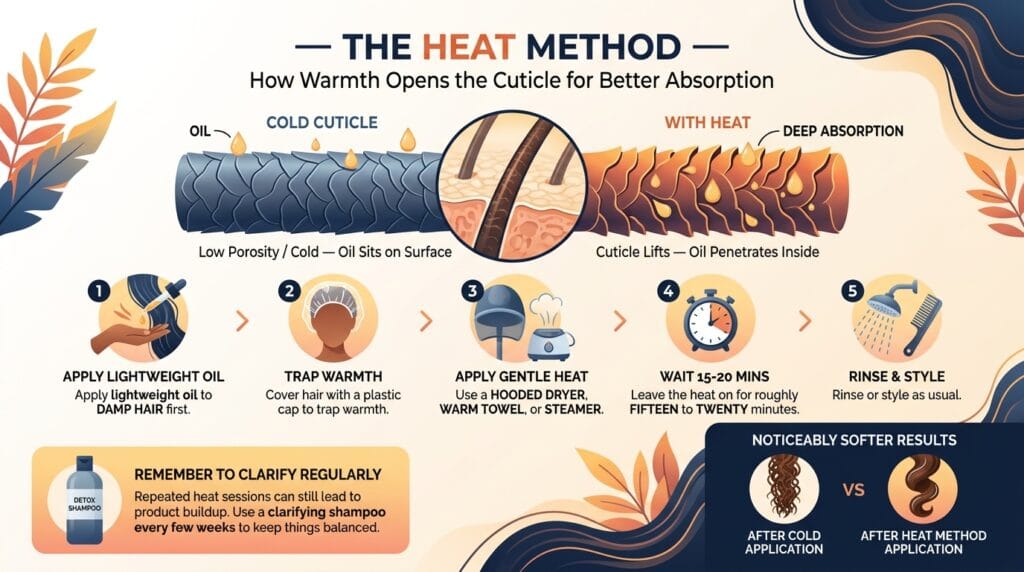
Heat is genuinely a secret weapon for absorption. It gently lifts the hair cuticle, creating small openings that allow oil to slip inside.
Here is exactly how the heat method works in practice with oils for low porosity hair. Apply your chosen lightweight oil to damp hair first.
Next, cover your hair with a plastic cap to trap warmth. Then apply gentle heat using a hooded dryer, a warm towel, or a steamer.
Leave the heat on for roughly fifteen to twenty minutes. Afterward, rinse or style as usual, and enjoy noticeably softer results.
Oil applied this way absorbs far better than oil applied to cold, dry hair. The difference in softness is often immediate and obvious.
However, remember to clarify regularly if you use this method often. Repeated heat sessions can still lead to product buildup over time, so a clarifying shampoo every few weeks keeps things balanced.
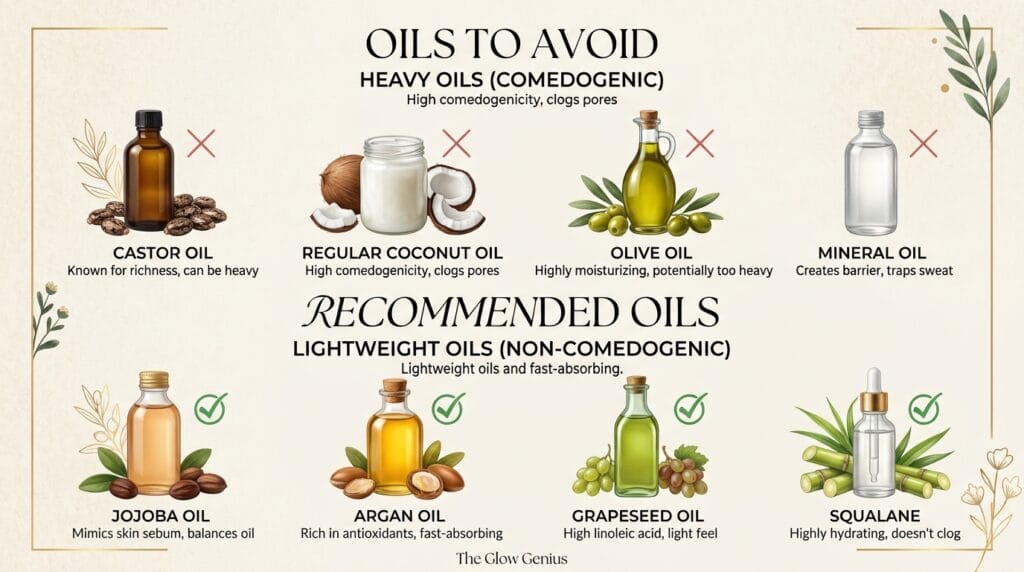
What Oils to Completely Avoid on Low Porosity Hair
Knowing what oils to avoid for low porosity hair matters just as much as knowing what to use. Some formulas are simply too heavy and will only create frustration.
Castor oil is too viscous for this hair type, so it sits directly on the surface. It rarely delivers the hydration low porosity strands actually need.
Regular, unfractionated coconut oil also causes problems here. Its molecular size is too large to slip through tightly closed cuticles, so it builds up quickly instead.
Olive oil behaves similarly, coating the strand heavily without ever truly penetrating. It can leave hair looking dull rather than nourished.
Heavy mineral oil is another one to skip completely. It seals the surface so tightly that it can actually block moisture from getting in or out.
Importantly, fractionated coconut oil is the exception to this rule. Because its heavier fatty acids have been removed, it becomes far lighter and genuinely suitable for low porosity hair.
If you have used any heavy oils in the past, a gentle clarifying shampoo can reset your strands. This removes buildup so lighter oils for low porosity hair can finally do their job.
A clarifying wash once every two to four weeks usually works well for most routines. Afterward, your strands are ready to properly absorb lightweight formulas again.
Low Porosity Hair Oil Guide at a Glance
Here is a quick-reference chart covering all eight oils for low porosity hair discussed above. Use it whenever you need a fast reminder while shopping or styling.
Oil | Molecular Weight | Key Benefit | Best Use | Avoid If |
|---|---|---|---|---|
Grapeseed oil | Very light | Shine, frizz control | Damp ends daily | Extremely dry, damaged ends |
Argan oil | Light | Smooths and softens | Mid-lengths to ends | Very fine, oil-sensitive hair |
Jojoba oil | Light | Balances scalp oil | Scalp and ends | Oily scalp already balanced |
Sweet almond oil | Light | Slip for detangling | Pre-detangle on damp hair | Nut allergies |
Avocado oil | Light | Deep hydration | Pre-shampoo treatment | Very fine hair prone to weighing down |
Sunflower oil | Ultra-light | Everyday sealing | After wash, all hair states | None significant |
Baobab oil | Light | Nourishes and strengthens | Blended with other oils | Preference for single-oil routines |
Rosehip oil | Light | Repairs split ends | Targeted on ends | Sensitive skin near hairline |
You May Also Like
If you loved this guide, these articles were made for you:
- 10 Best Deep Conditioners for 4C Hair
- How to Repair Damaged Hair
- Best Hair Supplements for Thinning Hair
- DIY Deep Conditioner for 4C Hair
- Rosemary Oil for Hair Growth vs Minoxidil
FAQs
The Right Oil Changes Everything for Low Porosity Hair
Your hair was never the problem. You simply needed the right oils for low porosity hair, built for tightly closed cuticles.
Choosing lightweight formulas over heavy, traditional oils makes a real difference over time. Small changes in your routine add up to noticeably healthier strands.
Stick to lightweight oil applied on damp hair, and always follow the LCO method for the best results. Use heat whenever you can fit it into your routine.
If you are just starting out, begin with grapeseed, argan, and jojoba oil. These three cover shine, softness, and scalp balance beautifully.
Understanding your hair porosity genuinely transforms how your routine feels. Keep these low porosity hair tips close by for your next wash day.
Bookmark this guide, save it to Pinterest, and share it with a friend who needs it too.
Natural hair communities have long understood the value of low porosity hair care, and that knowledge deserves real respect. Here is to strands that finally feel nourished, not weighed down.