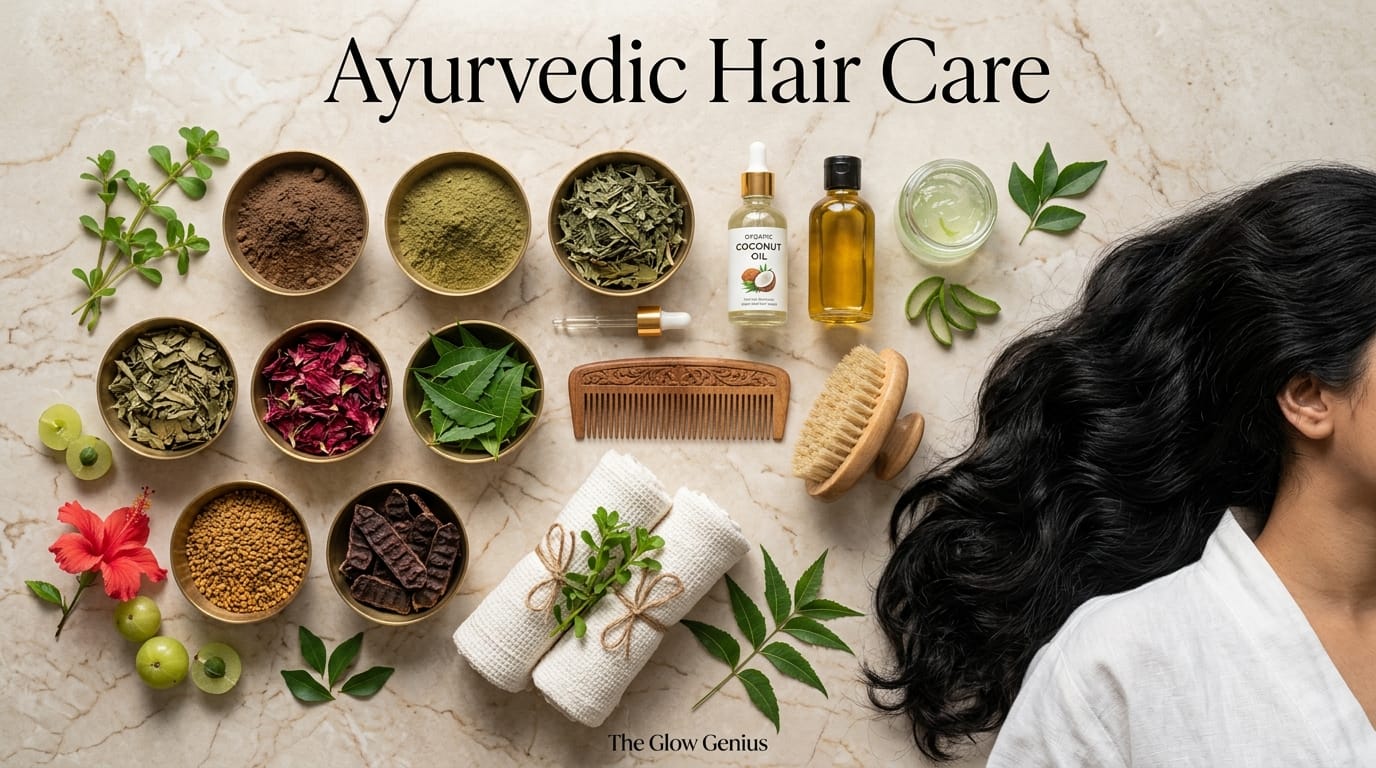
Ayurvedic Hair Care: The Complete Guide to Ancient Ingredients That Science Is Now Confirming
Ayurveda is a complete medical system from India dating back 5,000 years. The word itself means “science of life,” and it predates modern dermatology by millennia. What makes this moment genuinely interesting is that modern dermatologists are now studying ingredients Ayurveda has used for centuries. Dr. Pooja Rambhia, a board-certified dermatologist, confirmed to CNN that these ingredients have a long history of anecdotally strengthening and moisturising the hair shaft and promoting hair growth. This guide treats Ayurvedic hair care with the respect this ancient tradition deserves, while being honest about where modern research stands today. Here is the complete guide.
What Ayurveda Actually Teaches About Hair Health
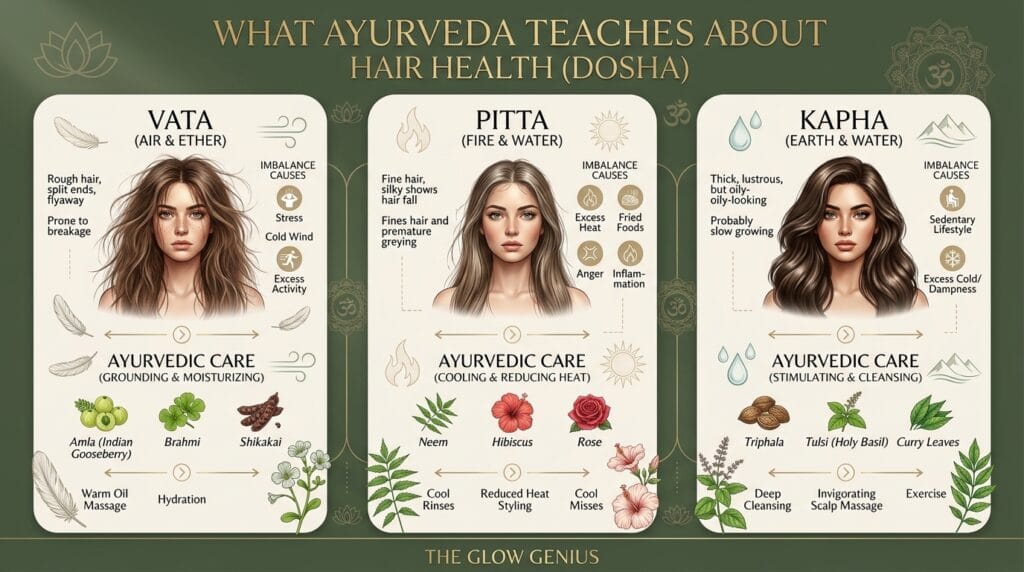
- Ayurveda views hair as a direct reflection of internal health, not a separate, isolated concern. This holistic philosophy connects hair quality to the balance of three fundamental energies, called doshas.
- Vata, representing air and ether, governs movement and dryness in the body. When Vata falls out of balance, hair often becomes dry, brittle, and frizzy. Pitta, representing fire and water, governs transformation and heat. A Pitta imbalance frequently shows up as premature greying and increased hair fall.
- Kapha, representing earth and water, governs structure and stability. When Kapha falls out of balance, the scalp tends to become oily, and hair growth slows noticeably. Because Ayurveda treats these three doshas as interconnected, addressing hair concerns traditionally involves examining overall balance, not just applying a single product.
The 10 Most Powerful Herbs Used in Ayurvedic Hair Routines
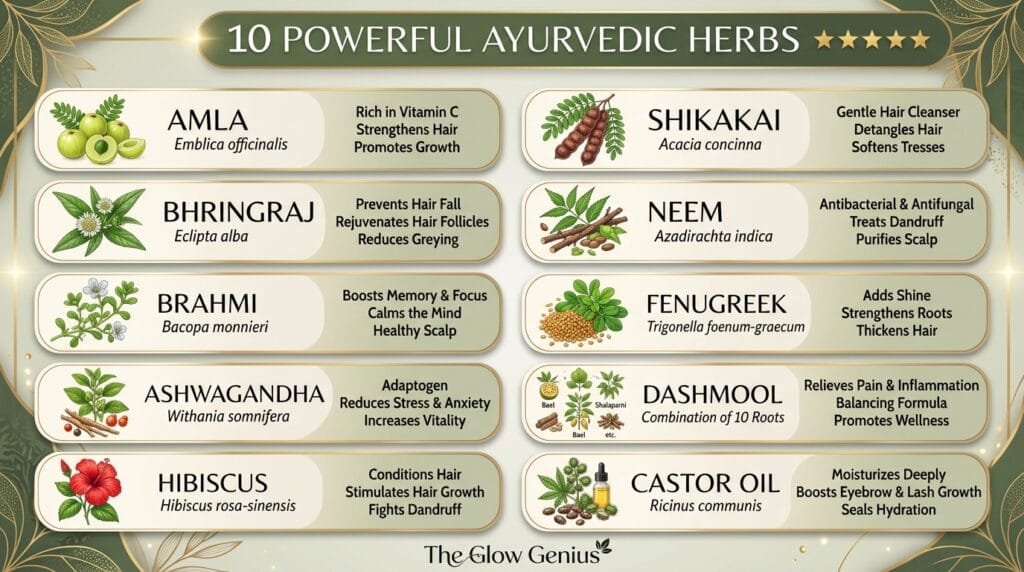
These ten ingredients form the foundation of traditional Ayurvedic hair care. Each carries centuries of use alongside emerging modern research.
- Amla (Indian Gooseberry): Helps reduce premature graying, supports hair growth, and fights dandruff and dry scalp. Apply as an oil or paste to the scalp weekly.
- Bhringraj: Traditionally known as the “king of hair herbs,” it promotes hair growth and reduces hair fall. Massage bhringraj oil into the scalp before washing.
- Brahmi: Strengthens roots, reduces hair fall, and soothes an irritated scalp. Use as a hair oil or leave-in rinse.
- Ashwagandha: Helps reduce stress-related hair fall. Take as a supplement or use in a scalp oil blend.
- Hibiscus: Conditions hair and supports healthy growth. Apply as a paste or infused oil to the hair and scalp.
- Shikakai: A gentle natural cleanser that keeps the scalp clean without harsh detergents. Use as a paste for washing hair.
- Neem: Helps control dandruff and fungal scalp issues. Patch test first, as it may cause allergic reactions.
- Fenugreek: Rich in protein to condition hair and strengthen strands. Apply a paste made from soaked, ground seeds before rinsing.
- Dashmool: Traditionally supports healthy roots by promoting scalp circulation as part of a regular hair care routine.
- Castor Oil: Supports healthier hair follicles and helps reduce scalp inflammation. Massage into the scalp before washing.
Which Herb Suits Your Hair Concern — Quick Match Guide
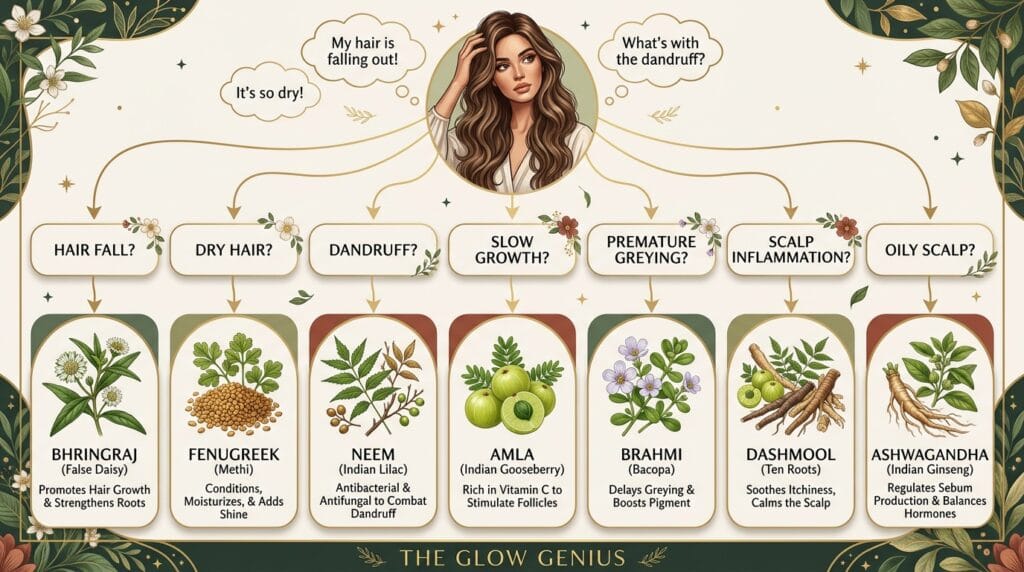
Matching the right herb to your specific hair concern makes Ayurvedic hair care significantly more effective and intentional.
- For hair fall and thinning, bhringraj combined with ashwagandha addresses both the external follicle support and the internal stress connection simultaneously. For dry, brittle hair, amla paired with fenugreek delivers strengthening protein alongside deep conditioning.
- For an oily scalp and dandruff concerns, neem combined with shikakai offers gentle, antifungal cleansing without stripping the scalp excessively. For slow growth, amla paired with dashmool supports scalp circulation alongside nutrient delivery to the hair follicle.
- For premature greying, amla combined with brahmi addresses pigment support traditionally associated with both herbs. For scalp inflammation specifically, brahmi paired with neem offers calming, antifungal support together.
How to Oil Your Hair the Ayurvedic Way — Step by Step
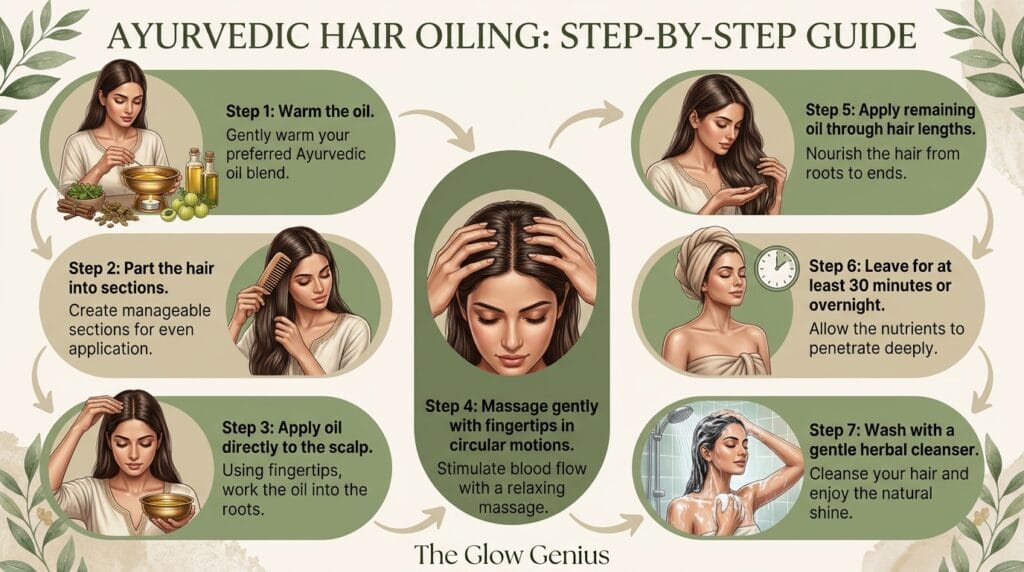
Traditional hair oiling in Ayurveda follows a specific, intentional process. These seven steps honour that tradition while remaining practical for modern life.
- Step 1. Warm your chosen Ayurvedic hair oil gently, either between your palms or briefly over low heat.
- Step 2. Part your hair into several sections to ensure even application across the entire scalp.
- Step 3. Apply the warmed oil directly to your scalp using your fingertips, section by section.
- Step 4. Massage your scalp in circular motions for five to ten minutes. Dr. Rambhia confirms that scalp massage genuinely increases blood circulation to the hair follicle, supporting the traditional benefits of this practice.
- Step 5. Work any remaining oil through the lengths of your hair, focusing on drier ends.
- Step 6. Leave the oil on for a minimum of 30 minutes, or overnight for a deeper, more traditional treatment.
- Step 7. Wash out thoroughly with a gentle cleanser, such as shikakai, to avoid stripping the benefits you just applied.
This traditional oiling ritual works best once or twice weekly as part of a consistent Ayurvedic hair care practice.
Building a Simple Ayurvedic Hair Routine for Modern Life
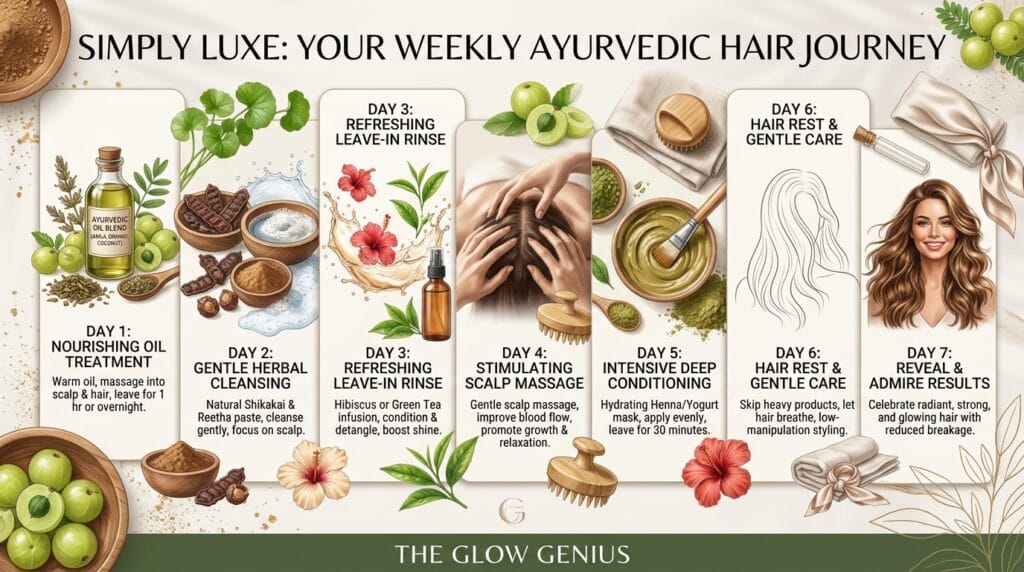
A weekly Ayurvedic hair care rhythm fits naturally into a modern schedule without requiring daily commitment.
Begin your week with a pre-wash oil treatment using bhringraj oil, applied the night before or several hours before washing. On wash day, cleanse using shikakai or another gentle traditional cleanser suited to your scalp type.
Post-wash, apply a brahmi or amla leave-in rinse to seal in moisture and support the hair shaft. Weekly, dedicate time to a full scalp massage using your chosen oil blend, allowing the traditional circulation benefits to build over time.
Monthly, incorporate a deeper conditioning treatment using a combination of herbs suited to your specific hair concern, following the matching guide in Section 3.
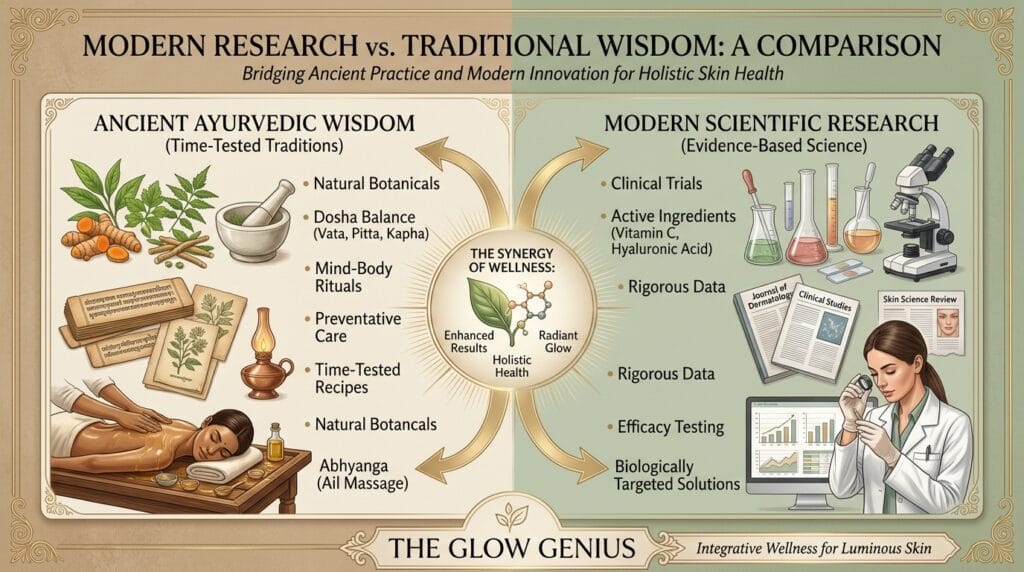
What Modern Research Says So Far — Honest Assessment
Modern research into Ayurvedic hair care shows genuine promise, though the evidence base varies significantly by ingredient.
The Journal of Cosmetic Dermatology, in 2024 research by Singh, Brown, and Gold, confirmed promising in vitro (laboratory) studies across many traditional herbs. However, the same research noted that large-scale clinical trials remain limited for most ingredients. A September 2025 study in the International Journal of Research in Dermatology found that an Ayurvedic scalp leave-on treatment showed a significant reduction in hair fall starting from week one — a genuinely encouraging finding.
Dr. Rambhia acknowledges the long history of anecdotal evidence supporting these ingredients, while noting that rigorous clinical trials are still developing across the field. Being honest matters here: research remains encouraging but early stage for most herbs, though amla specifically carries a somewhat more established evidence base than several others on this list.
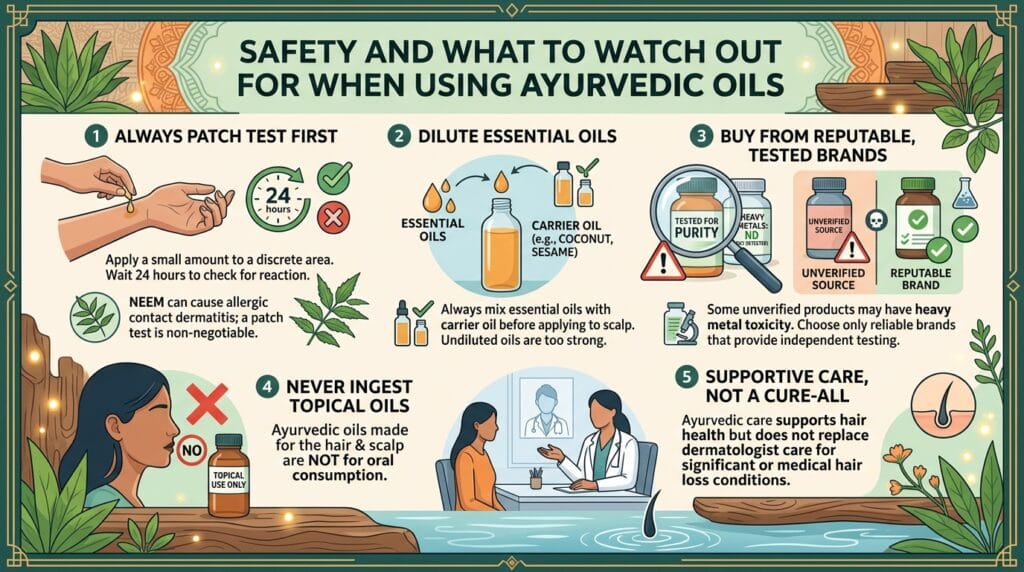
Safety and What to Watch Out for When Using Ayurvedic Oils
Respecting Ayurvedic hair care also means respecting its safety considerations. Always patch test any new herb or oil before applying it across your full scalp.
Essential oils used within Ayurvedic blends must always be diluted in a carrier oil before touching the scalp directly. Neem specifically has been linked to allergic contact dermatitis in some individuals, making a patch test genuinely non-negotiable before broader use.
Some Ayurvedic supplements have been linked to heavy metal toxicity in independent testing, so purchase only from reputable, tested brands rather than unverified sources. Never ingest oils formulated specifically for topical scalp use. Finally, Ayurvedic hair care supports overall hair health but does not replace dermatologist care for significant or medical hair loss conditions.
Ayurvedic Hair Herbs at a Glance
Herb | Traditional Use | Modern Evidence | Best For | How to Apply |
|---|---|---|---|---|
Amla | Strengthens, prevents greying | More established evidence | Dry hair, greying, growth | Oil or paste, weekly |
Bhringraj | Promotes regrowth | Emerging, promising | Hair fall, thinning | Scalp oil before wash |
Brahmi | Strengthens roots, calms scalp | Emerging | Hair fall, scalp inflammation | Oil or leave-in rinse |
Ashwagandha | Reduces stress-related hair fall | Emerging | Stress-related thinning | Topical oil or supplement |
Hibiscus | Conditions, promotes growth | Emerging | Dry, dull hair | Paste or infused oil |
Shikakai | Gentle natural cleanser | Traditional use, limited large trials | All scalp types | Powder paste for washing |
Neem | Antifungal, dandruff control | Emerging (patch test required) | Oily scalp, dandruff | Diluted oil, patch test first |
Fenugreek | Conditions hair shaft | Emerging | Dry, brittle hair | Soaked seed paste |
Dashmool | Promotes scalp circulation | Traditional use, limited large trials | Slow growth | Oil blend |
Castor oil | Reduces scalp inflammation | Emerging, promising | Follicle health, inflammation | Direct scalp massage |
You May Also Like
If you loved this guide, these articles were made for you:
- Rosemary Oil for Hair Growth vs Minoxidil
- Best Oils for Low Porosity Hair
- How to Repair Damaged Hair
- Best Hair Supplements for Thinning Hair
- 10 Best Deep Conditioners for 4C Hair
FAQs
5,000 Years of Hair Wisdom — Worth Adding to Your Routine
Ayurvedic hair care carries millennia of traditional use alongside a growing body of modern research support. Amla and bhringraj currently hold the strongest evidence base among the ten herbs in this guide, making them a sensible starting point.
Approach every new ingredient with a patch test first, and purchase only from reputable, tested brands to avoid the heavy metal contamination risk associated with some unverified sources. Respect this ancient system for what it genuinely is — a complete, sophisticated medical tradition, not a passing wellness trend.
Save this guide to your Pinterest boards and share it with a friend who is curious about incorporating these time-tested ingredients into her own routine. 🌿