How to Choose the Right Foundation Brush: The Complete Guide for Every Formula and Finish
You stand in the beauty aisle staring at dozens of foundation brush options, and none of them come with clear instructions. Every shape looks slightly different. Every price point promises something better.
Here is the good news. Learning how to choose the right foundation brush comes down to just three factors. Your foundation formula — liquid foundation, cream foundation, or powder foundation. And your coverage goal — sheer coverage, medium coverage, or full coverage. Your finish preference — dewy finish, natural finish, or matte finish.
Professional makeup artists confirm this matters more than most people realise. A $4 drugstore foundation applied with the right brush often outperforms a $50 foundation applied with a cheap one. Because technique and tool selection genuinely determine your final result, the brush is not a minor detail. Here is the complete guide.
The Three Things That Determine Your Foundation Brush Choice
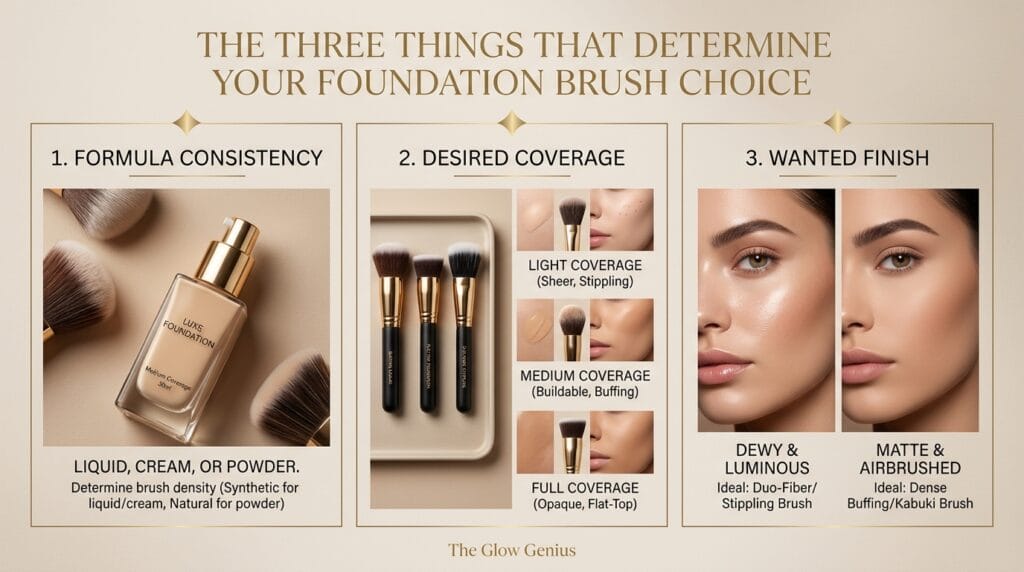
How to choose the right foundation brush always comes back to three factors working together. Missing even one leads to streaks, patchiness, or a finish that fights your foundation formula.
Factor one is your foundation formula. Liquid foundation, cream foundation, and powder foundation each behave completely differently on a brush. Because liquid moves and blends differently than powder, the brush that works for one often fails with another.
Factor two is your coverage goal. Full coverage requires a dense brush that presses product firmly into skin. Sheer coverage needs a lighter touch and a fluffier brush that distributes minimal product evenly.
Factor three is your finish preference. A dewy finish wants a brush that does not disturb the natural sheen of the formula. A matte finish benefits from a brush that presses and sets product more firmly against the skin.
Foundation Brush Types Explained Simply — What Each One Does
Understanding what each foundation brush type actually does removes the guesswork from your next purchase.
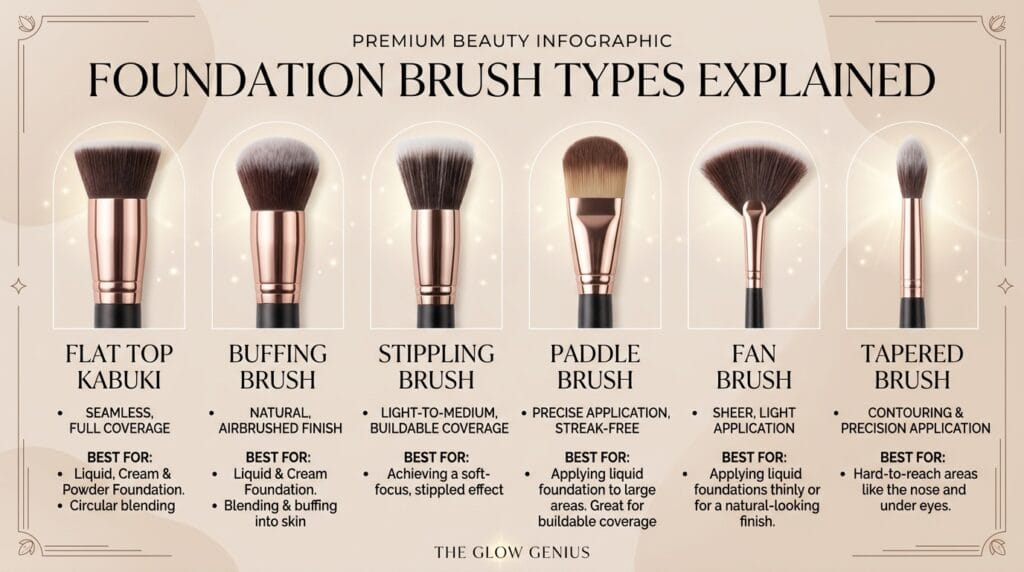
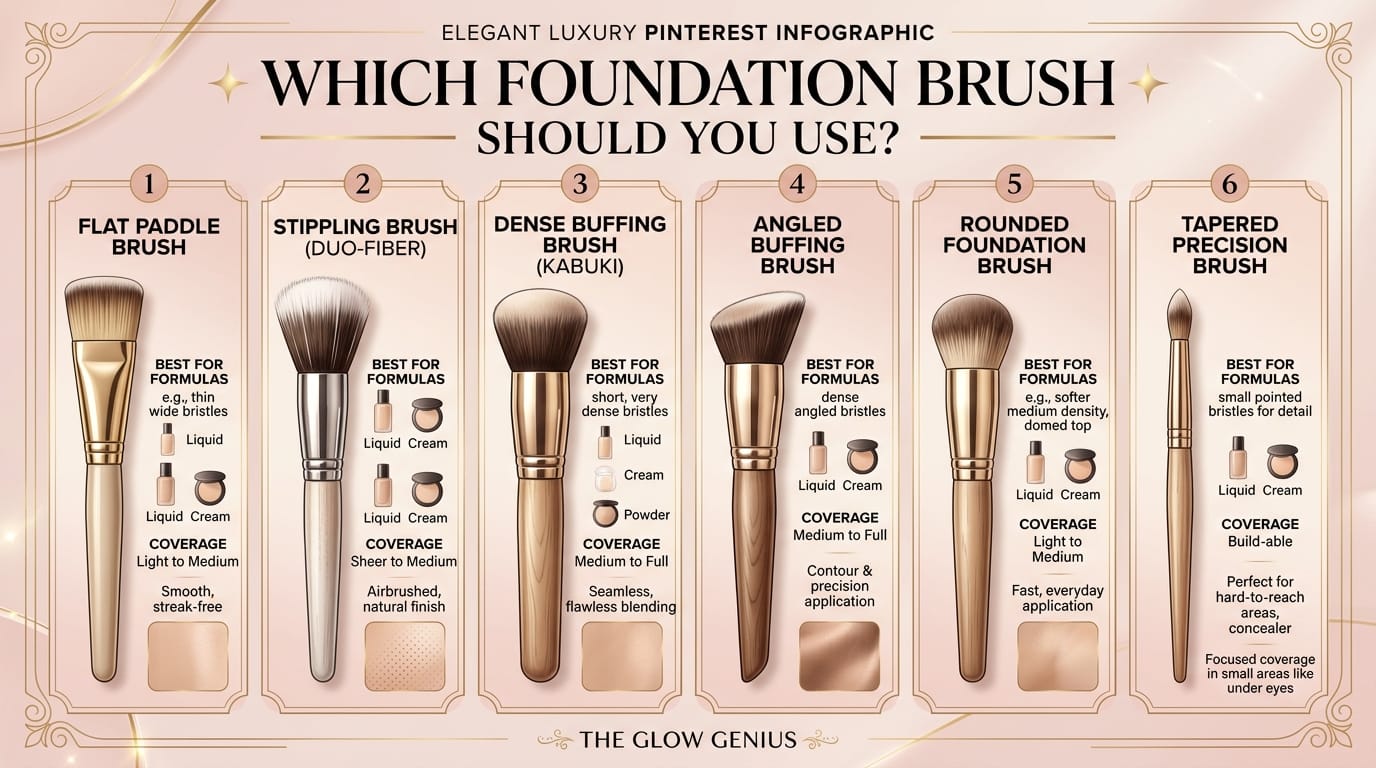
- The flat top kabuki brush has a dense, flat head that presses product firmly into skin. It delivers the most full coverage of any brush type and works through a press-and-buff motion rather than sweeping strokes.
- A buffing brush has a rounded, dense head designed for circular motions. It blends liquid foundation and cream foundation into a seamless, medium coverage finish that looks like skin rather than makeup.
- A stippling brush, also called a duo-fiber brush, has sparse bristles arranged in two layers. This design creates an airbrushed, buildable coverage finish, since the sparse bristle structure deposits product lightly and evenly.
- A paddle brush has a flat, tapered shape ideal for spreading liquid foundation quickly across larger areas before blending. A fan brush applies the lightest possible dusting, making it best suited to powder foundation for a sheer coverage finish.
- Finally, a rounded or tapered brush suits contouring and detailed areas like around the nose and under the eyes, where precision matters more than speed.
Which Brush Suits Your Foundation Formula
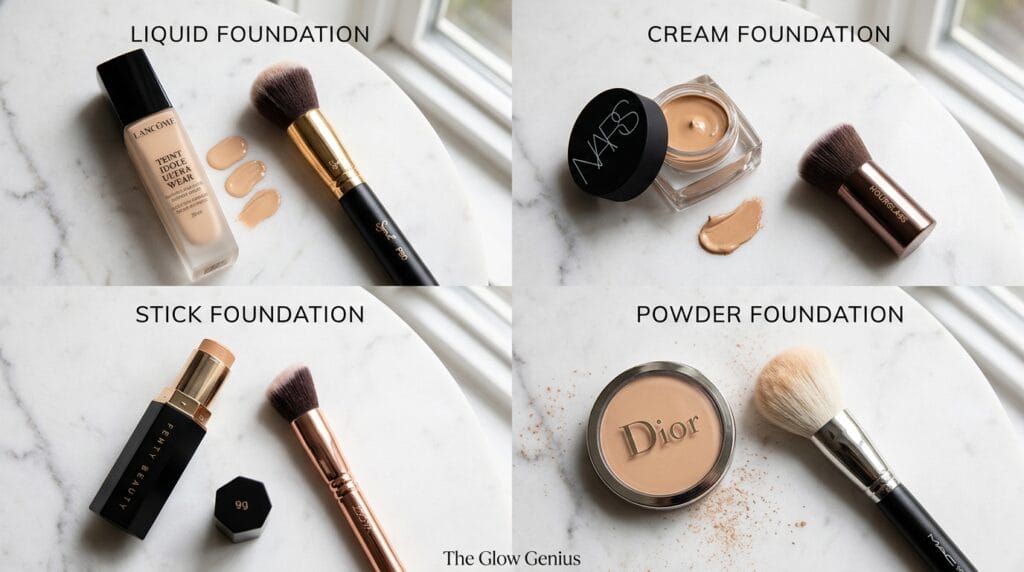
Liquid foundation performs best with dense synthetic bristles, found in a flat top kabuki brush or buffing brush. Because synthetic bristles do not absorb liquid the way natural bristles do, the product goes onto your face rather than soaking into the brush itself.
Cream foundation benefits from a slightly denser buffing brush with controlled pressure. Because cream foundation is thicker than liquid, applying too much pressure too quickly causes streaking. A steady, circular buffing motion prevents this issue entirely.
Powder or mineral foundation works best with a fluffy, soft brush — either a fan brush or a larger powder brush. This is where natural bristles genuinely excel, since they pick up and distribute dry powder formulas far more evenly than synthetic bristles can.
Stick or balm foundation, which sits between cream and solid textures, suits a dense buffing brush or flat top kabuki brush for pressing and blending. Because these formulas are more concentrated, a firmer brush helps distribute the product without leaving visible product lines.
Which Brush Suits Your Coverage Goal
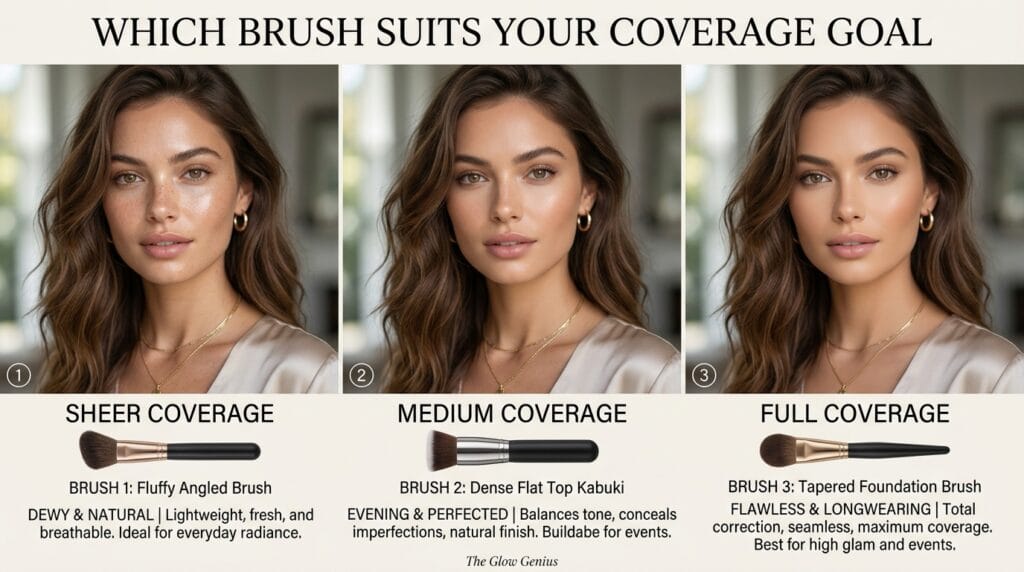
Full coverage demands a dense flat top kabuki brush used with a press-and-layer technique. Because this method builds product gradually rather than dragging it across skin, it avoids the patchiness that comes from trying to achieve heavy coverage in one single pass.
Medium or buildable coverage suits a stippling brush or duo-fiber brush applied through soft layering. This approach lets you control exactly how much coverage you need in specific areas, building up gradually until you reach your desired result.
Sheer or natural finish foundation works best with a fluffy paddle brush or tapered brush, using light pressure throughout application. Because less product transfers with lighter pressure, this technique preserves the sheer, skin-like quality these formulas are designed to deliver.
The key insight here is that brush technique matters just as much as brush shape. Even the perfect brush produces disappointing results with the wrong pressure or motion, which is why understanding both elements together determines your final finish.
Synthetic vs Natural Bristles — What Actually Matters
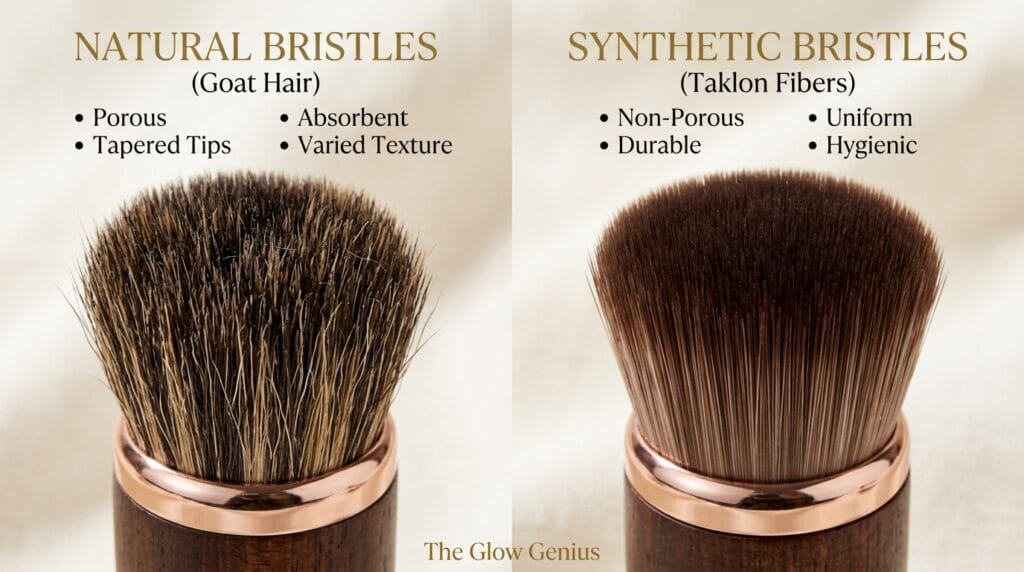
Synthetic bristles, typically made from nylon or Taklon, suit liquid foundation, cream foundation, and gel-based products best. Because these bristles do not absorb product, more of your foundation ends up on your face rather than trapped in the brush itself.
Synthetic bristles are also easier to clean and more hygienic overall, since the smooth fibre surface does not trap bacteria the way natural fibres can. In addition, they are cruelty-free, making them a genuinely good choice for anyone with sensitive skin who wants a hypoallergenic option.
Natural bristles, sourced from goat or squirrel hair, suit powder foundation formulas specifically. Their textured surface picks up and distributes powder beautifully, creating an even, seamless finish that synthetic bristles struggle to replicate with dry formulas.
Natural bristles tend to cost more and require more careful cleaning to maintain their shape and softness over time. The rule to remember is simple: synthetic bristles for liquid and cream, natural bristles for powder.
How to Apply Foundation With a Brush — Technique by Brush Type
Learning how to apply foundation with a brush correctly changes your results more than switching products ever will. Each brush type needs its own specific motion.
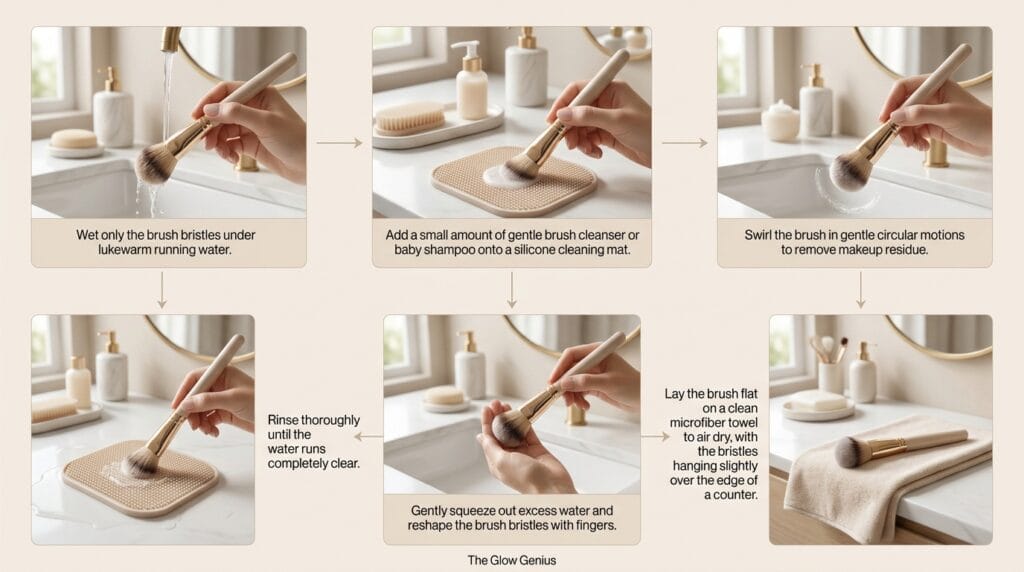
With a flat top kabuki brush, press and twist in small circular motions, working outward from the centre of your face. This press-and-buff technique builds full coverage without dragging product unevenly across your skin.
With a buffing brush, use small circular buffing motions and blend your hairline and jawline first. Starting at these transition points prevents the harsh lines that reveal where foundation ends and bare skin begins.
With a stippling brush, dab and press the bristles against skin without dragging. Building thin layers gradually creates that signature airbrushed look this brush is known for.
With a paddle brush, sweep in outward strokes and blend the edges using the clean, product-free part of the brush. With a fan brush, use light sweeping strokes exclusively on powder formulas — never liquid, since the sparse bristles cannot handle wet product effectively.
Regardless of brush type, always apply liquid foundation as three to four dots directly onto your face rather than loading it onto the brush first. This gives you far more control over how much product goes onto your skin.
Foundation Brush vs Sponge — Which One Wins for Your Skin
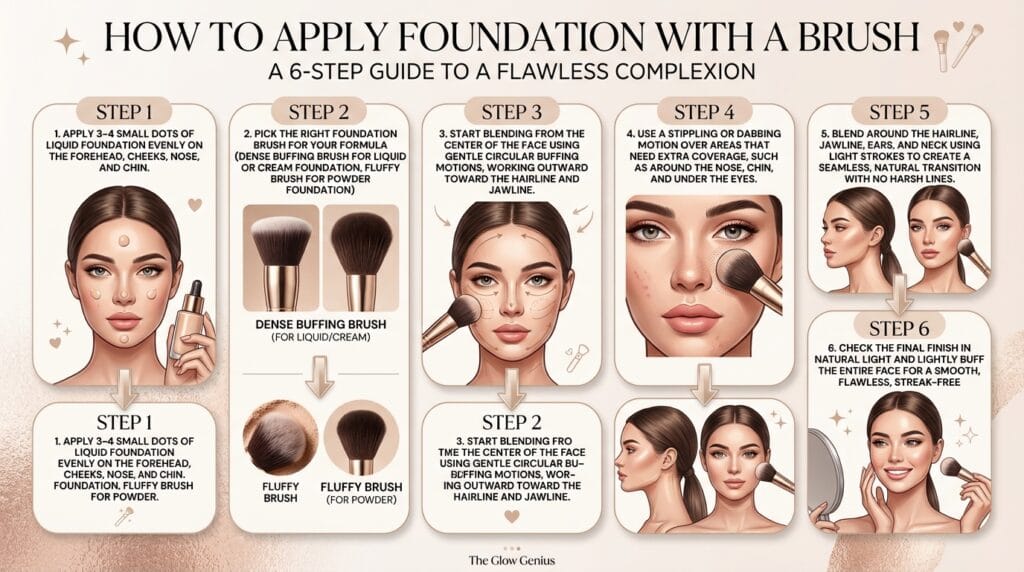
The foundation brush vs sponge debate comes down to your specific goals rather than one tool being universally better than the other.
A foundation brush offers several genuine advantages. It is more hygienic since it does not absorb product the way a sponge does. It suits full coverage and medium coverage goals better, and it allows for more precise application around features like the nose and eyes.
A sponge offers different, equally valid advantages. It creates a more natural finish by pressing rather than dragging product into skin. It suits sensitive skin particularly well, blends edges seamlessly, and is genuinely easier for complete beginners to use without much practice.
Choose a brush when you want full coverage, are working with cream foundation, need precise application, or apply makeup daily and want the most efficient tool. Choose a sponge when you want a dewy, natural finish, need to blend out harsh lines quickly, or are applying makeup in humid weather where a brush can feel heavier on the skin.
Caring for and Cleaning Your Foundation Brush — Why It Matters
Cleaning your foundation brush regularly matters for reasons beyond basic hygiene. Bacteria buildup on a dirty brush directly contributes to breakouts, since old product and oils create the perfect environment for bacterial growth.
Product buildup also changes how your brush actually performs over time. A foundation brush clogged with old foundation applies unevenly and no longer delivers the finish it was originally designed to create. In addition, ferrule damage from improper cleaning can shorten your brush’s lifespan significantly.
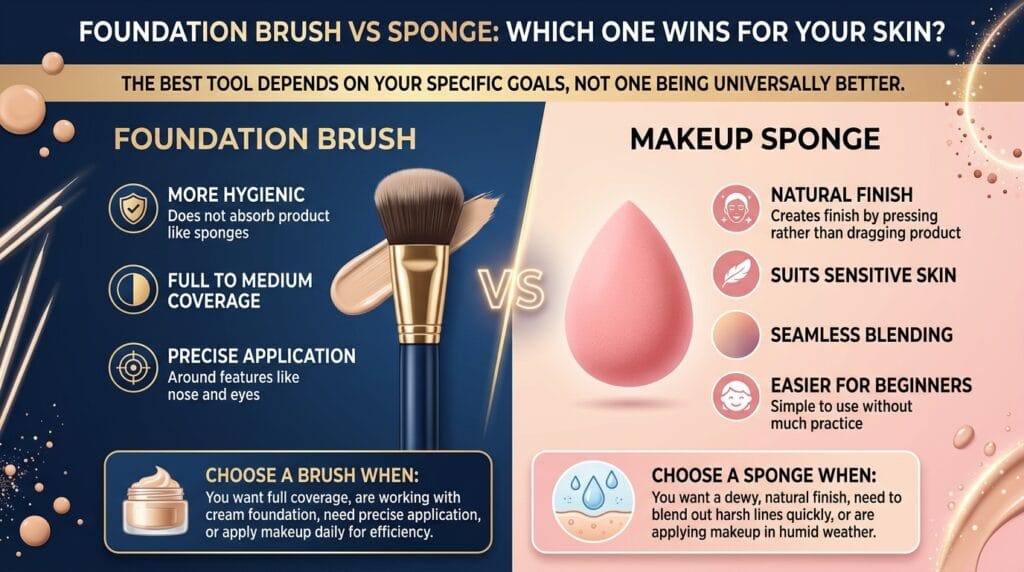
Deep clean your foundation brush weekly, and spot clean daily if your routine allows. To clean properly, wet the bristles, apply a gentle soap, and work it through the bristles using circular motions against your palm. Rinse thoroughly until the water runs clear, reshape the bristles gently, and always dry the brush flat rather than standing upright.
Never soak the ferrule — the metal section connecting the bristles to the handle — in water. Doing so loosens the glue holding the bristles in place, eventually causing them to fall out prematurely.
Foundation Brush Types at a Glance
Brush Type | Best Formula | Coverage | Finish | Bristle Type |
|---|---|---|---|---|
Flat top kabuki brush | Liquid, cream, stick | Full coverage | Matte to natural | Synthetic |
Buffing brush | Liquid, cream | Medium coverage | Natural, seamless | Synthetic |
Stippling (duo-fiber) brush | Liquid, cream | Buildable coverage | Airbrushed, dewy | Synthetic |
Paddle brush | Liquid | Sheer to medium | Natural finish | Synthetic |
Fan brush | Powder only | Sheer coverage | Natural, light | Natural |
Rounded/tapered brush | Liquid, cream (detail areas) | Precise application | Natural | Synthetic |
You May Also Like
If you loved this guide, these articles were made for you:
- Best Makeup Primers and Setting Sprays
- Dark Siren Makeup Tutorial
- Colorful Eye Makeup
- Hailey Bieber Glazed Donut Skin
- Skincare Routine for Oily Skin
FAQs
Your Perfect Foundation Starts With the Right Brush
How to choose the right foundation brush always comes back to the same three-factor framework: your formula, your coverage goal, and your finish preference. Match all three, and even an affordable foundation performs beautifully.
If you are just starting out, a synthetic buffing brush is the safest, most versatile choice for most beginners using liquid foundation. It forgives technique mistakes, blends seamlessly, and works across multiple coverage levels as your skills develop.
Remember the professional insight that started this guide: a $4 foundation with the right brush often beats a $50 foundation with the wrong one. The brush is not an afterthought — it is half of your entire foundation routine.
Save this guide to your Pinterest boards and share it with a friend who is standing confused in the beauty aisle right now. 🖌️