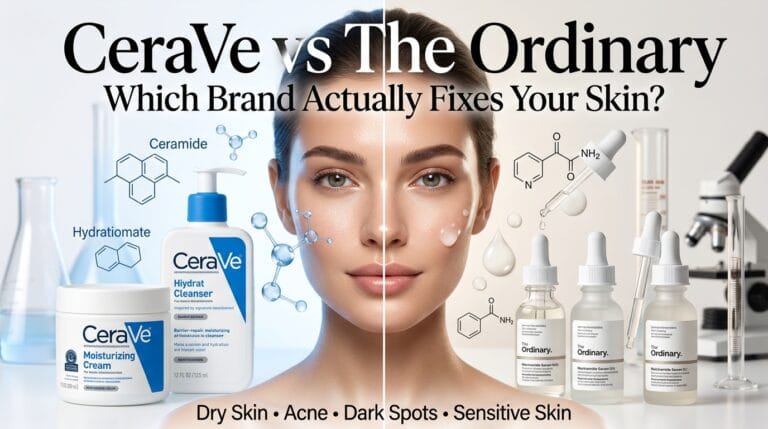

CeraVe vs La Roche Posay: Which Skincare Brand Actually Deserves Your Money?
Standing in the skincare aisle staring at two nearly identical-looking moisturizers, wondering which one is actually worth your cash? You’re not alone. The CeraVe vs La Roche Posay debate is one of the most searched skincare showdowns online, and for good reason — both brands are dermatologist-loved, drugstore-friendly, and packed with genuinely effective ingredients. But they’re not interchangeable, and picking the wrong one for your skin type could mean wasted money and disappointing results. Let’s break down exactly how these two skincare giants compare, so you can finally settle this debate for your own skin.
Brand Origins: Where CeraVe and La Roche Posay Come From
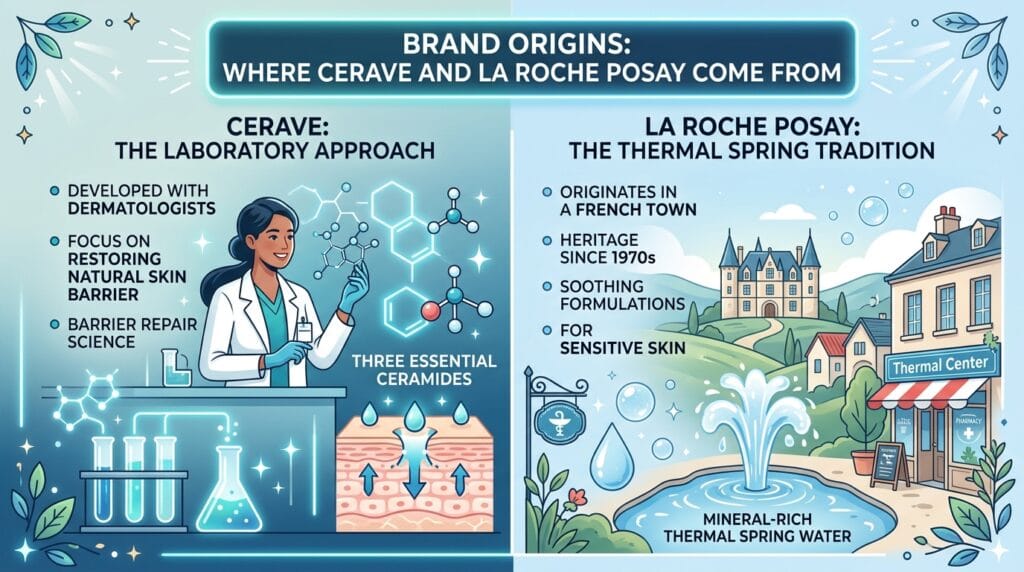
Understanding the roots of the CeraVe vs La Roche Posay comparison starts with knowing where each brand comes from. CeraVe was developed alongside dermatologists with a laser focus on restoring the skin’s natural barrier using three essential ceramides. Meanwhile, La Roche Posay originates from a small French town famous for its mineral-rich thermal spring water, which the brand has built its entire identity around since the 1970s. Consequently, while both brands market themselves as dermatologist-recommended, their foundational philosophies differ significantly. CeraVe leans into laboratory-backed barrier repair science, whereas La Roche Posay blends French pharmacy heritage with soothing, sensitive-skin-focused formulations.
Key Ingredients: What Sets Them Apart
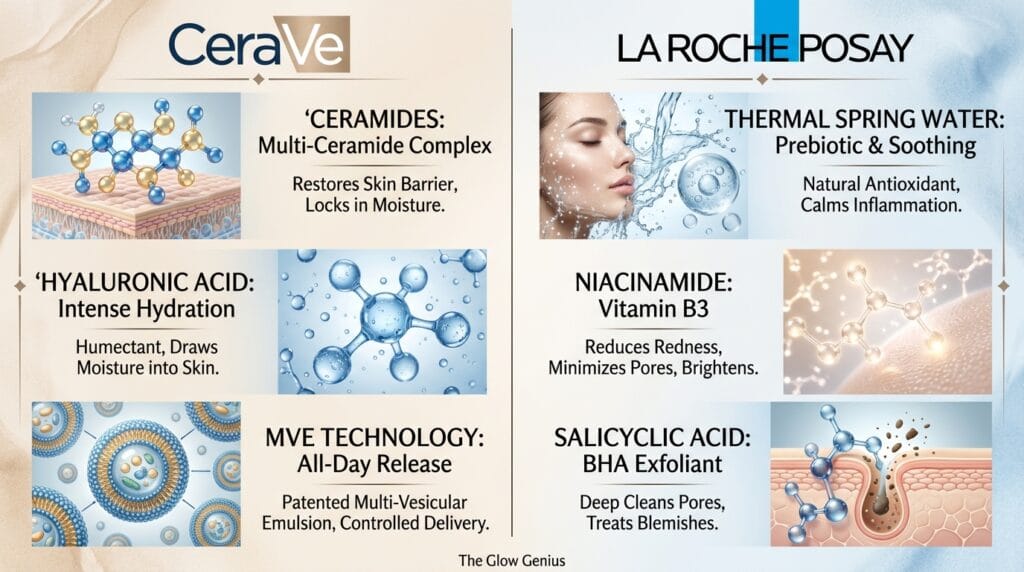
The heart of the CeraVe vs La Roche Posay debate really comes down to ingredients. CeraVe products consistently feature three essential ceramides, hyaluronic acid, and patented MVE Technology, which releases moisture gradually throughout the day. On the other hand, La Roche Posay formulas frequently center around thermal spring water, niacinamide, and salicylic acid, particularly within their popular Effaclar line. Because of this, CeraVe tends to appeal more to people chasing pure barrier repair and hydration, while La Roche Posay often suits those managing sensitive skin, redness, or breakouts. Additionally, both brands avoid harsh sulfates and parabens, making them safer bets than many mass-market alternatives.
CeraVe vs La Roche Posay for Acne-Prone Skin
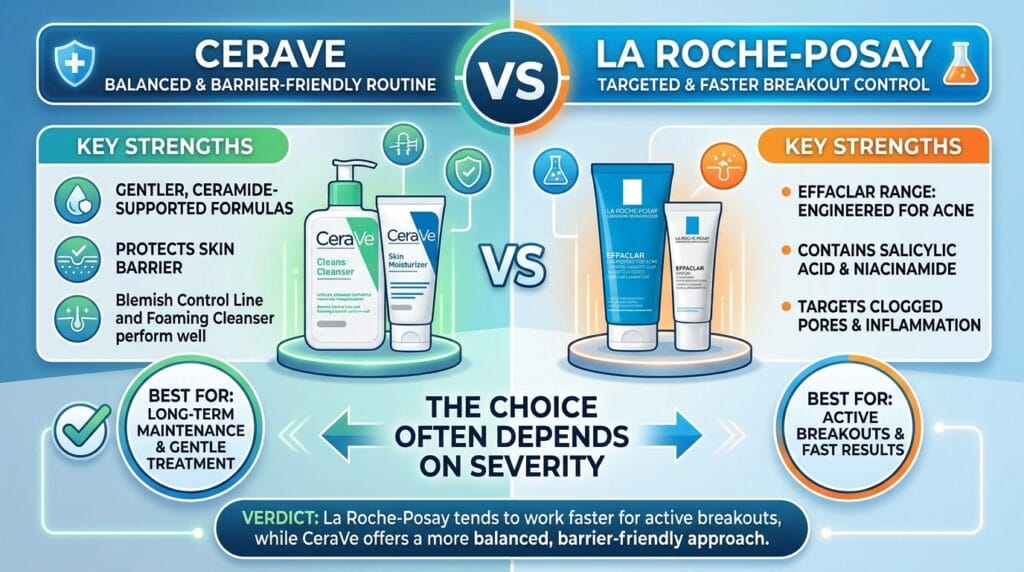
If breakouts are your main concern, the CeraVe vs La Roche Posay comparison leans slightly in La Roche Posay’s favor. Their Effaclar range was specifically engineered with salicylic acid and niacinamide to target clogged pores and inflammation. However, CeraVe’s Blemish Control line and foaming cleanser also perform well, especially for people who need gentler, ceramide-supported formulas alongside acne treatment. Therefore, the better choice often depends on severity — La Roche Posay tends to work faster for active breakouts, while CeraVe offers a more balanced, barrier-friendly long-term routine.
CeraVe vs La Roche Posay for Sensitive and Reactive Skin
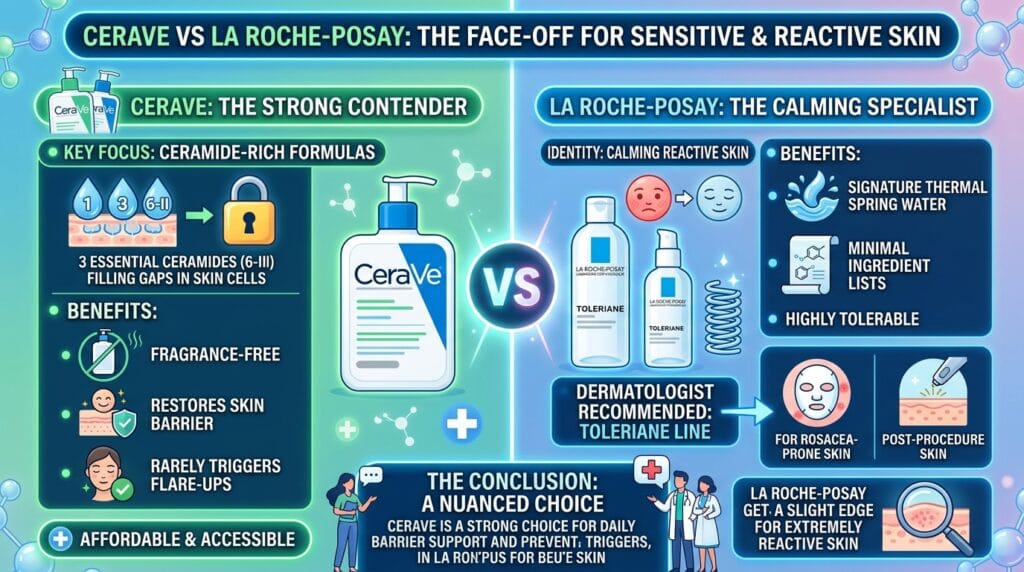
For sensitive skin, this CeraVe vs La Roche Posay face-off gets more nuanced. La Roche Posay’s entire brand identity revolves around calming reactive, easily irritated skin, thanks to its signature thermal spring water and minimal ingredient lists. Meanwhile, CeraVe remains a strong contender too, since its fragrance-free, ceramide-rich formulas rarely trigger flare-ups. That said, dermatologists frequently recommend La Roche Posay’s Toleriane line specifically for rosacea-prone or post-procedure skin, giving it a slight edge for extremely reactive skin types.
Price and Accessibility Comparison
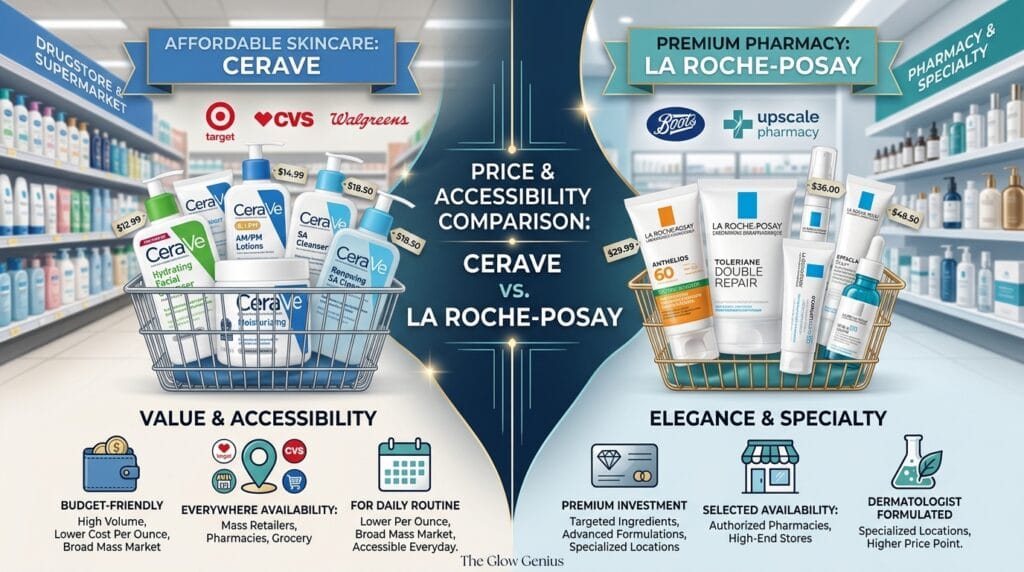
Budget plays a real role in the CeraVe vs La Roche Posay decision for most shoppers. CeraVe is widely available at supermarkets and drugstores at genuinely affordable prices, often under many premium alternatives’ cost. La Roche Posay, while still considered accessible compared to high-end skincare, typically sits at a slightly higher price point and is found more often in pharmacies or specialty beauty retailers. As a result, if cost is your primary deciding factor, CeraVe usually wins on value without sacrificing much in terms of formulation quality.
Which Brand Should You Actually Choose?
Ultimately, the CeraVe vs La Roche Posay decision comes down to your specific skin concerns and budget. Choose CeraVe if you want fuss-free, ceramide-powered hydration at an unbeatable price point, especially for dry or normal skin. Choose La Roche Posay if you’re managing sensitive, reactive, or acne-prone skin and don’t mind paying slightly more for targeted formulations. Either way, both brands are backed by genuine dermatological research, so you honestly can’t go too wrong — many skincare routines even combine products from both.
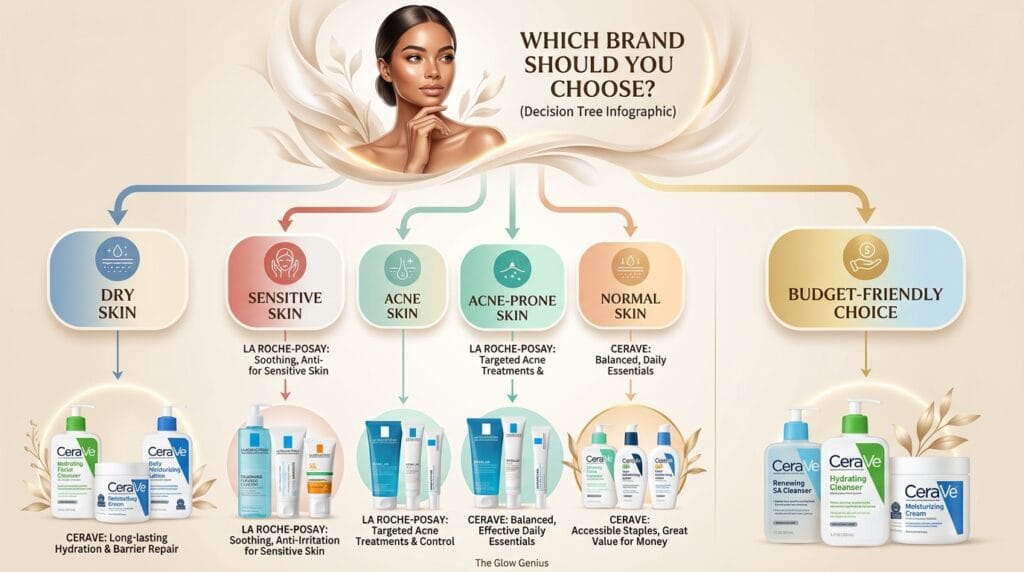
Table at a Glance: CeraVe vs La Roche Posay
Category | CeraVe | La Roche Posay |
|---|---|---|
Signature ingredient | Ceramides + MVE Technology | Thermal spring water |
Best for | Dry, normal, combination skin | Sensitive, reactive, acne-prone skin |
Price range | Budget-friendly | Mid-range |
Fragrance | Fragrance-free | Mostly fragrance-free |
Dermatologist endorsement | Widely recommended | Widely recommended |
Standout product | CeraVe Moisturizing Cream | La Roche Posay Effaclar Duo |
Availability | Drugstores, supermarkets | Pharmacies, specialty retailers |
You May Also Like
If you’re still exploring which skincare brand deserves a spot in your routine, these related reads from The Glow Genius will help:
- CeraVe vs The Ordinary: Which Skincare Brand Wins?
- CeraVe Healing Ointment vs Aquaphor: Which One Is Actually Better?
- Best Facial Cleansers for Every Skin Concern
- Vitamin C Serum Benefits for Skin
- Skincare Routine for Oily Skin
FAQs
Final Verdict
At the end of the day, the CeraVe vs La Roche Posay rivalry isn’t really about one brand beating the other — it’s about matching the right formulas to your unique skin needs. CeraVe remains the go-to for affordable, ceramide-rich hydration, while La Roche Posay continues to lead for sensitive, acne-prone, and reactive skin types. Whichever direction you lean, both brands have earned their dermatologist-recommended reputations for good reason. So next time you’re standing in that aisle, you’ll know exactly which one belongs in your cart.