
Skincare Routine for Oily Skin: The Complete Morning and Night Guide That Actually Works
You wash your face and feel clean for exactly twenty minutes. Then the shine returns. You try stronger cleansers, more washes, and mattifying products. Nothing works for long, and your skin often ends up looking worse than before. Here is the truth most people with oily skin never hear. The products marketed for oily skin control often make it worse, not better. When you strip your skin with harsh cleansers, it responds by producing even more sebum to compensate. That is a defence mechanism, not a failure on your part. A smarter skincare routine for oily skin uses gentle, targeted ingredients that signal your skin to produce less oil rather than triggering panic oil production. This guide covers that approach, step by step, morning and night. Here is the complete guide.
What Actually Causes Oily Skin — And Why Stripping It Backfires
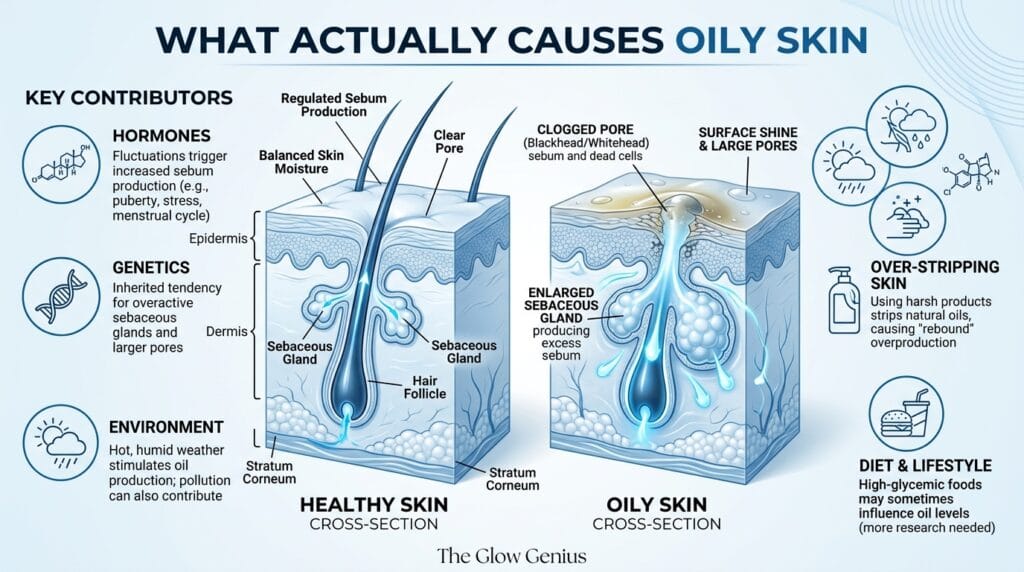
Oily skin begins with overactive sebaceous glands, the tiny glands beneath the skin’s surface that produce sebum. Sebum is not bad. It protects the skin barrier and keeps the face supple. However, when sebaceous glands produce more sebum than the skin needs, shine, clogged pores, and breakouts follow.
Several factors drive overactive sebaceous glands. Genetics play the largest role — if your parents had oily skin, you likely do too. Hormones, particularly androgens, directly increase sebum production. Stress raises cortisol levels, which also signals sebaceous glands to produce more oil. Humidity compounds the effect by slowing how quickly sebum evaporates from the skin’s surface.
The key insight that changes everything is this: harsh oily skin products backfire. When a strong cleanser strips the skin barrier of its natural sebum, the sebaceous glands receive a signal that the skin is under-protected. As a result, they ramp up sebum production significantly. The American Academy of Dermatology confirms that oily skin responds best to gentle, non-comedogenic routines rather than aggressive oil-control products.
Best Ingredients for Oily Skin — What to Look For
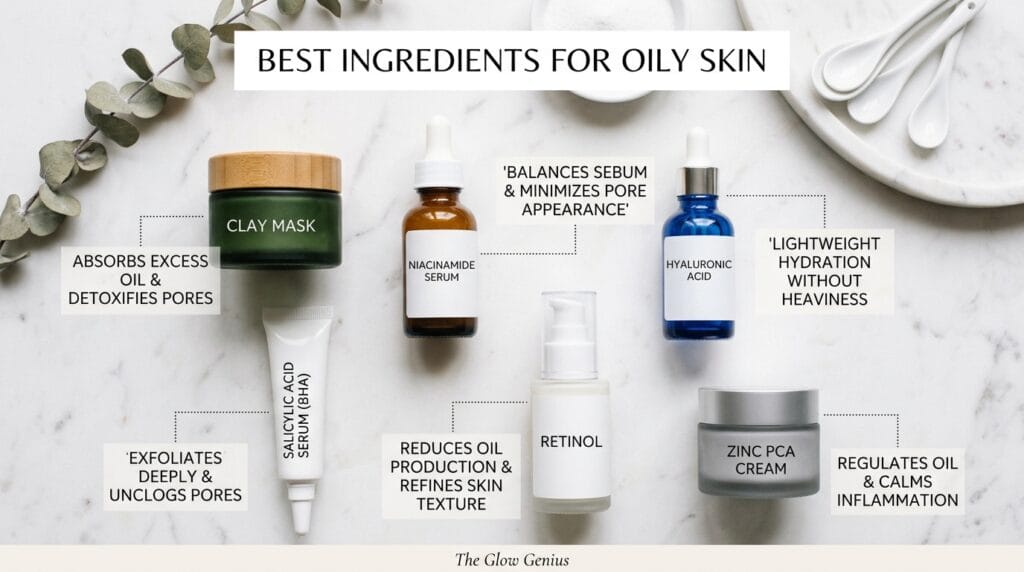
The right ingredients manage oily skin by working with the skin’s biology rather than against it. These six ingredients form the backbone of every effective oily skin care routine.
- Niacinamide is the most important ingredient for oily skin. Niacinamide for oily skin directly reduces sebum production at the sebaceous gland level and visibly shrinks the appearance of pores over four to eight weeks of daily use. Furthermore, it strengthens the skin barrier, which reduces the oil overproduction that follows stripping routines.
- Salicylic acid is a BHA, which stands for beta hydroxy acid. Unlike most acids, salicylic acid is oil-soluble, meaning it penetrates directly into pores rather than working only on the skin’s surface. Because of this, it dissolves the oil and dead skin cell buildup that causes blackheads and breakouts from the inside out. Hyaluronic acid provides lightweight hydration without any oil content — it attracts water molecules and holds them against the skin, making it the ideal moisture ingredient for oily skin.
- Retinol regulates skin cell turnover and gradually reduces the size of pores with consistent use. Clay absorbs excess sebum efficiently in weekly masks without disrupting the skin barrier the way daily harsh cleansers do. Zinc carries anti-inflammatory properties that calm the redness around breakouts while also regulating oil at the sebaceous gland level.
Morning Routine Steps for Oily Skin — In the Right Order
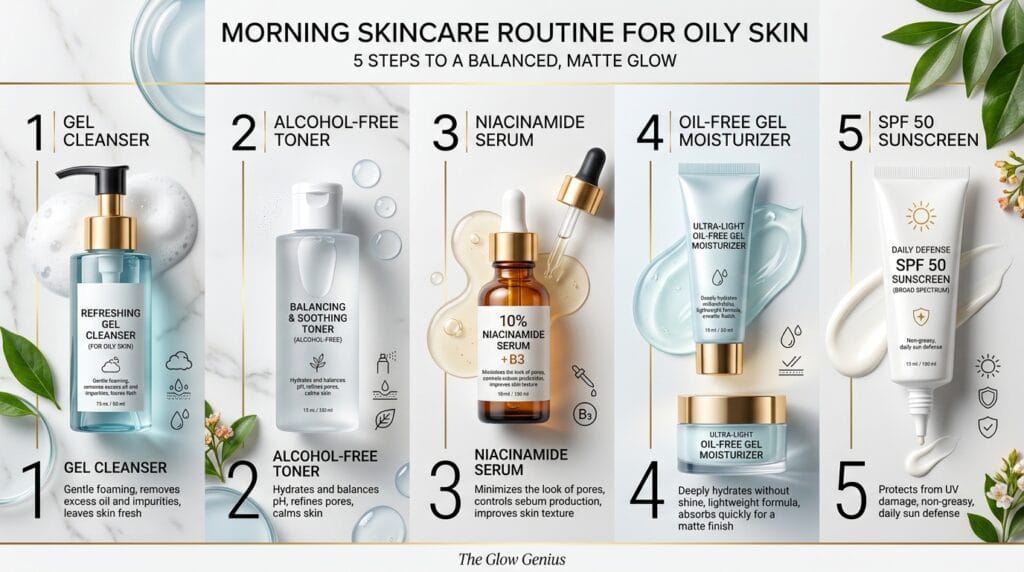
A morning skincare routine for oily skin follows five steps. Each step uses specific ingredients that manage sebum without triggering the rebound oil production that harsh routines cause.
- Step 1. Gel or foaming cleanser Start with a gel cleanser or foaming cleanser containing salicylic acid or niacinamide. Never use a stripping, soap-based cleanser. Because the goal is removing overnight sebum without signalling the sebaceous glands to overproduce, a gentle but effective formula matters enormously here.
- Step 2. Alcohol-free toner Apply an alcohol-free toner with niacinamide or witch hazel to a cotton pad and sweep across the face. This removes any residue the cleanser missed and minimises the appearance of pores immediately. In addition, an alcohol-free formula prepares the skin barrier for serum absorption rather than irritating it.
- Step 3. Niacinamide serum Apply three to four drops of a lightweight oily skin serum containing niacinamide to your face and neck. Niacinamide for oily skin works gradually, reducing sebum output and improving pore appearance over four to eight weeks. Therefore, consistency matters far more than concentration for this step.
- Step 4. Oil-free moisturiser This is the step most people with oily skin skip — and it is the biggest mistake in any oily skin routine. Apply a gel or water-based oil-free moisturiser every single morning. When oily skin goes without hydration, the skin barrier signals the sebaceous glands to produce more sebum as compensation. A lightweight oily skin moisturiser breaks that cycle.
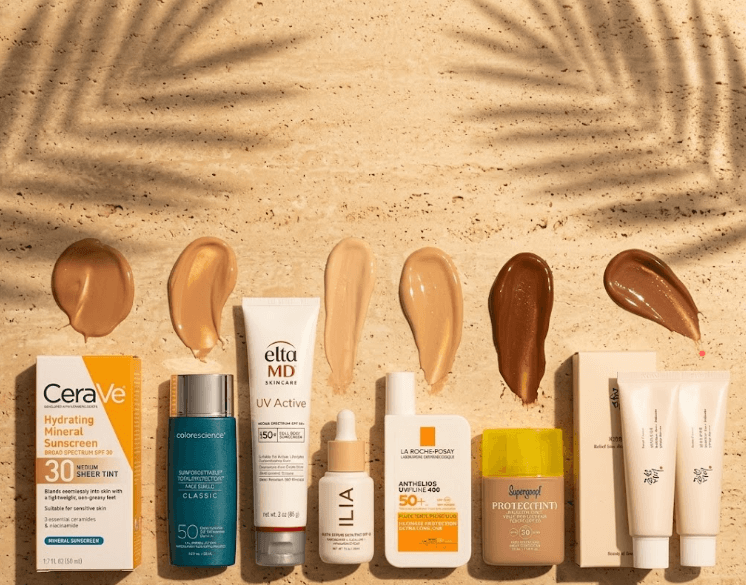
- Step 5. SPF — non-negotiable Finish every morning routine with an oil-free, non-comedogenic SPF 30 or higher. Sun exposure dries and damages the skin barrier, which triggers more sebum production as a defence mechanism. Furthermore, UV damage worsens pores, breakouts, and dark post-breakout marks simultaneously. An SPF formulated for oily skin sits lightly and often doubles as a mattifying base.
Night Routine Steps for Oily Skin — What Changes at Night
A night skincare routine for oily skin differs from the morning in three important ways. You double-cleanse if you wore SPF or makeup, exfoliate on treatment nights, and use more active ingredients because no SPF application follows.
- Step 1. Double cleanse if you wore SPF or makeup. Begin with a gentle oil cleanser or micellar water to remove SPF, sunscreen, and makeup fully. Because oil-based cleansers remove sebum-based products most effectively, this first cleanse prepares the skin for the second. Follow immediately with a gel cleanser or foaming cleanser to cleanse the skin itself.
- Step 2. Exfoliate two to three times a week at night only. Apply a BHA exfoliator containing salicylic acid for oily skin on treatment nights. This dissolves the oil and dead cell buildup inside pores while you sleep. However, do not exfoliate every night. Over-exfoliating strips the skin barrier and triggers significant rebound sebum production within days.
- Step 3. Apply your treatment serum at night. Use a niacinamide serum on non-exfoliation nights. On nights when skin has adapted sufficiently, introduce retinol once a week as a treatment. Start retinol slowly, building frequency as skin tolerates it. Because retinol and salicylic acid together can over-sensitise oily skin, avoid using both in the same session.
- Step 4. Apply a lightweight night moisturiser. Even at night, oily skin needs moisture. Apply a lightweight gel oily skin moisturiser rather than a heavy cream or balm. Because skin barrier repair peaks during sleep, consistent nightly hydration noticeably improves sebum regulation over time.

Weekly Treatments for Oily Skin That Make a Real Difference
Weekly treatments address the concerns that a daily routine alone cannot fully manage. Three treatments genuinely improve oily skin when added to a regular schedule.
A clay mask once per week absorbs excess sebum deep within pores without stripping the skin barrier the way daily cleansing cannot avoid. Apply a clay mask to a clean face, leave for ten minutes, then rinse completely. Because the clay draws oil and debris toward the surface physically, this single weekly step visibly reduces blackheads and overall shine within a few uses.
Blotting papers provide on-the-go sebum control during the day. They absorb surface shine without disturbing makeup or disrupting the skin barrier the way powder or additional cleansing would. Most importantly, blotting papers address midday shine without triggering the rebound oil cycle that over-washing causes. Keep a small pack in your bag for the hours between morning routine and night cleanse.
A BHA chemical exfoliant used two to three times per week dissolves the dead skin cells inside pores that blackheads form from. Because AHA exfoliants work on the skin’s surface while BHA penetrates oil, salicylic acid suits oily skin more specifically than any other exfoliator type.
What to Avoid With Oily Skin — Common Mistakes
Most oily skin advice focuses on what to add. This section covers what to remove from your routine, since several common habits directly worsen sebum overproduction.
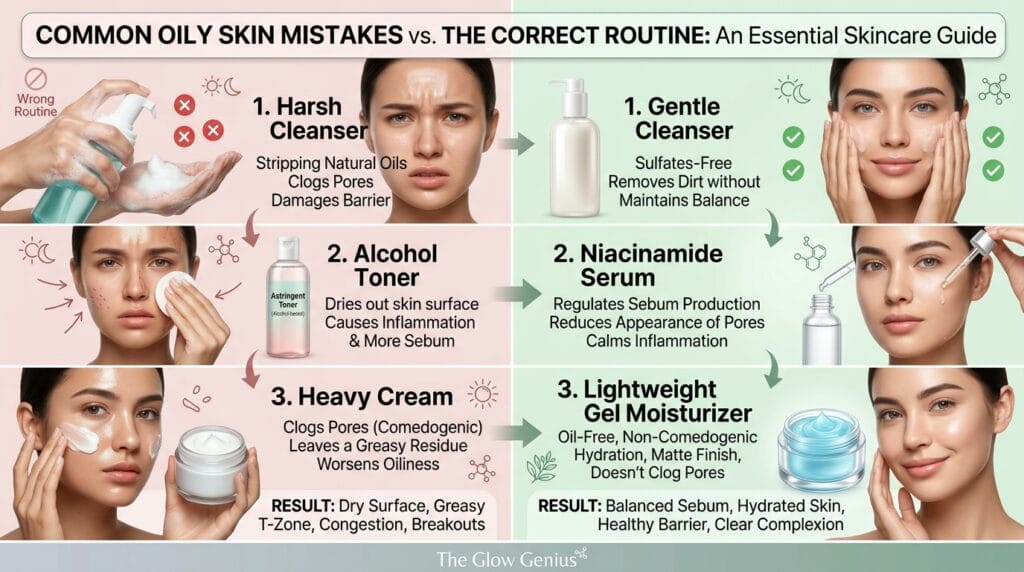
Never cleanse more than twice daily. Washing your face three or four times strips the skin barrier repeatedly, which signals sebaceous glands to dramatically increase sebum output as a compensation response. Two cleansing sessions — morning and evening — is the maximum any oily and acne prone skin routine needs.
Avoid alcohol-based toners entirely. Alcohol strips the skin barrier more aggressively than almost any other common skincare ingredient. Because oily skin already struggles with skin barrier function, an alcohol-based toner creates a cycle of stripping and sebum overproduction that worsens both shine and breakouts simultaneously.
Skip heavy creams and thick moisturisers. These clog pores, suffocate the skin’s surface, and prevent sebum from reaching the skin’s surface normally. On the other hand, the most damaging habit for oily skin is skipping moisturiser entirely. This single omission sends the strongest possible signal to sebaceous glands to compensate with increased sebum production.
Oily Skin Myths Completely Debunked
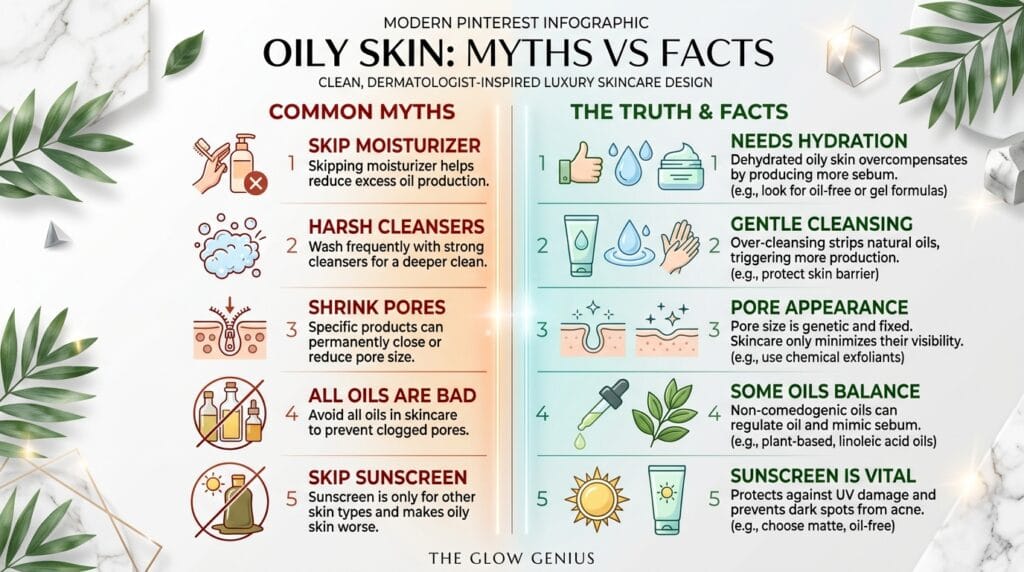
Several persistent myths about oily skin cause people to follow routines that actively worsen their skin. These four deserve direct correction.
- Oily skin does not need a moisturiser. This is the most damaging oily skin myth. Oily skin absolutely requires an oil-free moisturiser every day. Without hydration, the skin barrier weakens and the sebaceous glands increase sebum production in response. A lightweight gel oily skin moisturiser controls this cycle rather than contributing to it.
- You should cleanse oily skin three or four times daily. Twice daily is the maximum. In fact, cleansing more than twice strips the skin barrier and causes significantly worse sebum overproduction within 24 hours. The right oily skin cleanser used twice daily produces far better results than frequent stripping.
- Oily skin ages badly. In fact, the opposite is true. Sebum provides natural protection and lubrication to the skin barrier that slows visible ageing. People with oily skin often maintain smoother, more supple skin for longer than those with dry skin. The sebum that frustrates you today becomes a long-term advantage.
- Oily skin means dirty skin. Oiliness has nothing to do with cleanliness. It reflects genetics, hormones, and the activity level of your sebaceous glands — none of which respond to more frequent washing. In fact, over-washing in pursuit of cleanliness is one of the primary causes of worsening oily skin.
Oily Skin Routine at a Glance
Step | Morning | Night | Frequency |
|---|---|---|---|
Cleanse | Gel or foaming cleanser | Double cleanse (oil cleanser first if wearing SPF) | Twice daily |
Tone | Alcohol-free niacinamide toner | Optional — skip on exfoliation nights | Daily |
Treat | Niacinamide serum | Niacinamide serum or retinol | Daily (retinol 1-3x weekly) |
Moisturise | Oil-free gel moisturiser | Lightweight gel night moisturiser | Daily |
SPF | Oil-free non-comedogenic SPF 30+ | Skip | Every morning |
Exfoliate | Never in the morning | BHA salicylic acid exfoliator | 2 to 3 times weekly, night only |
Clay mask | Never | Once weekly on a cleansed face | Once per week |
You May Also Like
If you loved this guide, these articles were made for you:
- Best Facial Cleansers for Every Skin Concern
- CeraVe vs The Ordinary
- 10 Best Drugstore Skincare Under £5 UK
- Vitamin C Serum Benefits
- Homemade Face Mask for Acne
FAQs
Your Skin Is Not the Problem — Your Routine Might Be
Oily skin is not a flaw. It is a skin type that responds strongly to its environment, routines, and products. When you give it the wrong ones, it overreacts. When you give it the right ones, it settles remarkably fast.
The right skincare routine for oily skin is gentler than you expect, more hydrating than you think necessary, and more consistent than any single hero product. A gel cleanser twice daily. A niacinamide serum every morning. An oil-free moisturiser every single day without exception. SPF without fail.
Give this approach eight weeks without reverting to harsh products when shine appears. Your skin is not your enemy. It simply needed a smarter routine all along.
Save this guide to your Pinterest boards and share it with a friend whose oily skin routine is making things worse, not better. The gentler approach changes everything. 💧