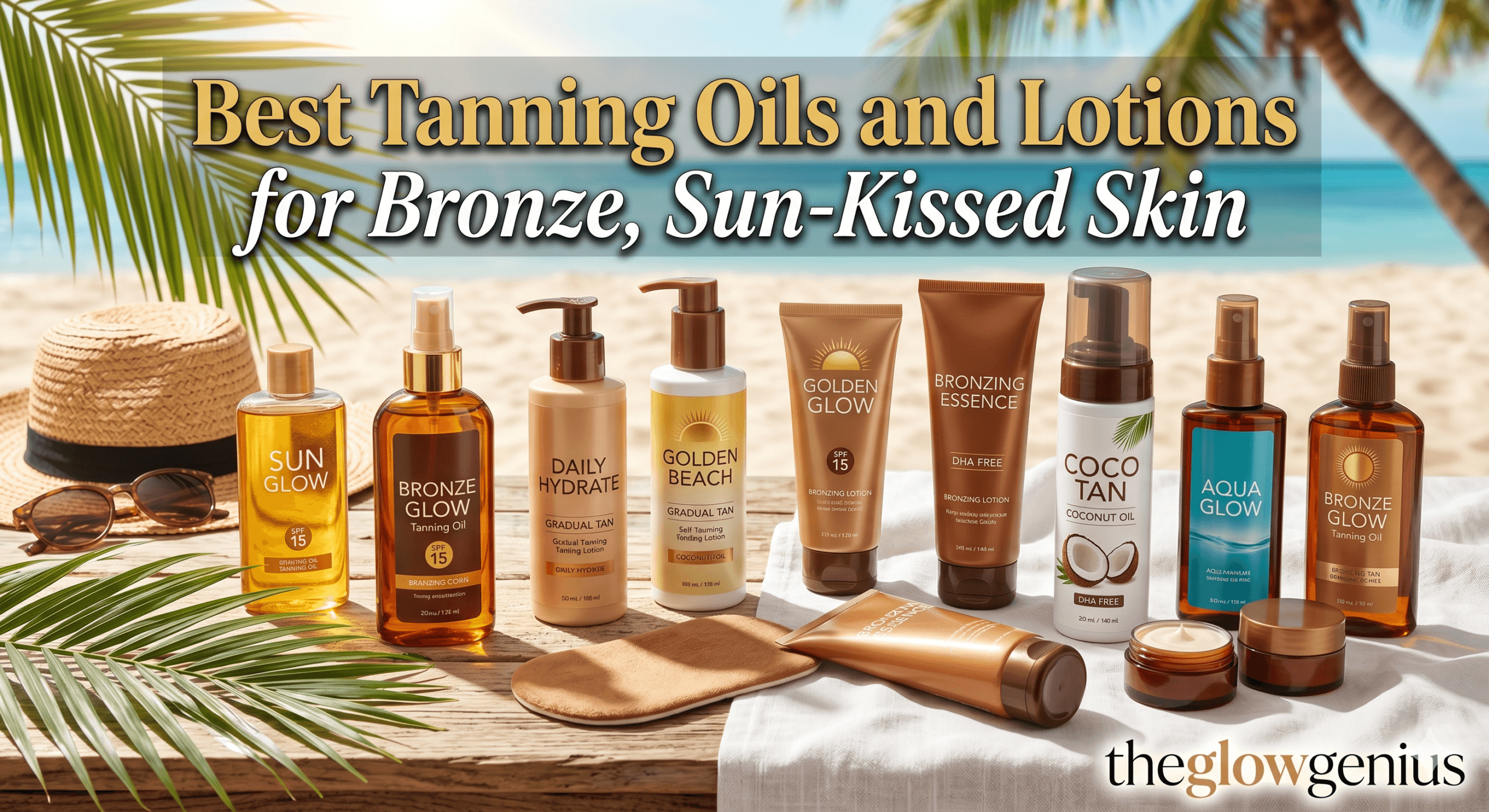
Best Tanning Oils and Lotions for Bronze, Sun-Kissed Skin: The Complete Summer Guide
All products featured for tanning oils and lotions on The Glow Genius are independently selected by our editors. We may receive support from retailers through purchases made via links on this page.
Bronze, sun-kissed skin has remained a constant beauty goal for decades. However, the way people achieve it has shifted significantly, with self-tanning lotion and gradual formulas now sitting alongside traditional tanning oil as genuinely popular options.
Choosing between tanning oils and lotions is not always obvious. Each formula type works differently, suits different skin tones, and carries different safety considerations. That is why this guide breaks every option down clearly, rather than leaving you to guess at the beauty aisle. Here is the complete guide.
Sun Tanning Products vs Self-Tanners — What Is the Difference
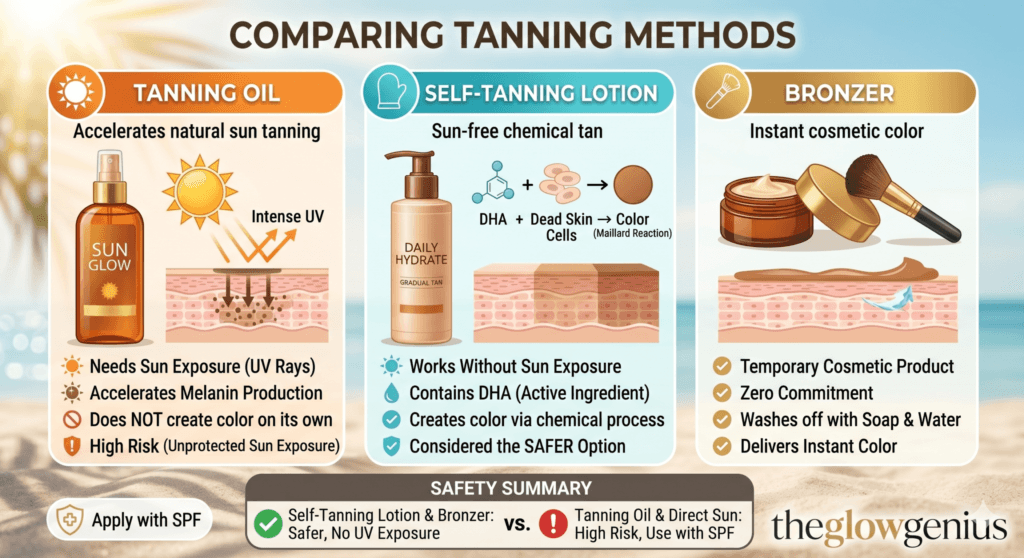
- Tanning oil works by accelerating your skin’s natural tanning process in sun exposure, rather than creating colour on its own. The oil itself does not change skin colour, but its formula often helps the skin absorb UV rays more intensely, speeding up melanin production during sun exposure.
- Self-tanning lotion, by contrast, works without any sun exposure at all. It contains DHA, an ingredient that reacts with the surface layer of dead skin cells to create colour through a chemical process called the Maillard reaction. Because this reaction does not involve melanin or UV rays, self-tanning lotion is considered the safer option for achieving bronze skin.
- Bronzer offers a third, completely different approach. Rather than altering the skin chemically or relying on sun exposure, bronzer sits on top of the skin as a cosmetic product, similar to makeup, and washes off with soap and water. It delivers instant, temporary colour with zero commitment.
In terms of safety, self-tanning lotion and bronzer are both significantly safer than relying on tanning oil and direct sun exposure. Prolonged, unprotected sun exposure carries a well-documented risk of skin cancer, which is why SPF should always be worn during any sun tanning, even when using a tanning oil.
Summer Tanning Guide: Choosing the Right Formula for Your Skin Tone
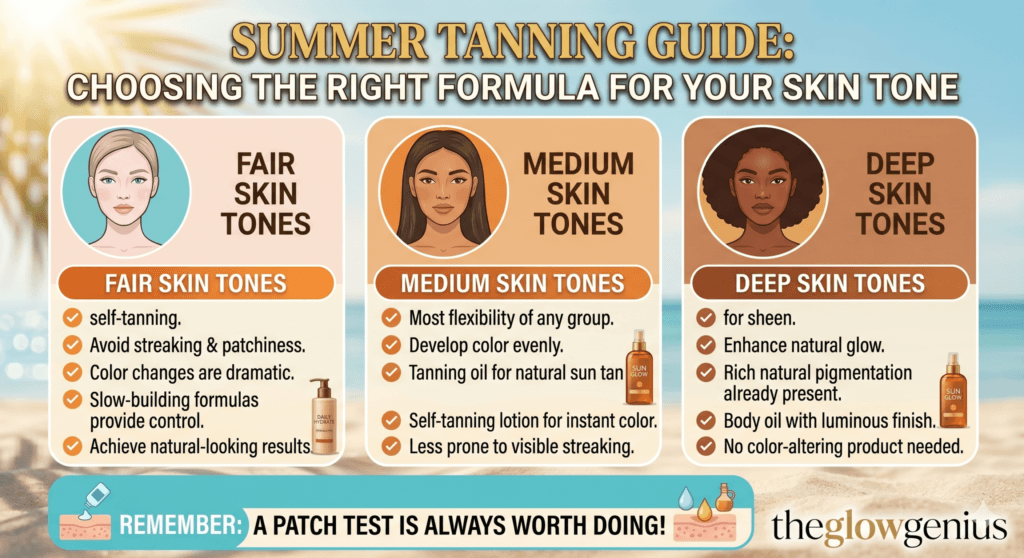
Fair skin tones generally need a gradual self-tanning lotion to avoid streaking and patchiness. Because fair skin shows colour changes more dramatically, a slow-building gradual formula allows for better control and a more natural-looking result over several applications.
Medium skin tones have the most flexibility of any group. Both tanning oil for natural sun tanning and self-tanning lotion for instant colour work well, since medium skin tends to develop colour evenly and is less prone to visible streaking or patchiness.
Deep skin tones often benefit more from oil-based formulas used purely for sheen and smooth skin, rather than for colour change itself. Because deep skin already carries rich natural pigmentation, a body oil with a luminous finish enhances the skin’s natural glow without needing a colour-altering product at all.
Regardless of skin tone, a patch test is always worth doing before applying any new self-tanning lotion or tanning oil across the whole body, since individual skin chemistry can react differently to DHA and other active ingredients.
Sun-Kissed Skin Tips — Best Tanning Products by Concern
1. Streaky or Patchy Self-Tan
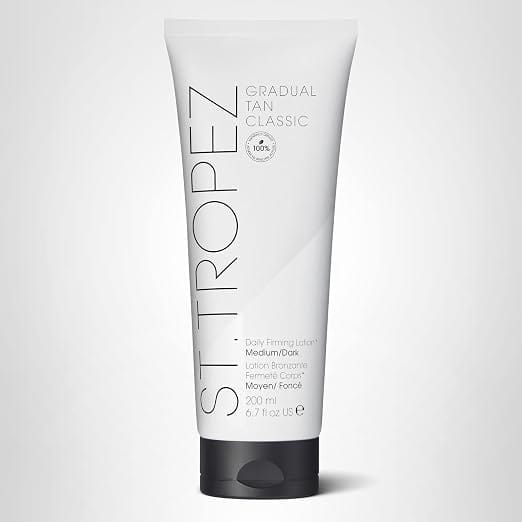
A streaky or patchy result usually happens when self-tanning lotion is applied unevenly or onto dry, flaky skin. Choose a gradual self-tanning lotion with buildable colour, which is more forgiving than a one-time intense formula. St. Tropez Gradual Tan Everyday Body Lotion is a widely trusted option here, delivering streak-resistant buildable colour that suits first-timers and experienced self-tanners alike. Always use a tanning mitt rather than bare hands for the most even application.
2. Fast-Fading Tan
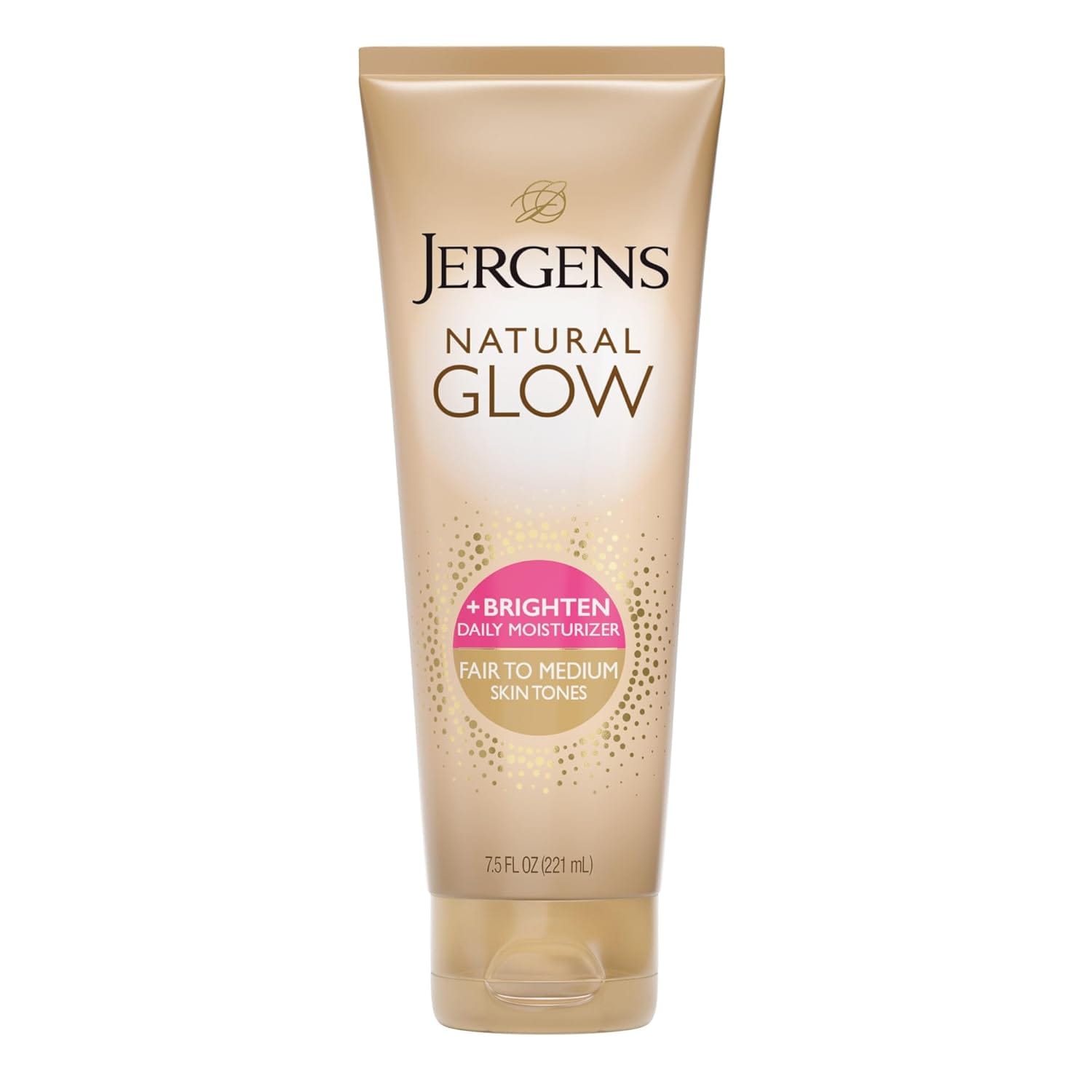
A fast-fading tan, whether from sun tanning or self-tanning lotion, typically results from skipping daily moisturiser. Look for a gradual tan moisturiser that maintains colour while hydrating skin simultaneously. Jergens Natural Glow Revitalizing Daily Moisturiser works well here, topping up DHA colour daily while keeping skin hydrated to slow fading. Apply daily, focusing on areas that naturally shed skin faster, like elbows and hands.
3. Sensitive Skin Reacting to Tanning Products
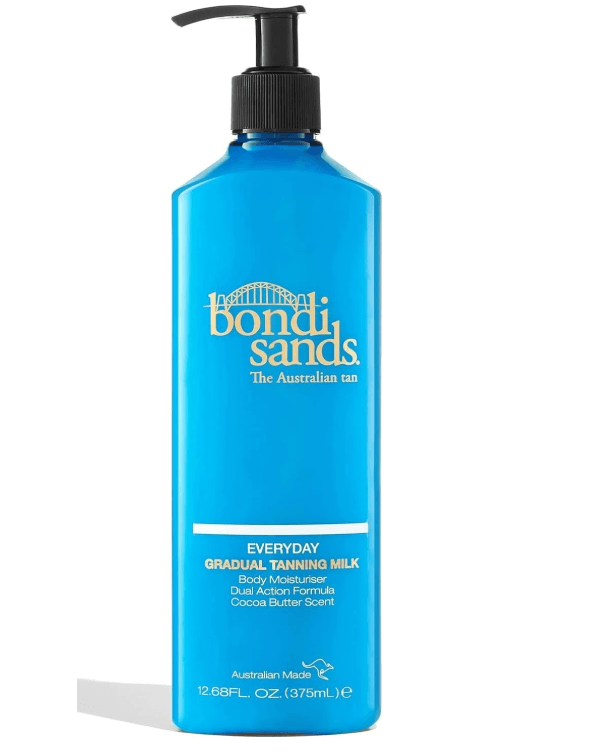
Sensitive skin can react to fragrance or certain preservatives commonly found in tanning oil and self-tanning lotion formulas. Look for fragrance-free, DHA-based formulas specifically labelled for sensitive skin. Bondi Sands Everyday Gradual Tanning Milk Fragrance Free is a reliable pick, offering a scent-free, gentle formula that minimises irritation risk on reactive skin. Always complete a patch test on the inner arm 24 hours before full application.
4. Dry Skin Not Holding Colour Evenly
Dry, flaky skin grabs onto self-tanning lotion unevenly, since DHA reacts most strongly with the outermost dead skin cells. Sanctuary Spa Gradual Tanning Body Lotion suits this concern well, combining a rich moisturising base with gradual colour so dry skin stays hydrated and holds colour more evenly. Exfoliating thoroughly before application removes this uneven buildup. Pay particular attention to elbows, knees, and ankles, which tend to be driest.
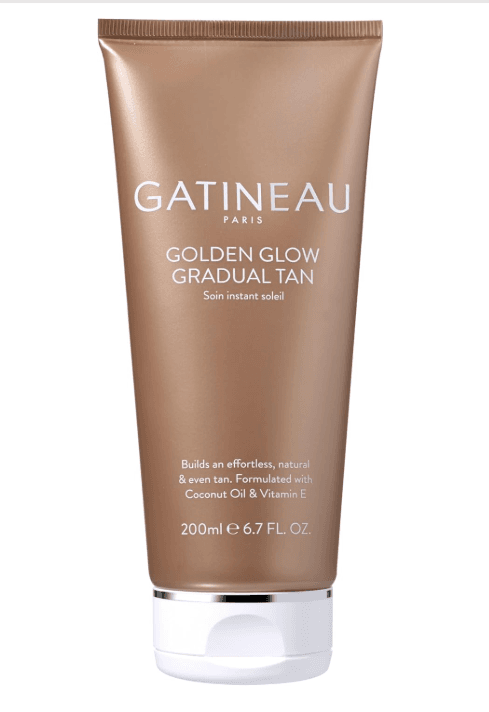
5. Wanting a Natural Sun Tan Faster
Wanting a faster natural tan is one of the most common goals during summer tanning season. A tanning oil can help skin absorb UV rays more efficiently, though sun exposure still requires patience and consistent, protected time outdoors with SPF. Australian Gold Botanical SPF 15 Tanning Oil is a popular choice here, combining accelerating oils with built-in SPF so you tan faster while maintaining a basic level of sun protection.
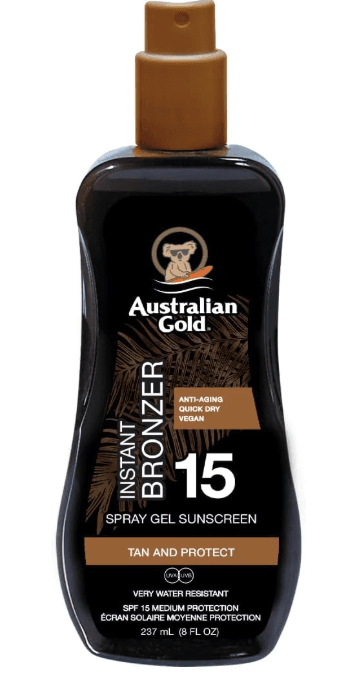
6. Wanting Tan Without Any Sun Exposure
For zero sun exposure, self-tanning lotion is the only genuine option, since it creates colour entirely through the DHA reaction rather than melanin stimulation. Isle of Paradise Self Tanning Drops are a highly regarded choice for this goal, offering customisable, buildable colour that can be mixed into any moisturiser for a completely sun-free bronze skin result. This is also the safest path to a tan, carrying none of the UV ray risks associated with sun tanning.
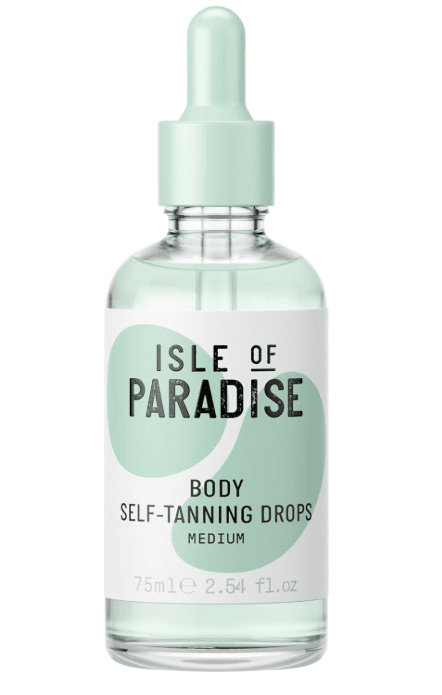
7. Maintaining Tan After Swimming
Swimming, particularly in chlorinated pools, accelerates fake tan fading significantly. Sienna X Gradual Tan Body Moisturiser works well as a post-swim top-up, replenishing DHA colour while restoring moisture stripped by chlorinated water. Apply after swimming sessions and pat skin dry rather than rubbing with a towel, since rubbing accelerates colour loss.
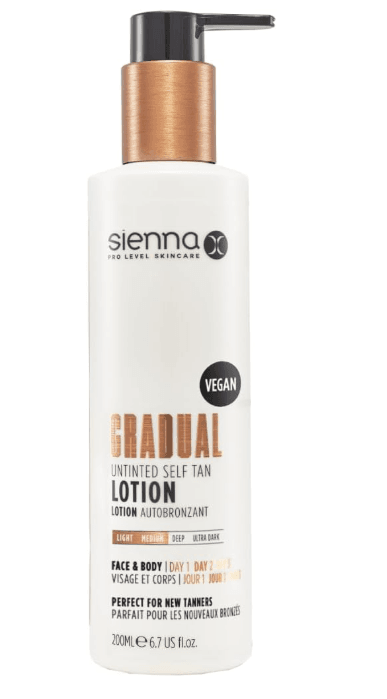
8. Avoiding Orange or Unnatural Tones
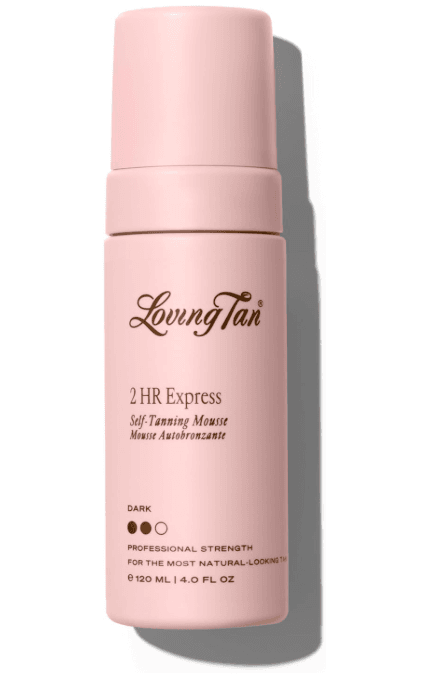
Orange or unnatural tones typically result from applying too much self-tanning lotion too quickly, or choosing a formula with a shade mismatch for your skin tone. Loving Tan 2 Hour Express Self Tanner is recommended for this concern because its colour-guide technology shows exactly where product has been applied, reducing overuse and uneven buildup. Choose a gradual, buildable formula and apply thin layers, building colour gradually over several days rather than aiming for instant depth.
How to Tan Faster Safely — What Actually Works
Exfoliating before any tanning application genuinely speeds up and improves results. Removing dead skin cells creates a smoother, more even surface, allowing both natural sun exposure and self-tanning lotion to develop more consistently across the body.
Daily moisturising also plays a significant role. Because well-hydrated skin holds colour more evenly, applying moisturiser consistently, both before and after tanning, helps any tan, whether from tanning oil or self-tanning lotion, last longer and fade more gracefully.
It is important to set realistic expectations around sun exposure. Tanning oil can help skin absorb UV rays more efficiently, but it does not eliminate the time genuinely needed to develop a natural tan safely. Most importantly, SPF should always be worn during sun tanning, since prolonged, unprotected sun exposure carries a well-established risk of skin cancer.
Gradual tan formulas build colour more evenly than one-time intense applications. Because gradual formulas contain lower concentrations of DHA per application, they allow for more control and significantly reduce the risk of streaky tan results compared to a single, heavy application.
Self Tanning Basics — Application Step by Step
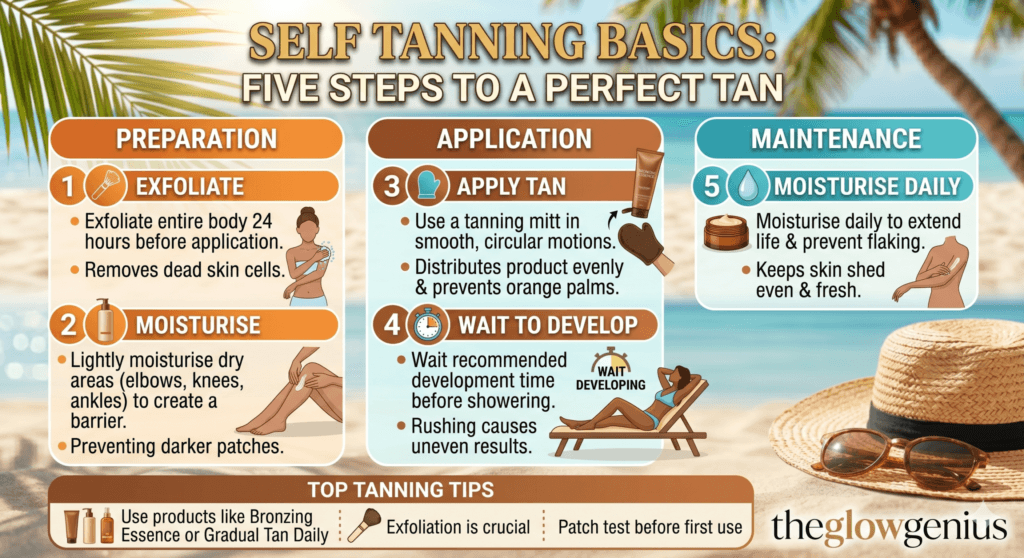
A reliable self-tanning application follows five clear steps every time.
- Step 1. Exfoliate the entire body 24 hours before applying any tanning oil or self-tanning lotion. This removes dead skin cells and creates the smoothest possible surface for even colour development.
- Step 2. Lightly moisturise naturally dry areas like elbows, knees, and ankles before application. These areas absorb DHA more intensely than the rest of the body, so a light barrier of moisturiser helps prevent unwanted darker patches.
- Step 3. Apply tanning oil or self-tanning lotion in smooth, circular motions using a tanning mitt rather than bare hands. A mitt distributes product evenly and prevents the orange-tinted palms that commonly result from direct hand application.
- Step 4. Wait the recommended development time, usually stated clearly on the product packaging, before showering or getting wet. Rushing this step is one of the most common causes of a disappointing, uneven result.
- Step 5. Moisturise daily afterward to extend the life of your tan and prevent flaking. Since skin naturally sheds over time, consistent moisturiser use keeps that shedding even, rather than patchy, which extends how long your bronze skin looks fresh.
Quick Comparison Table
Product Type | How It Works | Best For | Longevity | Sun Protection |
|---|---|---|---|---|
Tanning oil | Accelerates melanin in sun exposure | Natural sun tanning | Fades naturally over days | None — wear SPF separately |
Self-tanning lotion | DHA reacts with surface skin cells | Tan without sun exposure | 5 to 7 days typically | None — wear SPF separately |
Bronzer | Sits on skin surface as cosmetic colour | Instant, temporary colour | Washes off same day | None |
Gradual tan moisturiser | Low-dose DHA builds colour slowly | Even, buildable colour over time | Maintains with daily use | None — wear SPF separately |
You May Also like:
- CeraVe vs The Ordinary
- Best Facial Cleansers for Every Skin Concern
- Etude House Moistfull Collagen Sleeping Pack Review
- Best Korean Eye Cream
- 7 Best Tinted Sunscreens
- 5 Best Jones Road Miracle Balm Dupes
Frequently Asked Questions
Conclusion:
The safest path to bronze skin is self-tanning lotion, since it avoids UV ray exposure entirely while still delivering genuine, sun-kissed colour. Tanning oil and direct sun exposure carry real, well-documented skin cancer risk, which is why SPF should always be part of any sun tanning routine.
Self-tanning lotion wins for safety and zero sun exposure. Tanning oil, used responsibly with SPF, suits anyone who specifically wants a natural sun tan over time. Bronzer remains the best option for instant, fully temporary colour with no commitment at all.
Whichever option fits your goals, exfoliating, moisturising, and patience all matter more than any single product on the shelf.
Save this guide, share it with a friend prepping for summer, and come back anytime you need a refresher. ☀️