
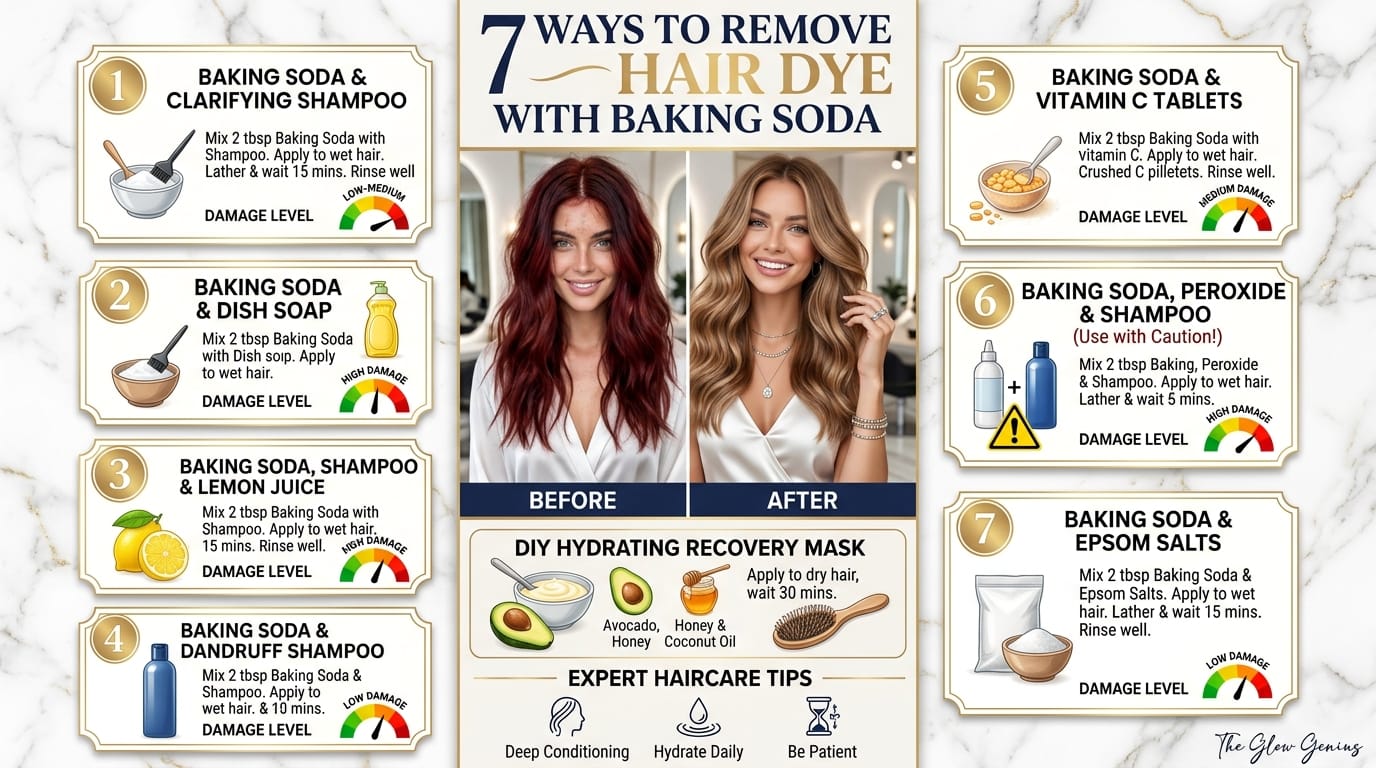
Baking Soda to Remove Hair Dye: 7 Methods That Actually Work (And 3 Things to Know First)
You dyed your hair last night. This morning, it is not the colour you wanted. Panic sets in, and you start searching for a fix.
Baking soda is one of the most searched DIY answers for this exact problem. People want to know how to fade hair dye without bleach, without a salon trip, and without waiting weeks.
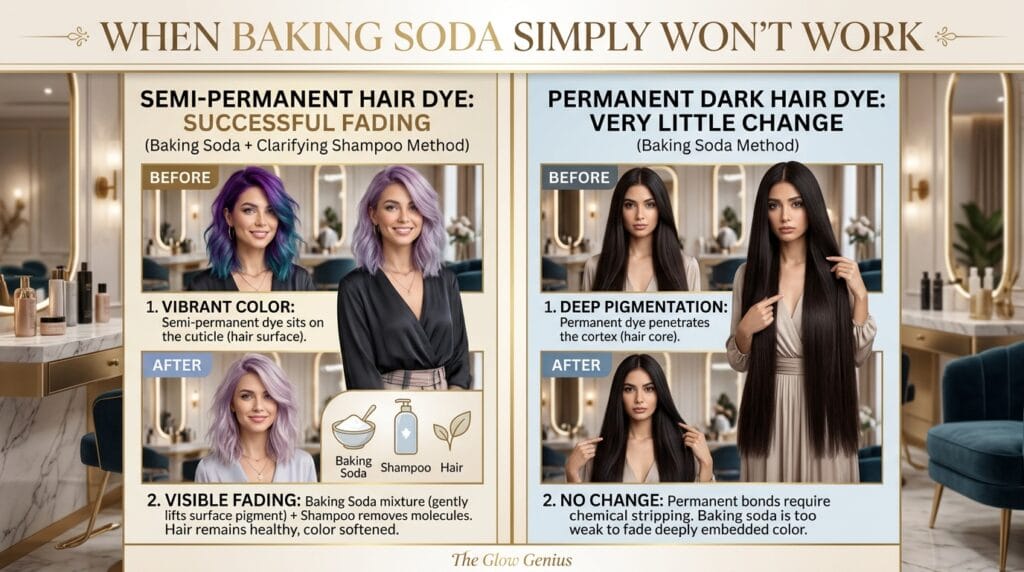
Here is the honest truth upfront. Baking soda works well on semi-permanent dye. It has limited effect on dark permanent dye. Both results are possible, but expectations matter.
This guide covers remove hair dye at home with real recipes, exact timing, and the aftercare your hair actually needs. If you have been searching for baking soda to remove hair dye, you are in the right place.
We will walk through seven tested methods, from gentle to strong. Each one comes with clear steps, so nothing is left to guesswork. Here is everything you need to know.
How Baking Soda Actually Fades Hair Colour — The Science
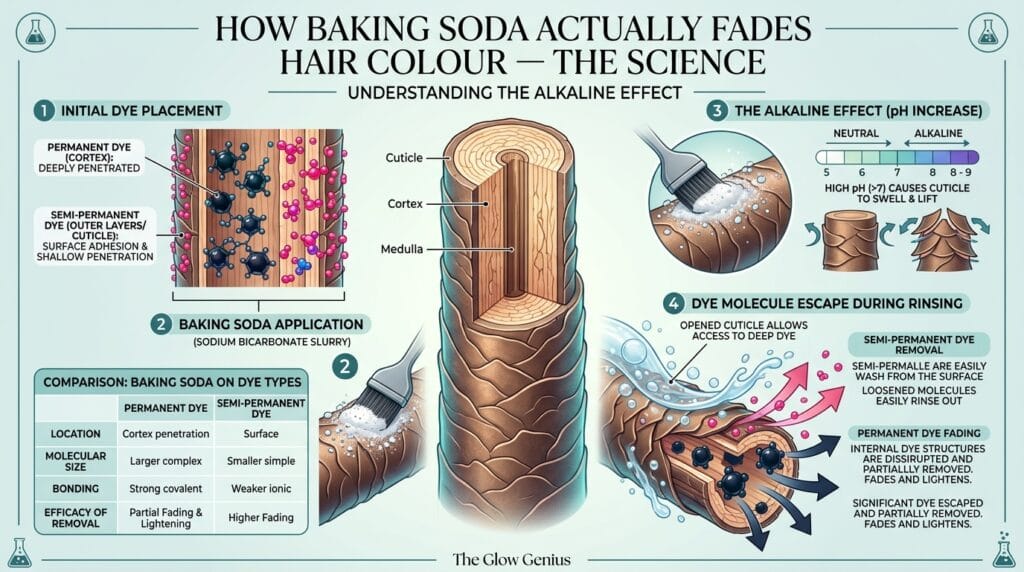
Baking soda has a pH of roughly 8 to 9, which makes it alkaline. That alkalinity is the whole mechanism behind this method.
When baking soda touches the hair shaft, it raises the pH of the hair cuticle. A raised pH lifts the cuticle layer slightly, opening tiny gaps in the hair’s outer structure.
Once the hair cuticle opens, dye molecules trapped inside can slowly wash out during rinsing. This is why baking soda hair colour removal works gradually, not instantly.
Permanent dye sits deep inside the hair cortex, bonded through a chemical process. Semi-permanent dye coats the surface layer instead, so it lifts out far more easily.
This difference explains why semi-permanent dye removal happens faster than fading permanent dye. Manage your expectations accordingly, and you will not feel disappointed.
Understanding this science also explains why baking soda to remove hair dye works better as a gradual process than a single miracle fix. Each wash lifts a little more colour, rather than stripping it all at once.
3 Things to Know Before You Start
Before you mix anything, understand these three points. They will save your hair and your patience.
- First, dye type changes everything. Semi-permanent dye fades well. Dark permanent dye only shifts tone slightly, even after several tries.
- Second, damage is real and cumulative. The high pH that lifts dye also strips natural oils from your hair. Overuse leads to dryness, brittleness, and breakage over time.
- Third, a deep conditioner afterward is not optional. Every method on this list must end with intensive conditioning to restore moisture and protect hair porosity.
Always do a patch test on a small hidden section first. This confirms your hair can handle the process before you commit to your whole head.
Keep these three points in mind every single time you try baking soda to remove hair dye. They are the difference between a controlled fade and an avoidable disaster.

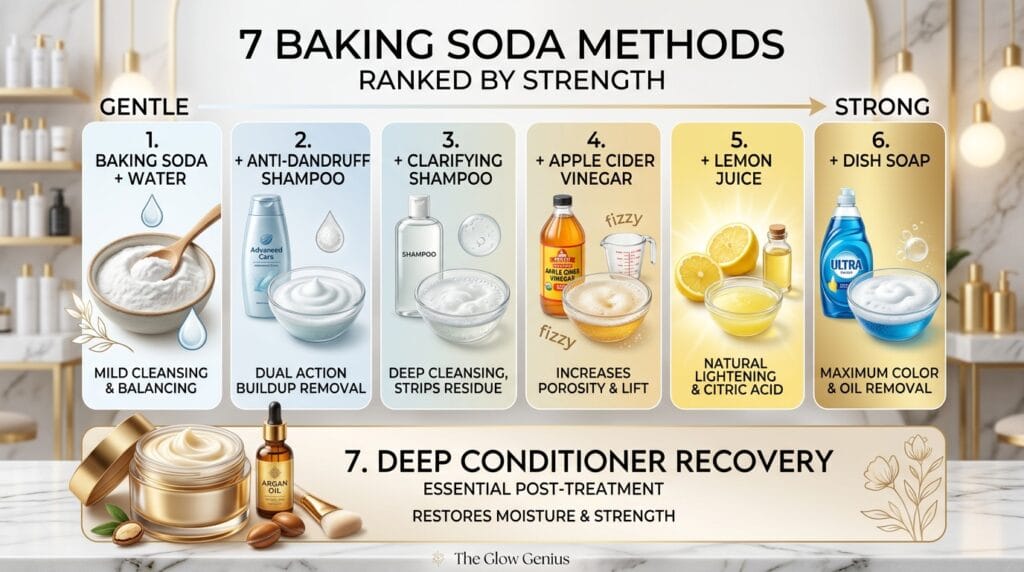
7 Baking Soda Methods Ranked by Strength
Below are seven proven methods for DIY hair dye remover projects at home. Each includes exact measurements, timing, and an honest damage rating.
These methods for baking soda to remove hair dye are ranked from gentlest to strongest, so start at the top if your hair is fragile or previously damaged.
Method 1: Baking Soda + Water Paste
⚠️ Low damage
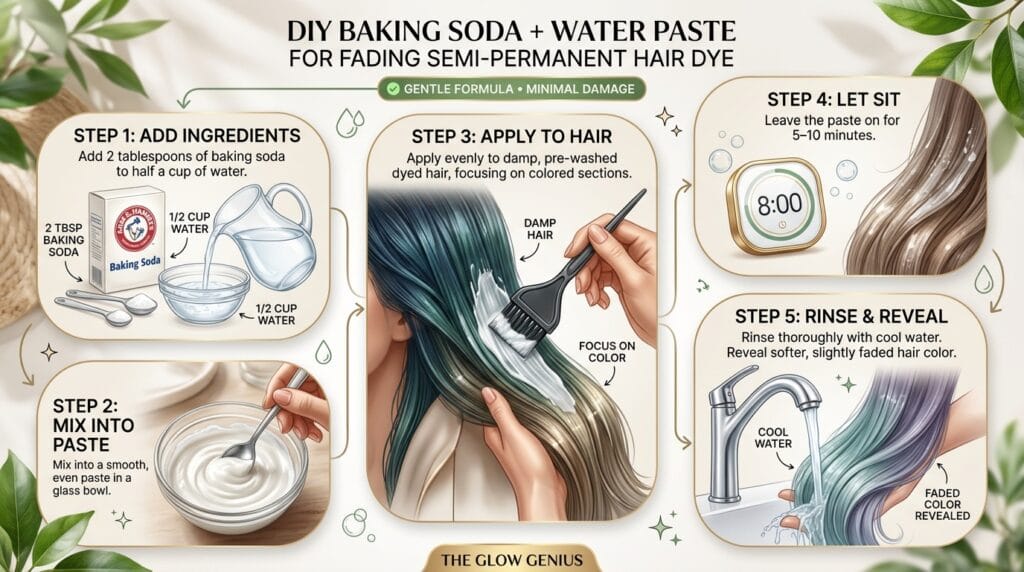
Mix 2 tablespoons of baking soda with half a cup of water into a smooth paste. Apply to damp hair, focusing on dyed sections.
Leave the paste on for 5 to 10 minutes, then rinse thoroughly with cool water. This is the gentlest way to remove hair dye at home, best for mild semi-permanent dye.
Many beginners start with this recipe when they first try baking soda to remove hair dye, since it carries the lowest risk of damage.
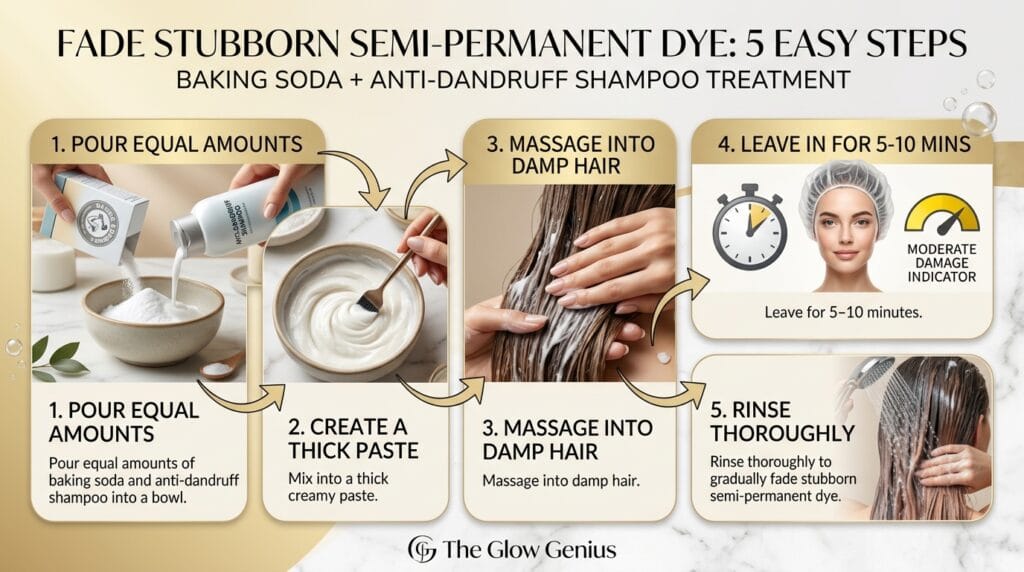
Method 2: Baking Soda + Anti-Dandruff Shampoo
⚠️⚠️ Moderate damage
Combine equal parts baking soda and anti-dandruff shampoo into a thick mixture. Apply to damp hair and massage gently for 5 to 10 minutes.
Rinse well afterward. This combination is a stronger clarifying option for baking soda shampoo hair dye fading and works best on stubborn semi-permanent dye.
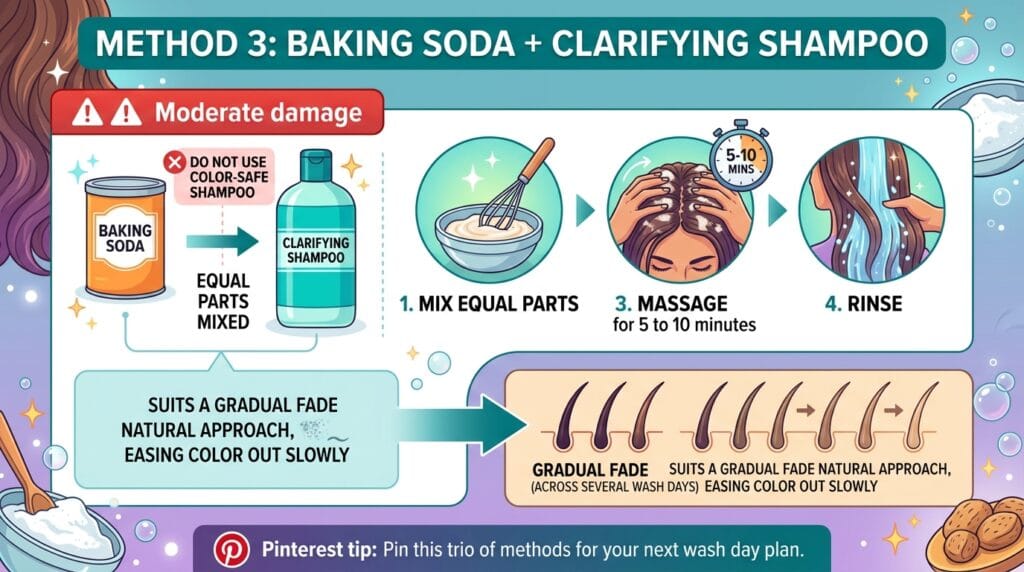
Method 3: Baking Soda + Clarifying Shampoo
⚠️⚠️ Moderate damage
Mix equal parts baking soda with a clarifying shampoo, never a colour-safe formula, since that defeats the purpose. Apply, massage for 5 to 10 minutes, then rinse.
This method suits a gradual fade hair colour naturally approach across several wash days rather than one aggressive session, easing colour out slowly.
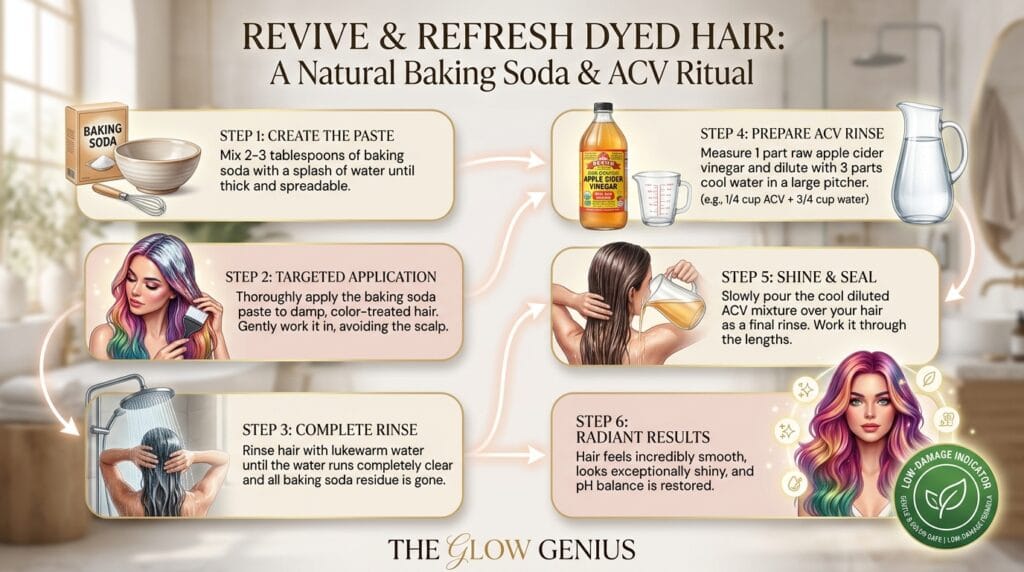
Method 4: Baking Soda + Apple Cider Vinegar
⚠️ Low damage
Apply a baking soda paste first, then rinse completely. Follow with a diluted apple cider vinegar rinse using 1 part vinegar to 3 parts water.
This baking soda and vinegar hair dye combination restores pH balance after the alkaline treatment, since vinegar is acidic and counterbalances the process.
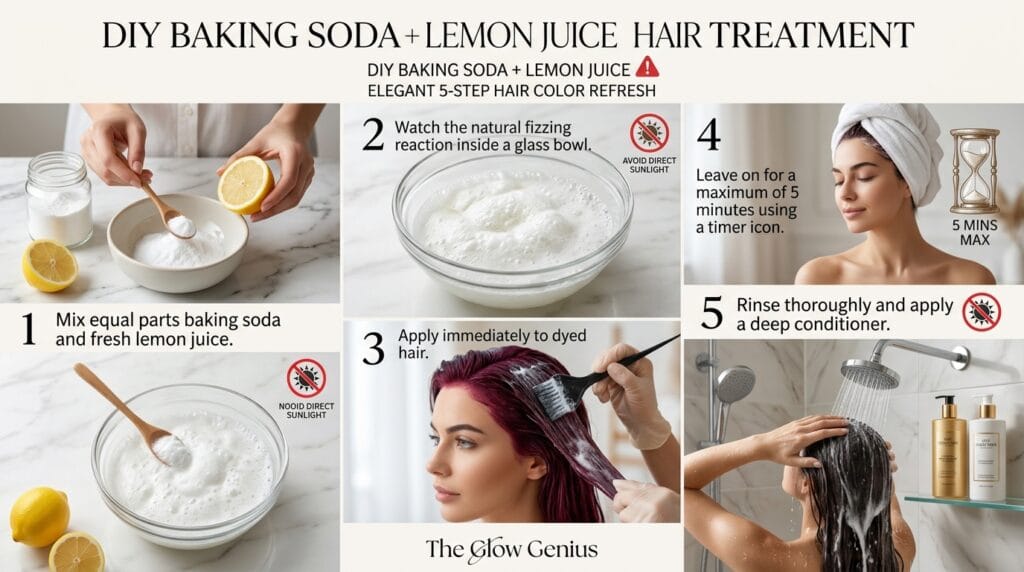
Method 5: Baking Soda + Lemon Juice
⚠️⚠️⚠️ Higher damage — deep condition after
Mix equal parts baking soda and fresh lemon juice. It will fizz, which is normal. Apply quickly since this reaction is fast-acting.
Leave on for 5 minutes maximum, since lemon juice accelerates the lightening process. Stay out of direct sun afterward, as sun exposure combined with lemon juice can cause uneven lightening.
Method 6: Baking Soda + Dish Soap
⚠️⚠️⚠️ Higher damage — deep condition after
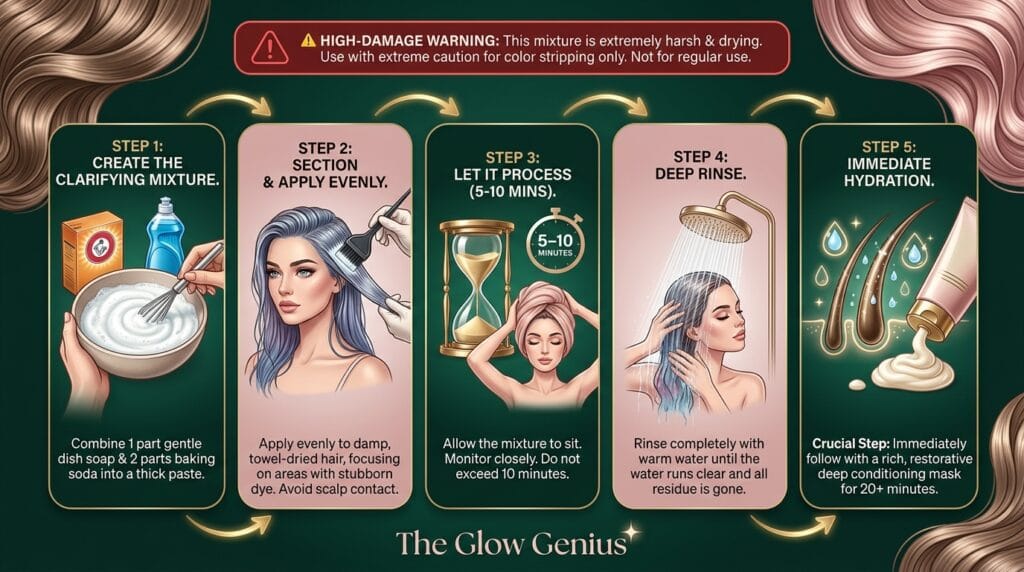
Combine a few tablespoons of baking soda with dish soap into a thick paste. Apply to damp hair and leave for 5 to 10 minutes before rinsing.
This is one of the strongest options for stubborn semi-permanent dye on lighter hair, but it strips natural oils aggressively, so use sparingly.
Method 7: Recovery Deep Condition (Essential)
No damage — this step repairs
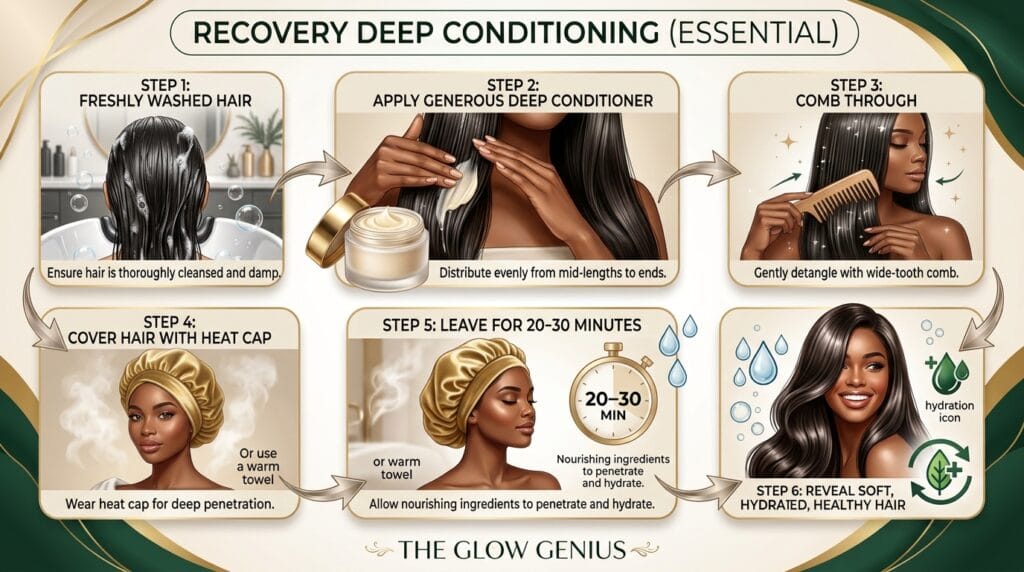
After any method above, apply a deep conditioner generously through mid-lengths and ends. Leave it on for 20 to 30 minutes, ideally under a heat cap.
This step is never optional. It is essential recovery that protects your hair shaft from the dryness and brittleness the other methods can cause.
Which Method Suits Your Hair Type
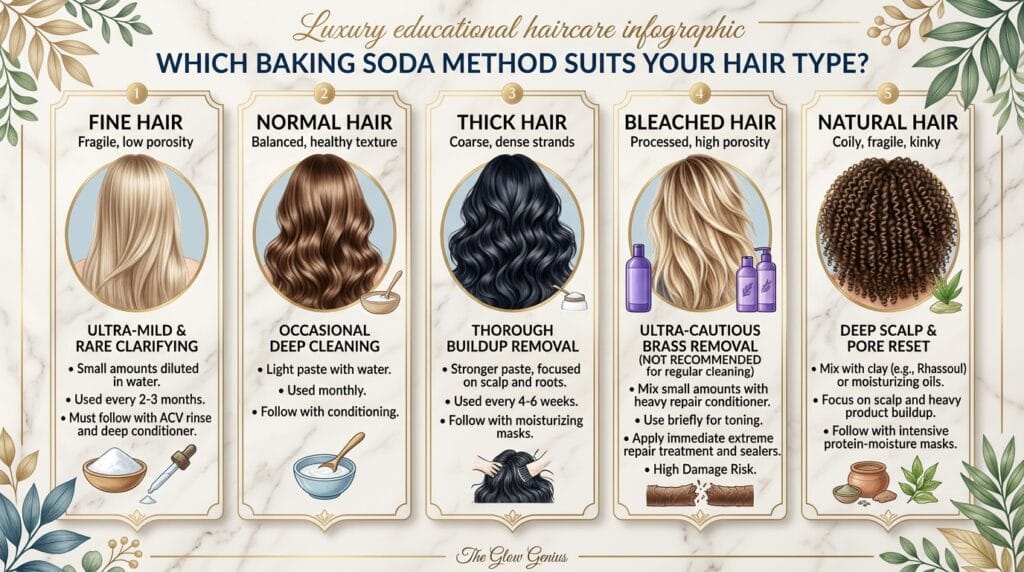
Matching the method to your hair type prevents unnecessary damage. Here is how to choose wisely.
- Fine or damaged hair: Use only Method 1, the gentle water paste, followed immediately by Method 7’s deep conditioner treatment.
- Normal hair: Methods 1 through 4 are all suitable, giving you flexibility based on how stubborn your hair dye is.
- Thick, resistant hair: Reach for Method 2 or Method 6, since these stronger combinations can better penetrate a dense hair shaft.
- Colour-treated or previously bleached hair: Stick to Method 1 only, proceed with extreme caution, and consider that a salon visit may be safer.
- Natural, unprocessed hair: Methods 1 through 3 offer a good balance between effectiveness and protecting hair porosity.
Matching your hair type to the right method is the smartest way to approach baking soda to remove hair dye without regretting it afterward.
How to Restore Hair After Colour Removal — Step by Step
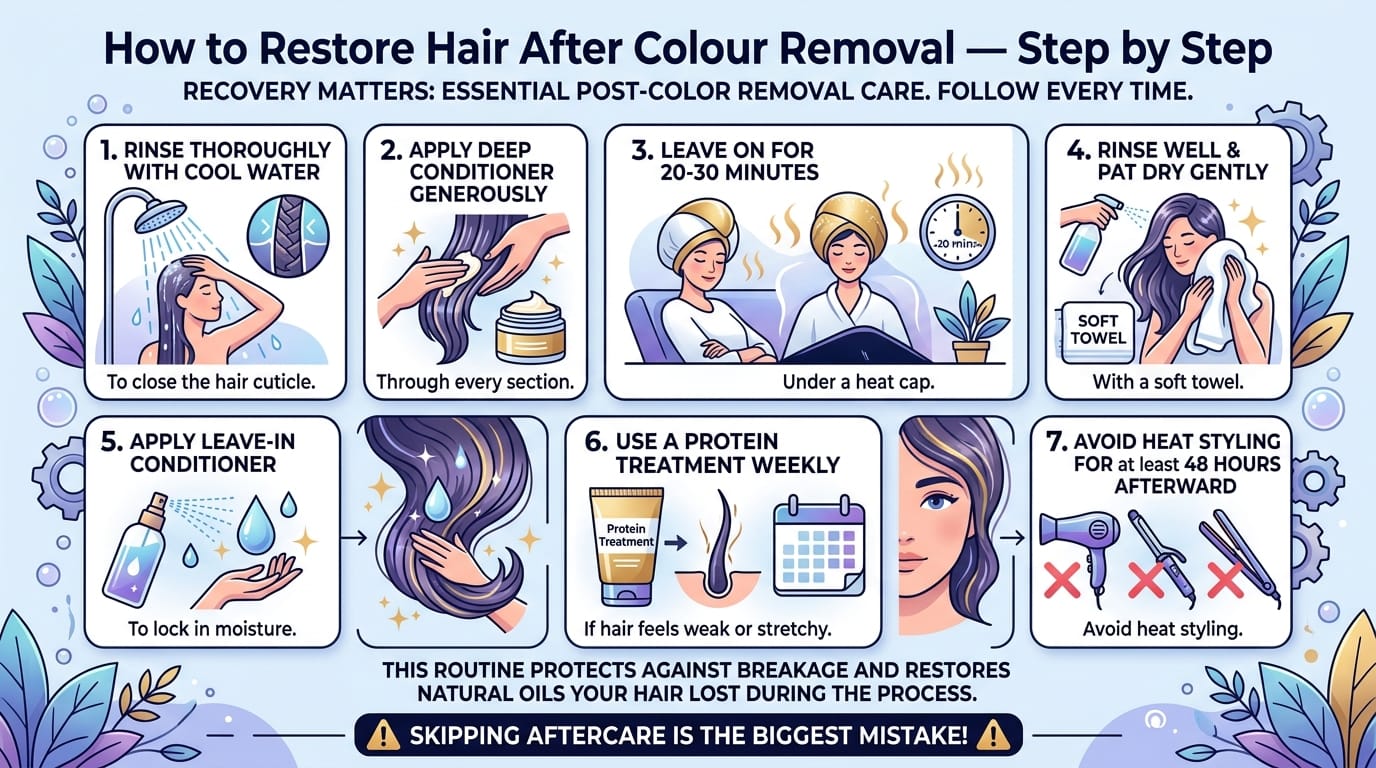
Recovery matters just as much as the removal process itself. Follow these steps every time.
- Rinse thoroughly with cool water to close the hair cuticle.
- Apply a deep conditioner generously through every section.
- Leave it on for 20 to 30 minutes under a heat cap.
- Rinse well, then pat hair dry gently with a soft towel.
- Apply a leave-in conditioner to lock in moisture.
- Use a protein treatment weekly if hair feels weak or stretchy.
- Avoid heat styling for at least 48 hours afterward.
This routine protects against breakage and restores natural oils your hair lost during the process.
Skipping aftercare is the biggest mistake people make with baking soda to remove hair dye, so treat this routine as mandatory, not optional.
When Baking Soda Simply Won’t Work
Honesty matters here, so let’s cover when this method will disappoint you.
Permanent dark dye, including black, dark brown, or deep red, has limited response. You may see only a subtle tone shift, not real removal, even with how to remove permanent hair dye attempts.
Already damaged or previously bleached hair will only get worse. The alkaline process compounds existing weakness in the hair shaft.
Very resistant hair with a thick cortex often resists pH-based lifting entirely, since the treatment cannot penetrate deep enough to reach the dye molecules.
Consider a salon visit if you need significant colour correction, your hair is already compromised, or three attempts still leave you unsatisfied.
Recognizing these limits early saves you from over-processing your hair while chasing results that baking soda to remove hair dye simply cannot deliver in every case.
Safer Alternatives to Consider Before Baking Soda
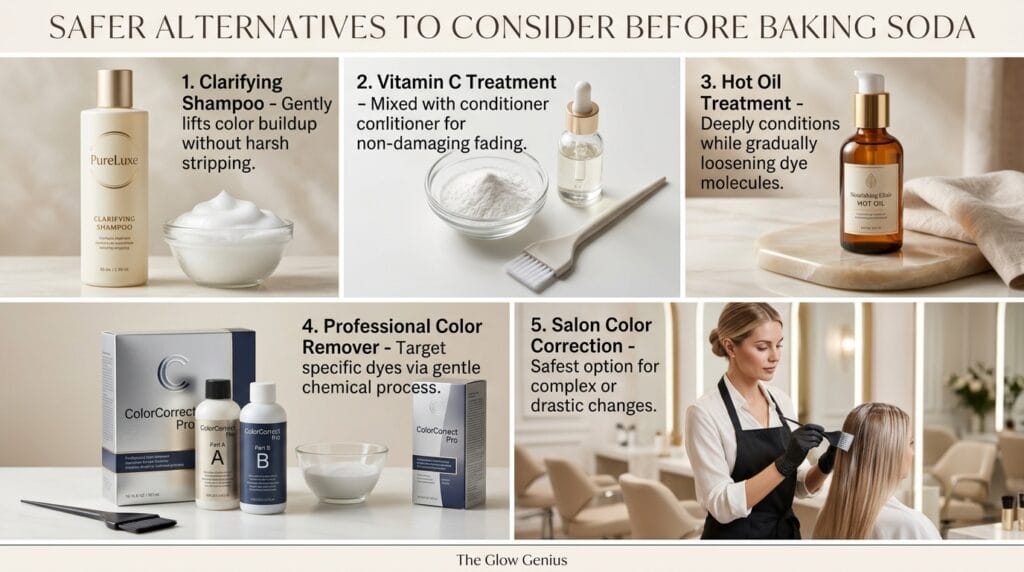
If you want hair dye removal without bleach but worry about damage, consider these gentler options first.
- Clarifying shampoo used 2 to 3 times weekly works slowly but causes the least damage overall.
- A vitamin C powder and shampoo paste is acidic, effective on semi-permanent dye, and generally gentle on the hair shaft.
- A hot oil treatment loosens dye molecules while conditioning at the same time, protecting natural oils.
- A professional colour remover product is designed specifically for this task and causes less damage than bleach.
- Salon colour correction remains the safest route for anyone needing significant, reliable results.
Any of these alternatives can work alongside or instead of baking soda to remove hair dye, depending on how cautious you want to be with your hair.
Baking Soda Methods at a Glance
Method | Strength | Best For | Damage Level | Deep Condition After? |
|---|---|---|---|---|
Water Paste | Gentle | Mild semi-permanent fading | Low | Yes |
Anti-Dandruff Shampoo | Moderate | Stronger semi-permanent fading | Moderate | Yes |
Clarifying Shampoo | Moderate | Gradual multi-wash fading | Moderate | Yes |
Apple Cider Vinegar Rinse | Gentle | Restoring pH after treatment | Low | Yes |
Lemon Juice | Strong | Lighter semi-permanent shades | Higher | Yes, essential |
Dish Soap | Strong | Stubborn colour, lighter hair | Higher | Yes, essential |
Recovery Deep Condition | Repair step | Every method above | None | This is the recovery |
This table sums up how each baking soda to remove hair dye method compares, so you can pick the right one for your situation.
You May Also Like
If you loved this guide, these articles were made for you:
- How to Repair Damaged Hair
- 10 Best Deep Conditioners for 4C Hair
- Best Oils for Low Porosity Hair
- Luxury Blonde Hairstyles
- Ayurvedic Hair Care
FAQs
The Honest Verdict on Baking Soda Hair Dye Removal
Baking soda genuinely works for fading semi-permanent dye, and thousands of people use it successfully at home every week. For permanent dye, keep your expectations realistic.
The science is simple. Raised pH opens the hair cuticle, letting dye molecules escape gradually rather than instantly.
Always follow every session with a deep conditioner. Limit yourself to two or three attempts before giving your hair a real break.
If your situation calls for significant colour correction, a trichologist or salon professional will get you there safely and predictably.
Used correctly, baking soda to remove hair dye is a solid, budget-friendly first step for anyone dealing with a colour mishap. Save this guide, share it with a friend mid dye-mishap, and come back whenever you need it.