
Honey Face Mask Benefits: 7 DIY Recipes for Glowing, Clear Skin
Honey sits in almost every kitchen cupboard, yet it is also one of the oldest known skincare ingredients on record. Cleopatra reportedly bathed in it, and modern dermatology is finally catching up to why.
A honey face mask is one of the simplest, cheapest DIY beauty rituals you can try tonight. It requires no special equipment, no long ingredient list, and no waiting for a delivery to arrive.
Here is the honest truth upfront. Raw honey and manuka honey genuinely support skin hydration, calm mild irritation, and help manage acne-prone skin. They do not erase deep wrinkles, remove scars overnight, or replace a full skincare routine.
This guide covers real recipes, skin type matches, and the safety notes that matter before you apply anything to your face. Here is everything you need to know.
How Honey Actually Benefits Your Skin — The Science
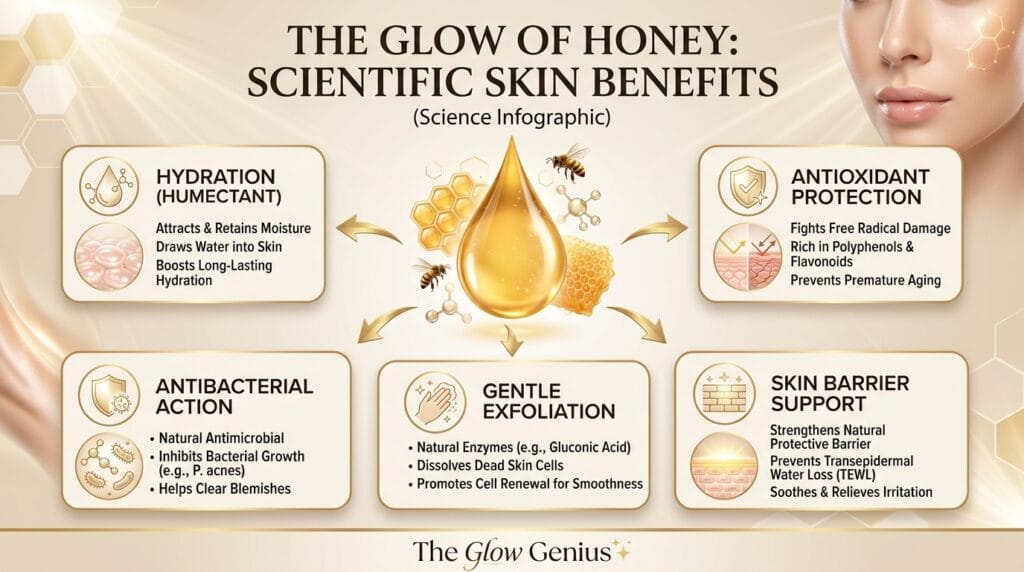
Honey works on skin through several distinct mechanisms, not just as a sticky, sweet-smelling spread.
- First, honey is naturally humectant, meaning it draws moisture from the air into the skin. This is why a honey face mask leaves skin feeling noticeably softer immediately after rinsing.
- Second, raw honey contains natural enzymes and mild acids that support gentle exfoliation, helping remove dead skin cells without harsh scrubbing.
- Third, honey, especially manuka honey, has documented antibacterial properties. These come from hydrogen peroxide produced naturally within the honey, along with its low pH balance and low moisture content, which together make it hostile to certain bacteria linked to acne breakouts.
- Fourth, honey contains antioxidants including flavonoids and phenolic compounds. These help neutralise free radicals from UV exposure and pollution, supporting the skin’s natural barrier over time.
This combination of humectant, antibacterial, and antioxidant properties explains why a honey face mask shows up so often in both grandmother-approved remedies and modern skincare research.
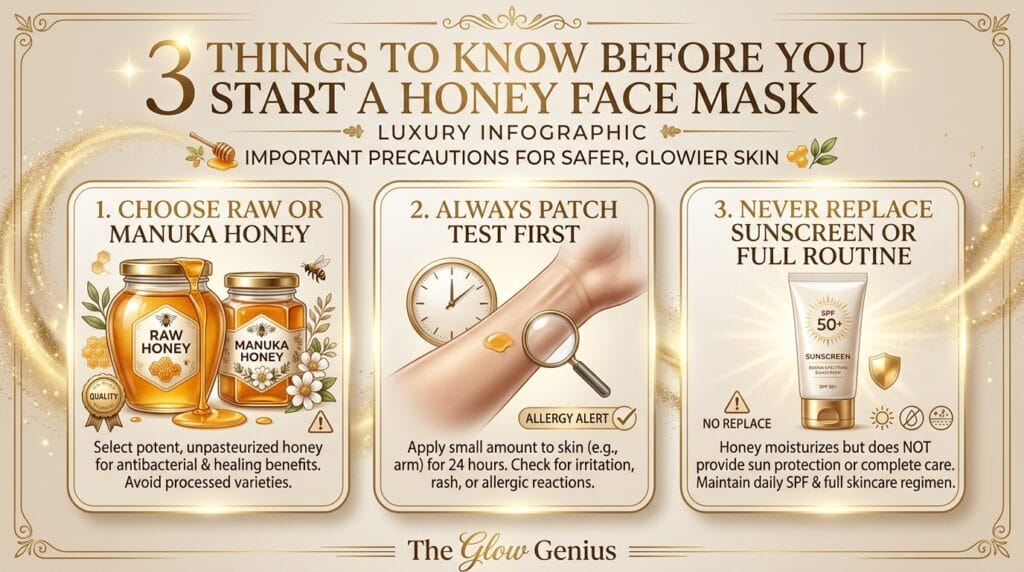
3 Things to Know Before You Start
Before you reach for the honey jar, keep these three points in mind.
- First, not all honey is equal. Raw honey and manuka honey retain more enzymes and antibacterial properties than heavily processed, pasteurised supermarket honey, which loses potency during heat processing.
- Second, a honey allergy is real and can be serious. Anyone with a known bee or pollen allergy should avoid honey face masks entirely, since topical reactions can range from mild redness to more serious swelling.
- Third, a honey face mask is a supplement to your routine, not a replacement for cleanser, SPF, or active ingredients like retinoids that address deeper concerns such as fine lines or stubborn hyperpigmentation.
Always do a patch test on your inner arm or behind your ear first. Wait 24 hours before applying any new mask to your full face.
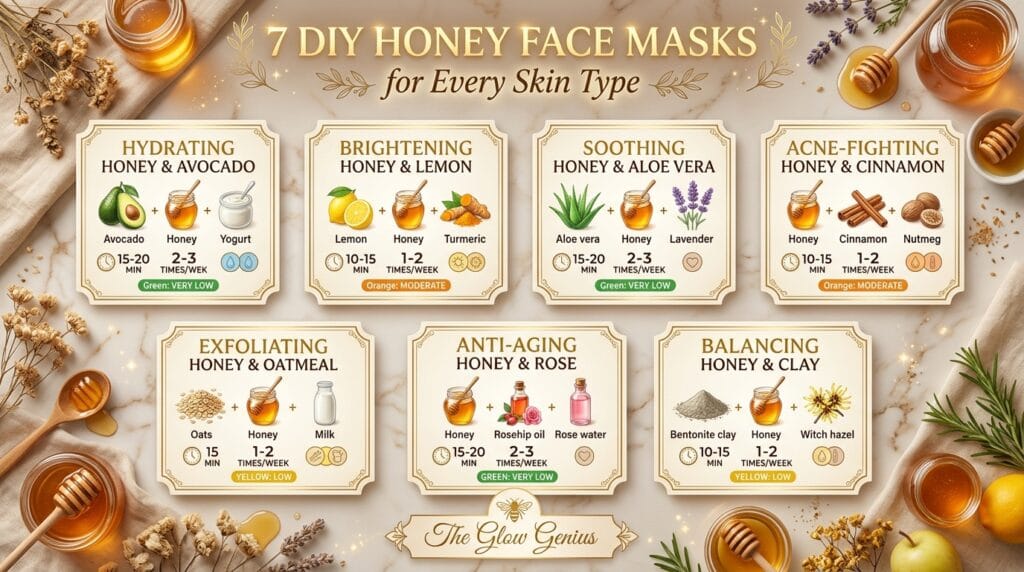
7 Honey Face Mask Recipes Ranked by Skin Concern
Below are seven tested honey face mask recipes, each targeting a different skin concern, with exact measurements and timing.
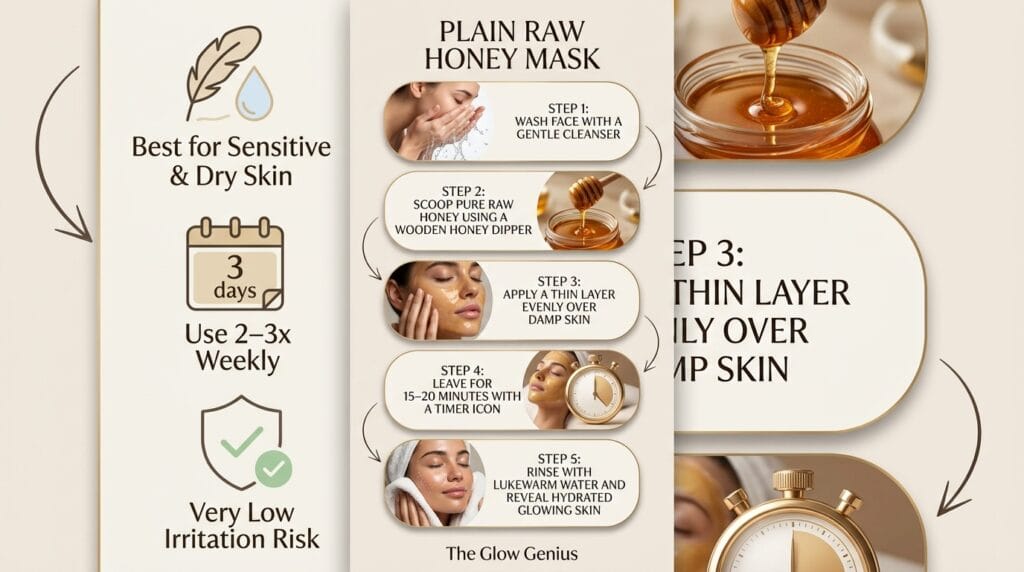
1. Plain Raw Honey Mask
Best for: sensitive, dry, or first-time users
Apply a thin, even layer of raw honey directly to clean, damp skin using clean fingertips. Leave on for 15 to 20 minutes, then rinse with lukewarm water.
This is the gentlest honey face mask option and the best starting point if your skin is easily irritated or you are trying honey on your face for the first time.
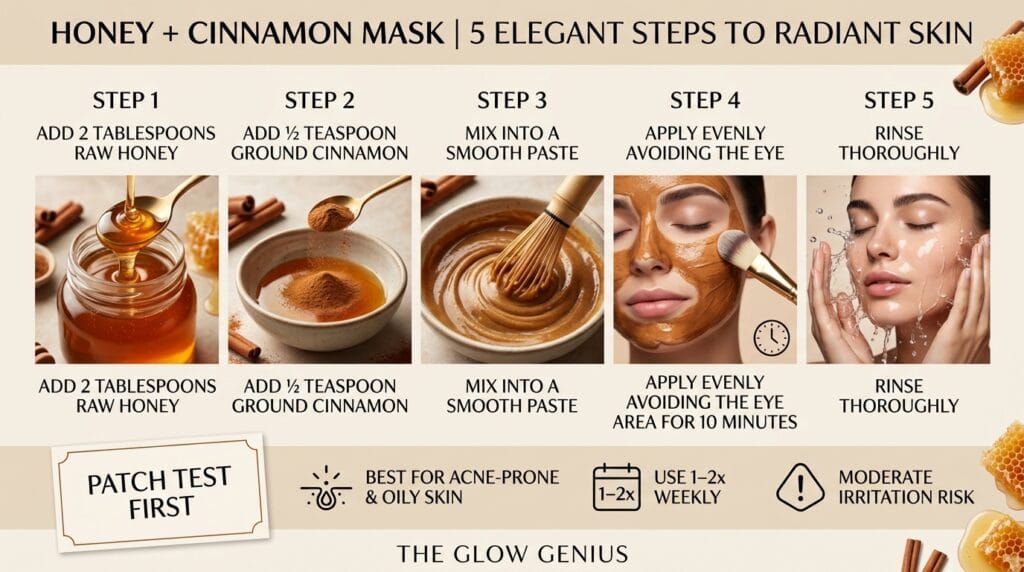
2. Honey and Cinnamon Mask
Best for: acne-prone, oily skin
Mix 2 tablespoons of raw honey with half a teaspoon of ground cinnamon. Apply to clean skin, avoiding the eye area, and leave on for 10 minutes only.
Cinnamon has its own antibacterial qualities, but it can irritate sensitive skin, so always patch test this specific combination separately before a full application.
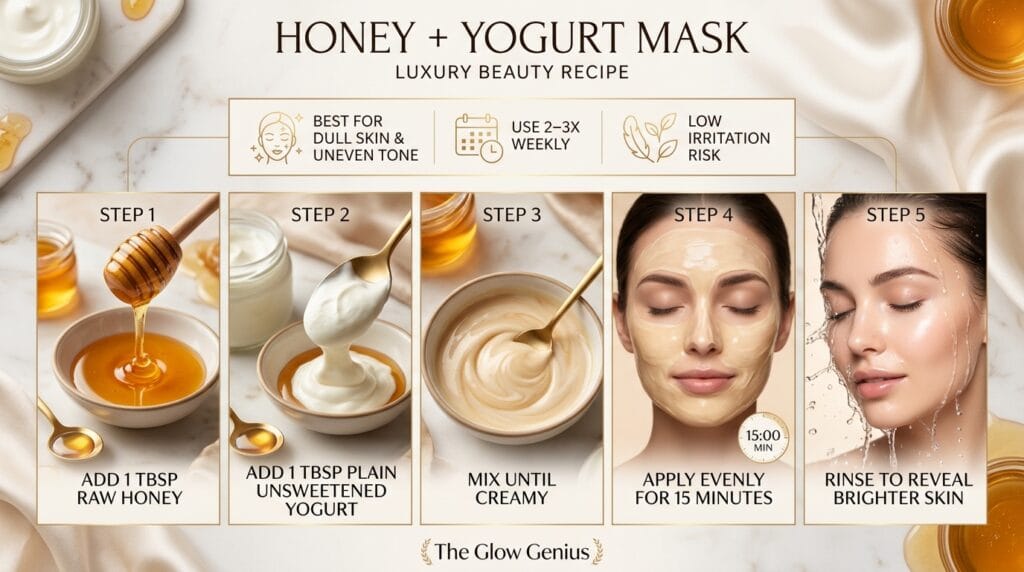
3. Honey and Yogurt Mask
Best for: dull, uneven skin tone
Combine 1 tablespoon of raw honey with 1 tablespoon of plain, unsweetened yogurt. Apply an even layer and leave on for 15 minutes before rinsing.
The mild lactic acid in yogurt supports gentle exfoliation, while honey locks in skin hydration, making this a well-rounded option for brightening dull skin.
4. Honey and Oatmeal Mask
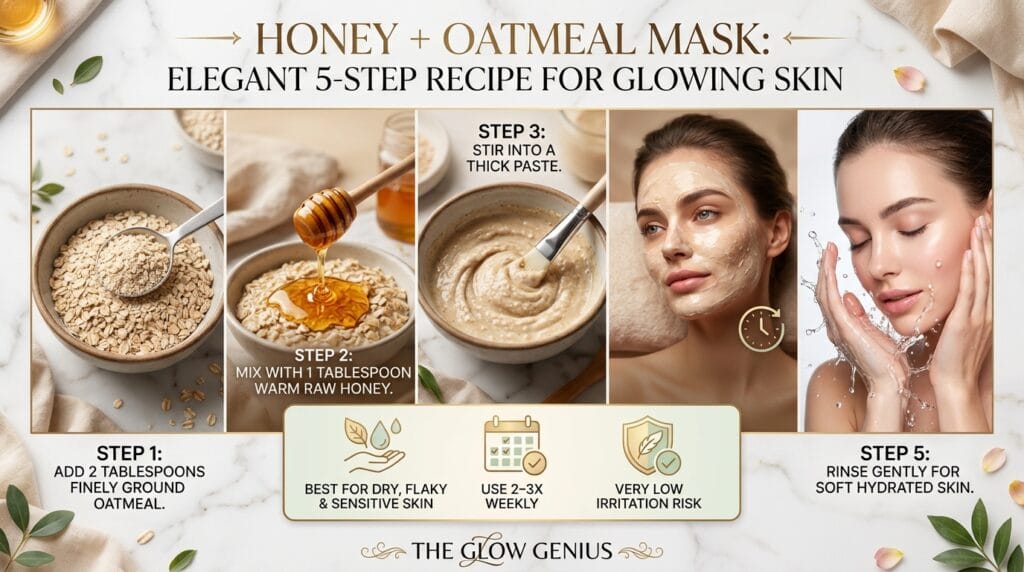
Best for: dry, flaky, or sensitive skin
Mix 2 tablespoons of finely ground oatmeal with 1 tablespoon of warm raw honey until it forms a thick paste. Apply and leave on for 15 to 20 minutes.
Oatmeal is known for calming irritation, and paired with honey’s humectant properties, this combination suits skin that reacts easily to new products.
5. Honey and Turmeric Mask
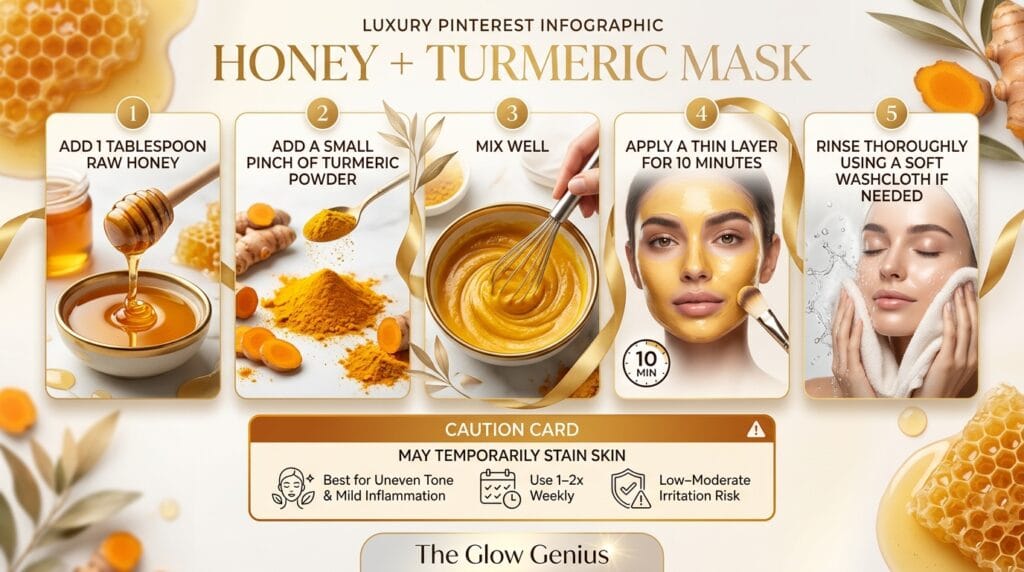
Best for: uneven tone, mild inflammation
Combine 1 tablespoon of raw honey with a small pinch of turmeric powder. Apply a thin layer, since turmeric can temporarily stain lighter skin tones, and leave on for 10 minutes.
Rinse thoroughly and follow with a washcloth if any yellow tint remains. This combination is best reserved for evening use to avoid any visible residue during the day.
6. Honey and Lemon Juice Mask
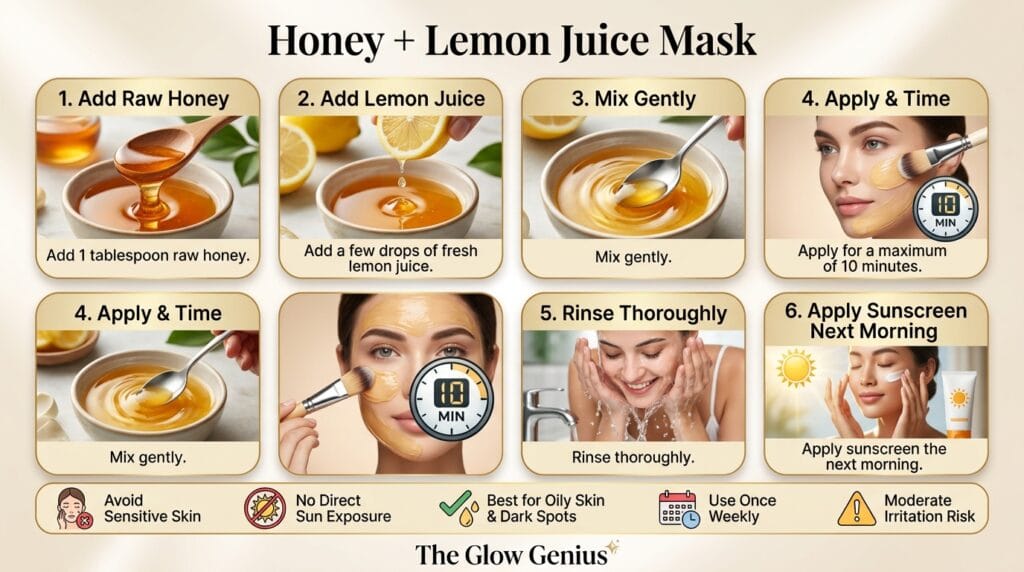
Best for: oily skin, occasional dark spots
Mix 1 tablespoon of raw honey with a few drops of fresh lemon juice. Apply for 10 minutes maximum, since lemon juice is acidic and can increase sun sensitivity.
Always apply SPF the next day if you use this mask, and avoid it entirely if your skin is already sensitive, broken, or freshly exfoliated.
7. Manuka Honey Overnight Mask
Best for: acne-prone or blemish-focused routines
Apply a thin layer of manuka honey, ideally rated UMF 10 or higher, to clean skin as the final step of your evening routine. Leave it on overnight and rinse in the morning.
This method allows the honey’s antibacterial properties more time to work on active blemishes, though it does leave your pillowcase slightly sticky, so an old pillowcase is worth using.

Which Honey Mask Suits Your Skin Type
Matching the recipe to your skin type prevents unnecessary irritation and gets you better results faster.
- Dry or dehydrated skin: Reach for the plain raw honey mask or the honey and oatmeal combination, both of which prioritise skin hydration over active exfoliation.
- Oily or acne-prone skin: The honey and cinnamon mask or the manuka honey overnight mask target excess oil and blemish-causing bacteria most directly.
- Sensitive skin: Stick to plain raw honey or the honey and oatmeal mask, and always patch test first, since sensitive skin reacts fastest to new ingredients.
- Dull or uneven-toned skin: The honey and yogurt mask or the honey and turmeric mask both support brighter, more even-looking skin over consistent use.
- Combination skin: Alternate between the plain raw honey mask and the honey and yogurt mask depending on which areas of your face need attention that week.

How to Apply a Honey Face Mask — Step by Step
Follow this routine every time, regardless of which recipe you choose.
- Cleanse your face thoroughly to remove makeup, sunscreen, and daily buildup.
- Pat your skin slightly damp, since honey spreads more evenly on damp skin.
- Apply your chosen honey face mask in a thin, even layer, avoiding the eye area.
- Leave on for the recommended time, using a timer to avoid over-application.
- Rinse thoroughly with lukewarm water, then pat dry gently with a soft towel.
- Apply your regular moisturiser to seal in the added skin hydration.
- Use SPF the next morning, especially after any mask containing lemon juice or turmeric.
This routine protects your skin barrier while letting the honey face mask do its work effectively.

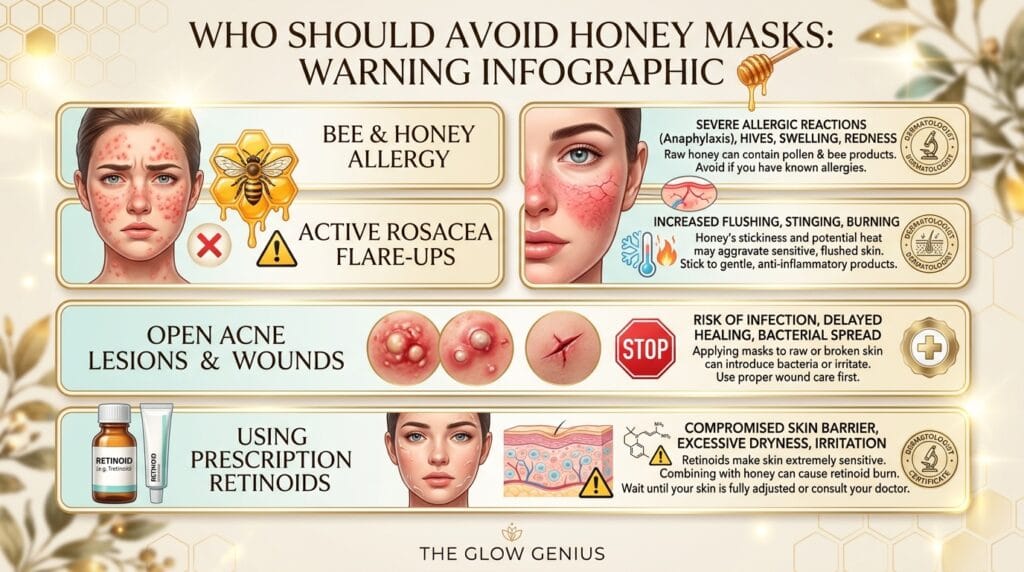
Who Should Avoid Honey Face Masks — Important Safety Information
Honesty matters here, so let’s cover who should skip this ritual entirely.
Anyone with a diagnosed honey allergy or bee product allergy should avoid honey face masks completely, since even topical exposure can trigger a reaction in sensitive individuals.
People with active rosacea flare-ups or open acne lesions should proceed cautiously, since added ingredients like cinnamon or lemon juice can worsen inflammation on already compromised skin.
Anyone using strong active ingredients, including retinoids or prescription acne treatments, should space out honey face masks from those products to avoid unnecessary irritation or reduced effectiveness of prescribed treatments.
If you notice redness, swelling, or itching after any application, rinse immediately and discontinue use. Consult a dermatologist if a reaction does not resolve within a day.
Honey Face Masks at a Glance
Recipe | Best For | Time On Skin | Frequency | Irritation Risk |
|---|---|---|---|---|
Plain Raw Honey | Sensitive, first-time use | 15-20 min | 2-3x weekly | Very low |
Honey + Cinnamon | Acne-prone, oily skin | 10 min | 1-2x weekly | Moderate |
Honey + Yogurt | Dull, uneven tone | 15 min | 2-3x weekly | Low |
Honey + Oatmeal | Dry, flaky, sensitive | 15-20 min | 2-3x weekly | Very low |
Honey + Turmeric | Uneven tone, inflammation | 10 min | 1-2x weekly | Low-moderate |
Honey + Lemon Juice | Oily skin, dark spots | 10 min max | 1x weekly | Moderate |
Manuka Honey Overnight | Acne-prone, blemishes | Overnight | 2-3x weekly | Low |
You May Also Like
If you loved this guide, these articles were made for you:
- DIY Fruit Face Masks
- 10 Homemade Face Mask for Acne That Clear Breakouts
- DIY Coffee Face Mask for Instant Glow
- DIY Peel-Off Masks for Blackheads & Glow
- Rose Water Benefits for Skin and Hair
- How to Get Glass Skin with 10 Proven Ways
- 9 Islamic & Ayurvedic Skincare Hacks for Natural Glow
- 15 Daily Habits for Clear Skin
FAQs
The Honest Verdict on Honey Face Masks
Honey, especially raw honey and manuka honey, genuinely supports skin hydration, mild acne management, and a softer overall complexion. It works best as a consistent weekly ritual rather than a one-time miracle fix.
The science behind it is simple. Honey’s natural humectant, antibacterial, and antioxidant properties work together, gently and gradually, rather than dramatically overnight.
Always patch test first, especially with cinnamon, turmeric, or lemon combinations. Skip it entirely if you have a known honey allergy.
If you are managing persistent acne, deep hyperpigmentation, or another ongoing skin concern, a dermatologist remains your safest and most reliable resource. Save this guide, share it with a friend who loves DIY skincare, and come back whenever you need a recipe.