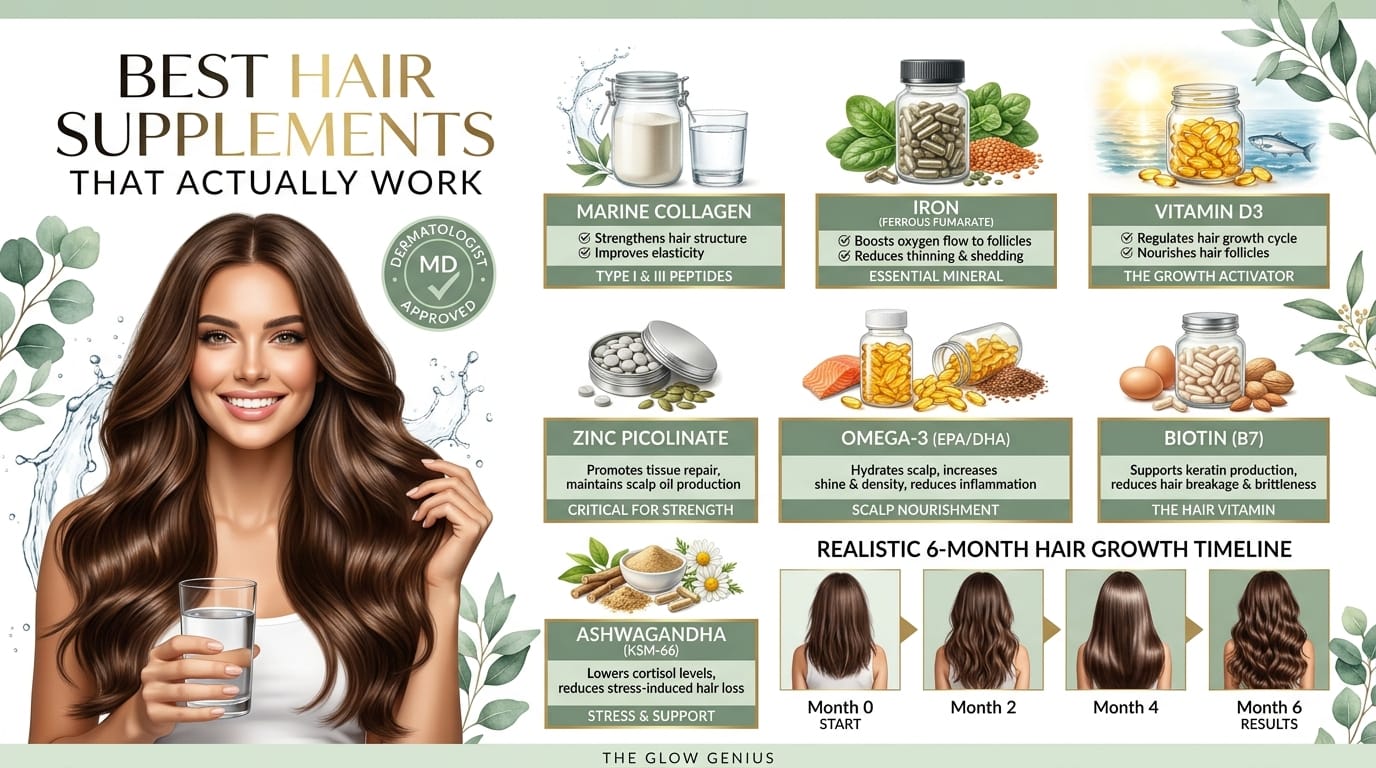
Best Hair Supplements for Thinning Hair: What Dermatologists Actually Recommend
All recommendations on The Glow Genius are independently researched by our editors to help you make the best beauty decisions. This best hair supplements for thinning hair article is for informational purposes and does not replace advice from a qualified dermatologist or trichologist.
Watching your hair thin is emotionally difficult, and the supplement market does not make it easier. Shelves overflow with products promising dramatic regrowth, and the claims often outpace the actual evidence behind them.
Here is the most important fact before you spend another pound or dollar. The best hair supplements for thinning hair work significantly better when the thinning stems from a nutritional deficiency — not genetic hair loss. A recent U.S. News Health survey of 129 dermatologists for 2026-2027 confirms this distinction clearly. Supplements are not a universal fix.
Understanding your specific cause matters more than any single product recommendation. This guide walks through the real research, the honest limitations, and exactly which hair supplements for thinning hair genuinely have evidence behind them. Here is what the research actually shows.
What Actually Causes Hair Thinning — The Real Reasons
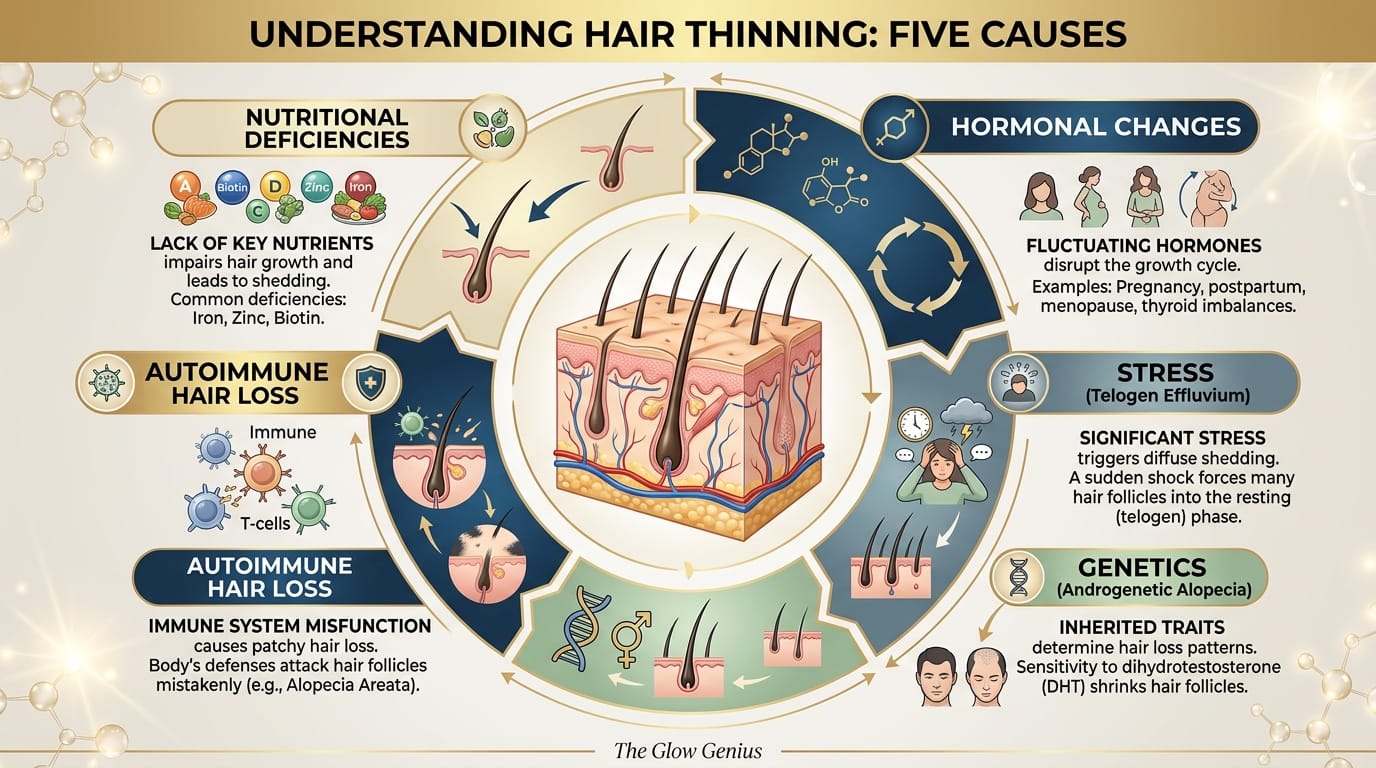
Hair thinning has several distinct causes, and identifying yours changes everything about which approach will actually help. Five main factors drive most cases.
Nutritional deficiencies — particularly iron, vitamin D, and zinc — represent one of the most common and most fixable causes. Hormonal changes also play a significant role, including elevated DHT (dihydrotestosterone), post-pregnancy hormone shifts, and menopause-related changes to the hair growth cycle.
Stress causes a specific condition called telogen effluvium, where elevated cortisol pushes hair follicles into a resting phase prematurely, leading to noticeable shedding. Genetics cause androgenetic alopecia, the most common form of pattern hair loss, which responds differently to treatment than deficiency-related thinning. Finally, autoimmune conditions like alopecia areata cause hair loss through the immune system attacking hair follicles directly.
Because each cause responds differently to supplementation, identifying yours before spending money on products matters enormously. A dermatologist or trichologist can help pinpoint the likely cause through examination and appropriate blood test screening.
Which Nutrient Deficiencies Affect Hair Most
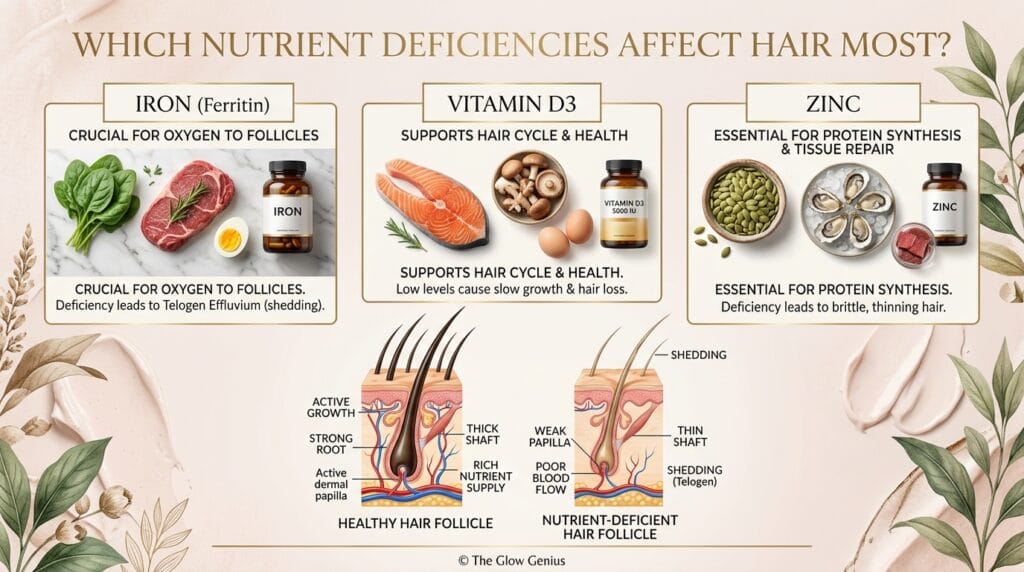
Three specific nutrient deficiencies show the strongest research connection to hair thinning in women. Understanding these helps you know exactly what to ask your doctor to test.
- Iron deficiency, measured through ferritin levels, is the leading cause of hair loss in women — and one of the most frequently missed. Because standard blood tests sometimes check haemoglobin without checking ferritin specifically, this deficiency often goes undiagnosed for months or years.
- Vitamin D deficiency links directly to hair follicle dysfunction. Getting a blood test before supplementing matters here too, since vitamin D toxicity is possible with excessive, unmonitored supplementation. Zinc deficiency affects the protein synthesis necessary for hair follicle health and structural keratin production.
- Most importantly, supplements only help when an actual deficiency exists. Taking iron, vitamin D, or zinc supplements without confirming deficiency through blood test results provides no meaningful benefit and, in the case of iron, can cause harm.
Ingredients With the Strongest Evidence for Hair Growth
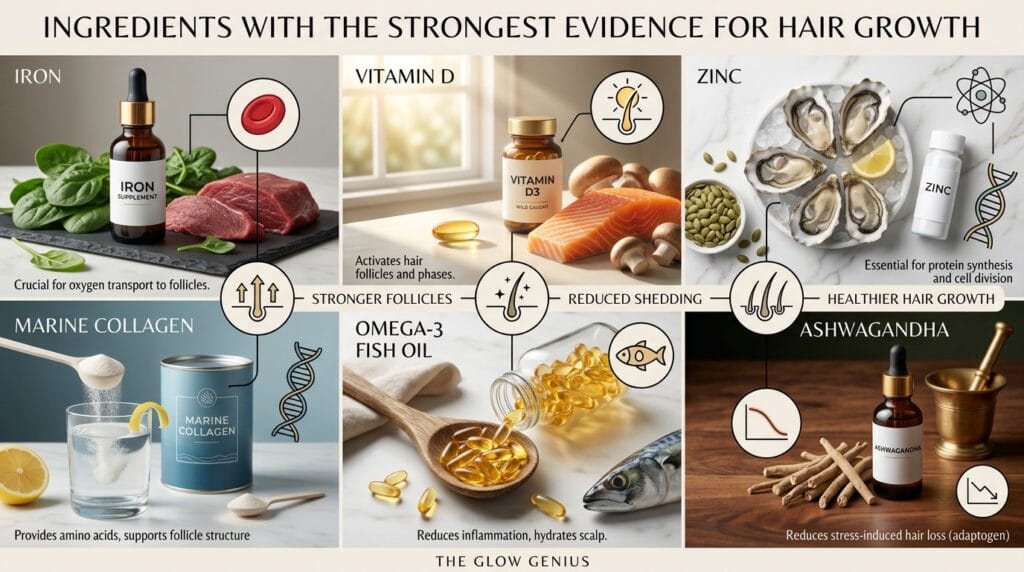
Six ingredients carry the most credible research behind them for supporting hair growth in appropriate situations. Understanding what each does — and its limitations — helps you make an informed choice.
- 1. Iron, only if a blood test confirms deficiency, directly addresses one of the most common missed causes of hair thinning in women. Never supplement iron without testing, since excess iron is toxic.
- 2. Vitamin D, similarly, only helps if a blood test confirms deficiency. It supports the hair follicle function necessary for a healthy hair growth cycle.
- 3. Zinc supports hair follicle health and the protein synthesis your body needs to build keratin, the structural protein that makes up hair strands.
- 4. Collagen, particularly marine collagen, provides amino acids — specifically proline and glycine — that support keratin production. Clinical data shows improvements in hair thickness within three to six months of consistent use.
- 5. Omega-3 fatty acids reduce scalp inflammation and support overall hair follicle health, creating a better environment for growth.
- 6. Ashwagandha, an adaptogen, reduces cortisol, the stress hormone directly linked to telogen effluvium. For stress-related shedding specifically, this makes ashwagandha particularly relevant.
The Honest Truth About Biotin — Most People Use It Wrong
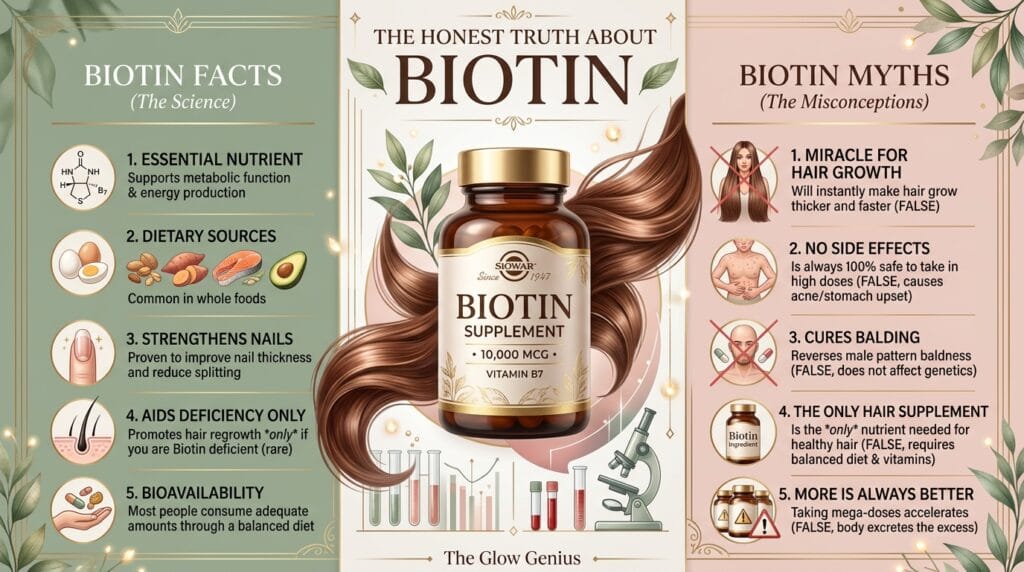
Biotin (vitamin B7) is the most heavily marketed hair supplement on the market. However, the evidence tells a more limited story than the marketing suggests.
Biotin is genuinely the most studied vitamin for hair, but research consistently shows it only helps when you are actually deficient. Because most people in developed countries are not biotin deficient, taking extra biotin often provides little to no additional benefit for hair thinning.
There is also an important safety consideration. High-dose biotin interferes with thyroid and cardiac blood test results, potentially causing inaccurate lab readings. If you take biotin supplements, always tell your doctor before any blood test, since this interference can lead to misdiagnosis in some cases.
Biotin supplements generally do not harm non-deficient hair. However, they also may not provide the significant improvement that marketing claims suggest. If you suspect biotin deficiency specifically, a blood test can confirm this before you invest in ongoing supplementation.
Iron and Hair Loss — The Connection Most Women Miss
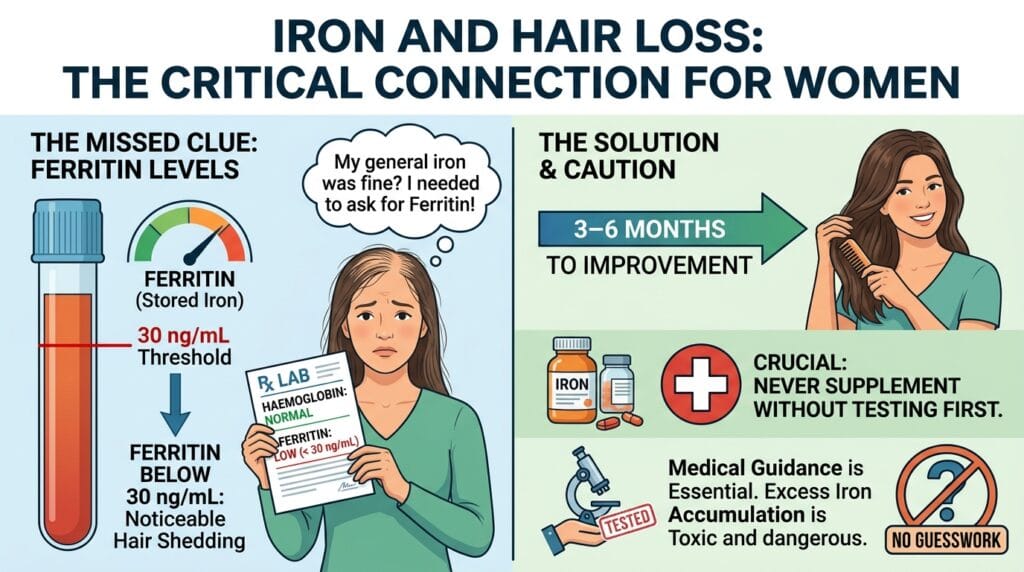
Iron deficiency deserves its own dedicated section because it remains one of the most significant and most frequently missed causes of hair loss in women. Research consistently links ferritin levels below 30 ng/mL to noticeable hair shedding.
Ferritin measures your body’s stored iron, and it differs from a standard haemoglobin test. Many women receive a haemoglobin check that appears normal while their ferritin levels sit well below the threshold linked to hair thinning. Therefore, specifically requesting a ferritin test — not just a general iron panel — matters enormously.
If your blood test confirms deficiency, iron supplementation can significantly improve shedding within three to six months. However, never begin iron supplementation without testing first. Excess iron accumulates in the body and becomes toxic, causing serious health complications over time. This is one supplement decision that genuinely requires medical guidance rather than guesswork.
What to Look for in a Hair Growth Supplement Formula
Quality hair growth supplements share certain characteristics that distinguish them from ineffective products making empty promises.
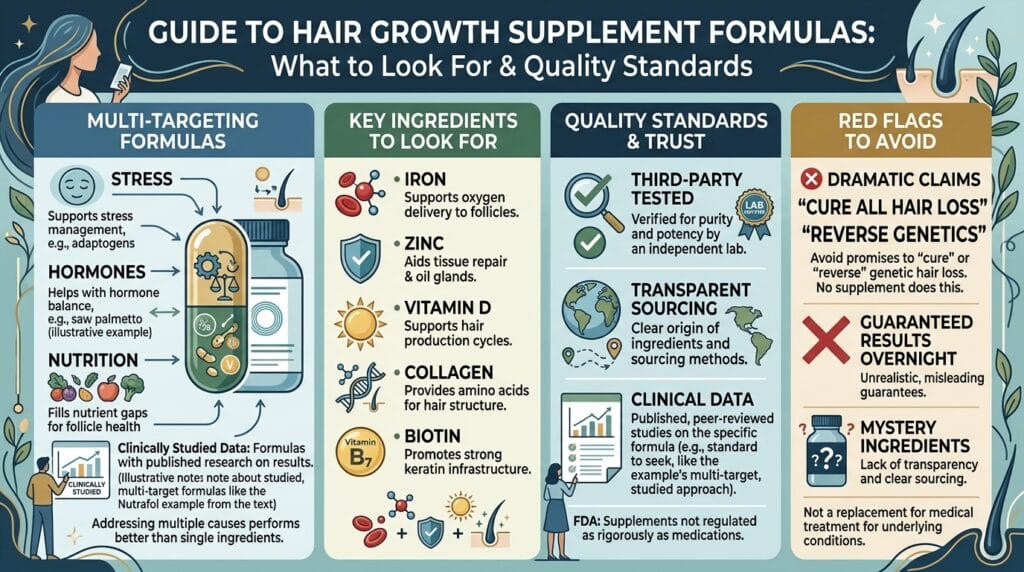
Multi-ingredient formulas that address several potential causes simultaneously tend to perform better than single-ingredient products. Look for combinations including iron, zinc, vitamin D, collagen, and biotin together, since hair thinning often stems from more than one contributing factor at once.
Nutrafol is one example frequently identified by experts, including coverage from Fortune and the National Council on Aging, as a strong performer for overall approach. Its multi-target formula addresses stress, hormones, and nutrition simultaneously, and it carries clinically studied, published data supporting its use. This example illustrates what a well-researched, multi-target formula can look like — it is not the only option, but it demonstrates the standard worth seeking.
Because the FDA does not regulate supplements the same rigorous way it regulates medications, look specifically for third-party tested products with transparent ingredient sourcing. Furthermore, avoid any supplement making dramatic “cure” or “reverse” claims, since no supplement legitimately reverses genetic hair loss or replaces medical treatment for significant conditions.
Realistic Results and the Honest Timeline You Need to Know
Understanding the honest timeline for hair supplements for thinning hair prevents the frustration and early abandonment that comes from unrealistic expectations.
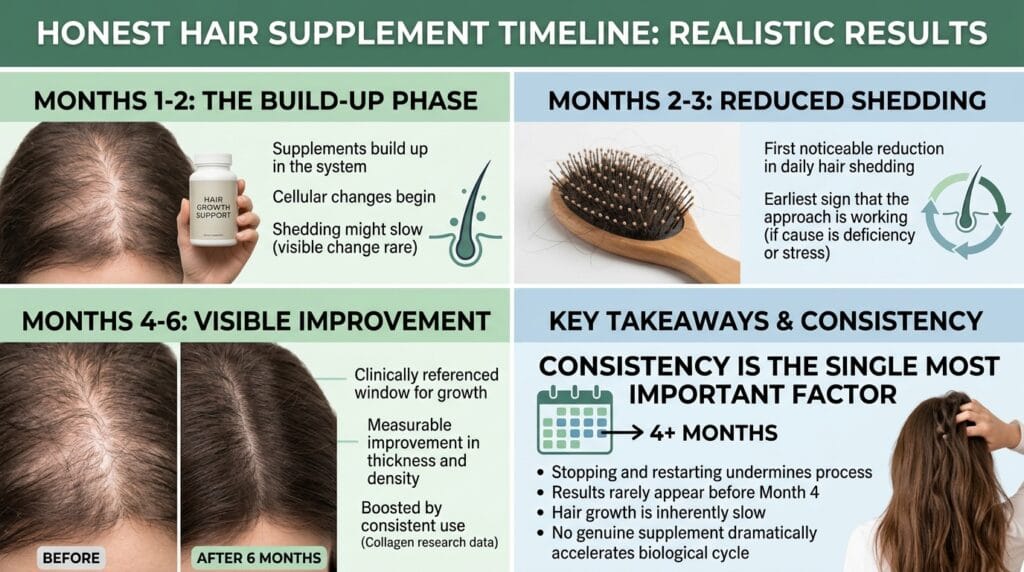
Months one and two involve supplements building up in your system. Because hair growth cycle changes happen gradually at the cellular level, visible improvement rarely appears this early, though some people notice their shedding beginning to slow.
Months two and three typically bring the first noticeable reduction in daily hair shedding. This is often the earliest visible sign that the supplement approach — assuming the underlying cause was deficiency or stress-related — is working. Months four through six deliver the visible improvement in thickness and growth that most clinical data references, including the collagen research showing measurable thickness improvement within this window.
Consistency is the single most important factor across this entire timeline. Stopping and restarting supplementation, or expecting results before month four, undermines the process. Hair growth is inherently slow, and no genuine supplement accelerates the biological hair growth cycle dramatically.
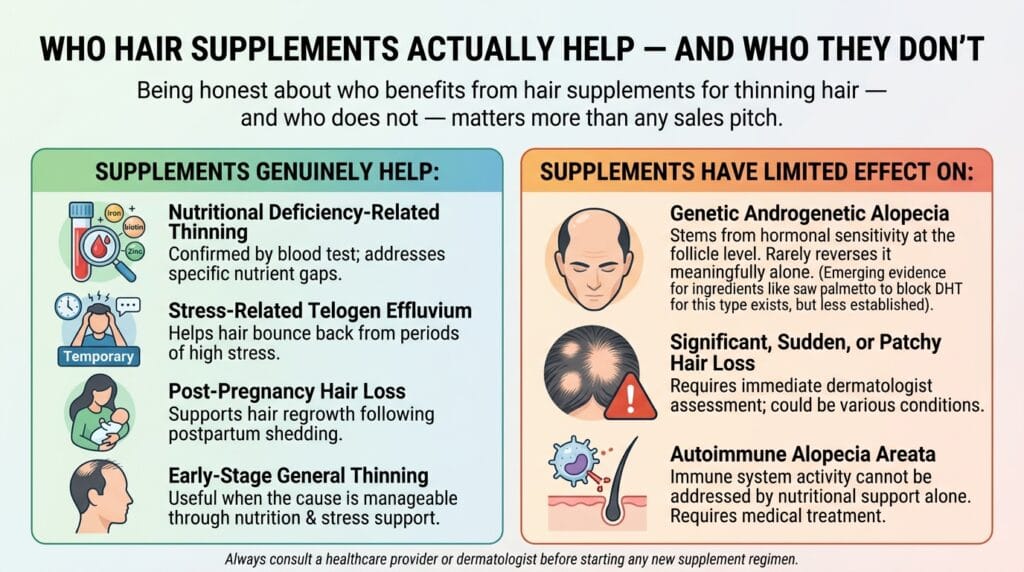
Who Hair Supplements Actually Help — And Who They Don’t
Being honest about who benefits from hair supplements for thinning hair — and who does not — matters more than any sales pitch.
Supplements genuinely help nutritional deficiency-related thinning, once a blood test confirms the specific deficiency. They also help stress-related telogen effluvium, post-pregnancy hair loss, and early-stage general thinning where the cause is manageable through nutrition and stress support.
However, supplements have limited effect on genetic androgenetic alopecia. Because this form of hair loss stems from hormonal sensitivity at the follicle level, supplements alone rarely reverse it meaningfully — though ingredients like saw palmetto, which may block DHT, show emerging but less established evidence for this specific type.
Significant, sudden, or patchy hair loss requires a dermatologist assessment rather than a supplement purchase. Similarly, autoimmune alopecia areata requires medical treatment, not supplementation, since the underlying mechanism involves immune system activity that nutritional support cannot address alone.
Hair Supplement Ingredients at a Glance
Ingredient | Evidence Level | Best For | Blood Test Needed | Caution |
|---|---|---|---|---|
Biotin | Moderate (only if deficient) | Confirmed biotin deficiency | Optional but recommended | Interferes with thyroid/cardiac lab tests |
Iron | Strong (if deficient) | Confirmed iron/ferritin deficiency | Yes — ferritin specifically | Excess iron is toxic — test first |
Vitamin D | Strong (if deficient) | Confirmed vitamin D deficiency | Yes | Toxicity possible with excess |
Zinc | Moderate | Follicle health, protein synthesis | Recommended | Generally low risk at normal doses |
Collagen | Moderate-strong | Keratin support, hair thickness | Not required | Generally well-tolerated |
Omega-3 | Moderate | Scalp inflammation reduction | Not required | Generally well-tolerated |
Ashwagandha | Emerging-moderate | Stress-related telogen effluvium | Not required | Consult doctor if on medication |
Saw palmetto | Emerging | Androgenetic alopecia (DHT-related) | Not required | Less established than prescription options |
You May Also Like
If you loved this guide, these articles were made for you:
- Rosemary Oil for Hair Growth vs Minoxidil
- 10 Best Deep Conditioners for 4C Hair
- Best Vitamins for Acne
- How to Repair Damaged Hair
- Habits of Women Who Age Slowly
FAQs
Your Hair Needs the Right Cause Identified First
Before buying any supplement, get a blood test. Iron and vitamin D are the most commonly missed deficiencies behind hair thinning in women, and both require confirmed testing before supplementation makes any real difference.
The best hair supplements for thinning hair help most when your thinning is deficiency-related or connected to stress-driven telogen effluvium. They cannot reverse genetic androgenetic alopecia, and they are not a substitute for medical care if your shedding is sudden, patchy, or significant.
See a dermatologist or trichologist if you are uncertain about your specific cause. Getting this right, before spending money on supplements, saves both time and disappointment.
Save this guide to your Pinterest boards and share it with a friend who feels overwhelmed by the hair supplement aisle. She deserves the honest answer, not another marketing claim. 🌿