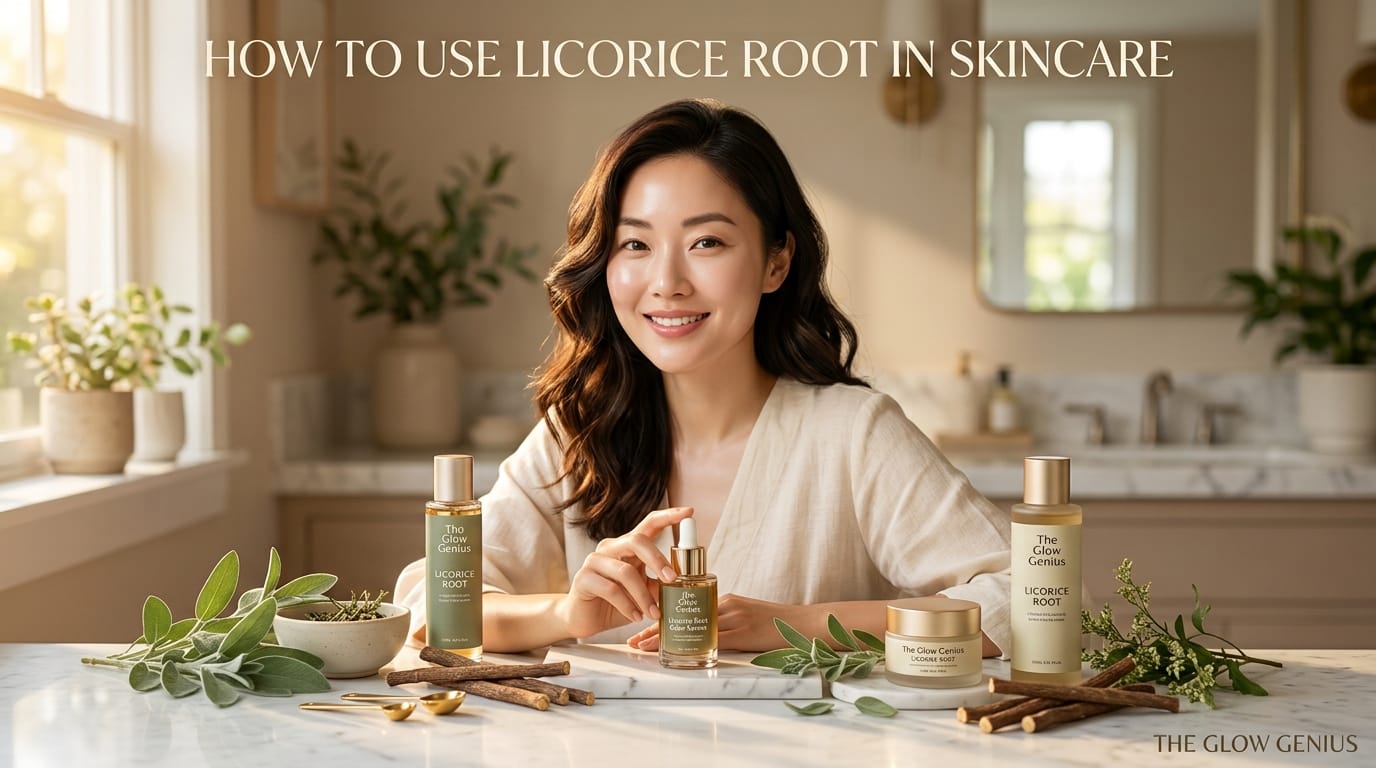
How to Use Licorice Root in Skincare: The Complete Guide to Brighter, Calmer, Even-Toned Skin
All recommendations on The Glow Genius are independently researched by our editors to help you make the best beauty decisions. This article is for informational purposes and does not replace advice from a qualified dermatologist.
You flip over a serum or toner and spot “licorice root extract” or “Glycyrrhiza glabra” on the ingredient list. It sounds exactly like the candy — and it is. Dr. Noëlle Sherber, a board-certified dermatologist, confirms that both licorice candy and this skincare ingredient come from the same Glycyrrhiza glabra root.
However, what this root does for skin has nothing to do with flavour. Licorice root has been used for over 2,000 years across Traditional Chinese Medicine, Ayurveda, and ancient Greek and Roman cosmetics. Modern dermatology has now confirmed exactly why it worked all along.
Understanding how to use licorice root correctly turns an old traditional remedy into a genuinely effective modern skincare tool. Here is the complete guide.
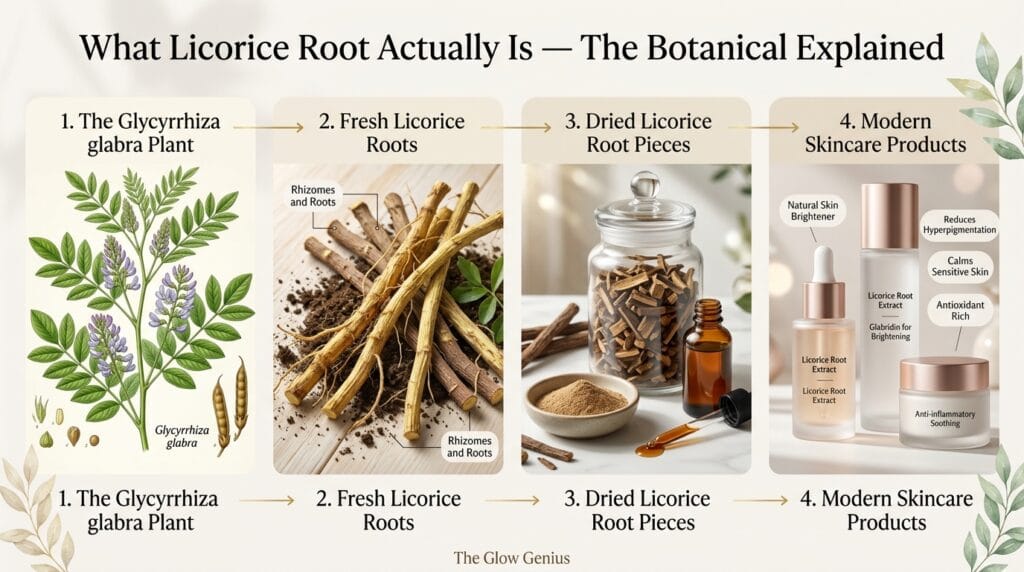
What Licorice Root Actually Is — The Botanical Explained
Licorice root comes from the Glycyrrhiza glabra plant, native to the Mediterranean, parts of Asia, and Europe. For over 2,000 years, practitioners of Traditional Chinese Medicine and Ayurveda have used this root for its calming and skin-supporting properties. Ancient Greek and Roman cosmetic traditions also incorporated it long before modern science explained the mechanism.
The Korean beauty movement brought licorice root extract into mainstream Western skincare over the past decade. Because Korean formulations prioritise gentle, effective brightening ingredients, licorice root for skin fit perfectly into that philosophy. Manufacturers extract the active compounds from the root through processing methods that concentrate the beneficial molecules into a usable skincare form.
When reading an ingredient label, look for “Glycyrrhiza glabra root extract” positioned near the top of the list. Its placement indicates a meaningful concentration rather than a trace addition. Furthermore, this precise naming convention helps you identify licorice root extract even when brands use creative marketing names elsewhere on the packaging.
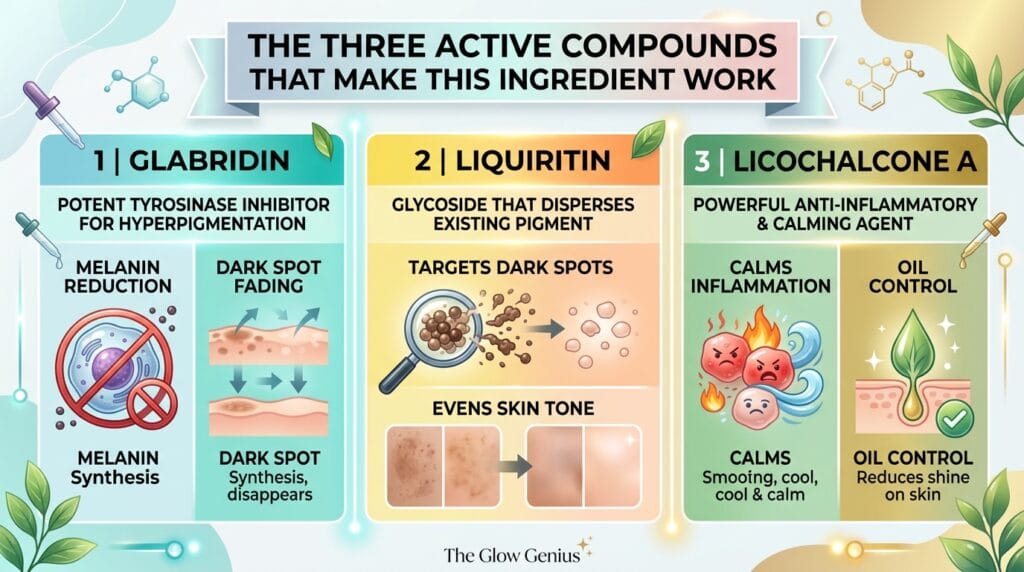
The Three Active Compounds That Make This Ingredient Work
Licorice root contains several active compounds, each contributing a specific function. Understanding these explains exactly how licorice root benefits translate into visible skin changes.
- Glabridin is the most studied compound in licorice root extract. It inhibits tyrosinase, the enzyme responsible for producing melanin. Dr. Debra Jaliman, a dermatologist at the Icahn School of Medicine at Mount Sinai, confirms that glabridin in licorice extract inhibits tyrosinase and helps with hyperpigmentation, melasma, and inflammation. Because less tyrosinase activity means less new melanin production, glabridin skin benefits centre on preventing further dark spots from forming.
- Liquiritin works differently. Rather than preventing new melanin, it disperses and removes existing melanin already sitting in the skin. This dual action — glabridin preventing new pigment and liquiritin removing existing pigment — makes licorice root unusually comprehensive for dark spots.
- Licochalcone A carries anti-inflammatory and antibacterial properties while also regulating sebum production. This makes it relevant for acne and oily skin concerns beyond just brightening. Finally, glycyrrhizin provides soothing, calming, anti-inflammatory action that supports sensitive skin and irritated conditions like rosacea and eczema.
Which Skin Concerns This Botanical Ingredient Actually Targets
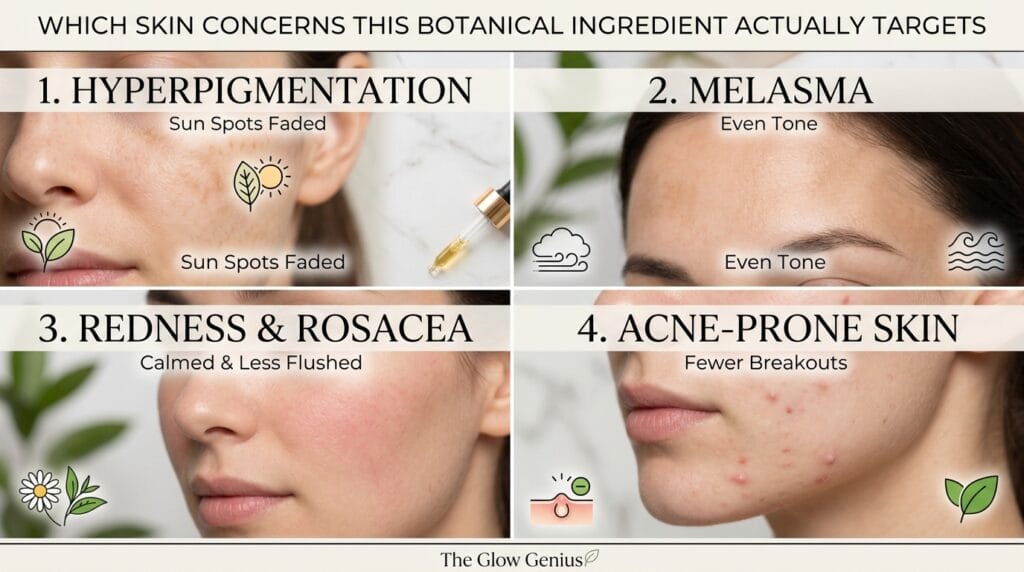
- Licorice root for hyperpigmentation and dark spots is the ingredient’s most researched application. Glabridin inhibits tyrosinase to prevent new melanin, while liquiritin disperses existing pigment already visible on the skin’s surface. Together, these compounds address both the cause and the visible result of uneven pigmentation.
- Melasma, a stubborn form of hyperpigmentation often triggered by hormones and sun exposure, also responds to licorice root. Dr. Jaliman has confirmed its effectiveness for this specific condition, though results require patience and consistency.
- Rosacea and general redness benefit from the anti-inflammatory action across all the active compounds, particularly glycyrrhizin. Because rosacea involves chronic inflammation, an ingredient that calms this response addresses the visible redness directly rather than just masking it.
- Acne and oily skin respond to licochalcone A specifically, which fights acne-causing bacteria while regulating excess sebum production. Finally, eczema and sensitive skin benefit from glycyrrhizin‘s soothing properties, making licorice root for sensitive skin a genuinely appropriate recommendation rather than a risky one.
Incorporating This Ingredient Into Your Daily Routine
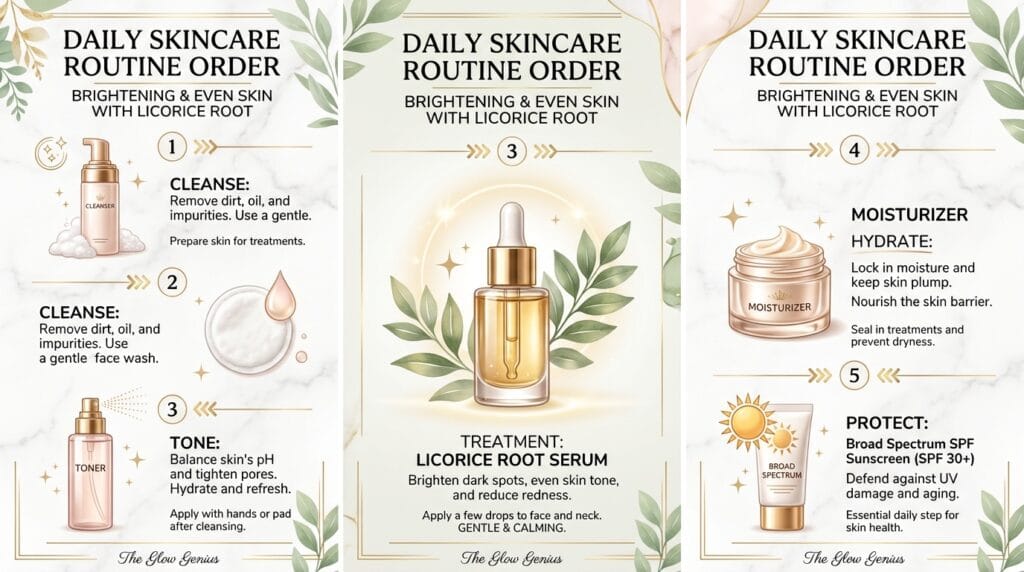
Learning how to use licorice root correctly maximises its effectiveness. These five steps apply to most formulations you will find.
- Find a licorice root serum or toner. A licorice root serum carries higher concentrations, making it better suited for targeting specific dark spots. A toner version suits daily maintenance and works well for sensitive skin wanting a gentler introduction.
- Apply after cleansing and toning. Serums go directly onto clean skin before moisturiser. If using a licorice root toner, apply it immediately after cleansing as your second step, before any serum.
- Follow with SPF every single morning. Licorice root fades dark spots, but UV exposure continuously creates new melanin. SPF protects the progress this ingredient is actively building, making daily sun protection non-negotiable alongside any brightening routine.
- Use once or twice daily depending on your formula. Morning use adds antioxidant protection alongside your SPF. Evening use allows the calming compounds to work during the skin’s natural overnight repair process. Both timing options are valid depending on your routine.
- Be patient for four to eight weeks minimum. Visible brightening and dark spot fading typically take this long to become noticeable. Softer, calmer skin often appears within one to two weeks, but the more significant pigmentation changes require sustained, consistent use.
Morning vs Evening — When to Apply Licorice Root for Best Results
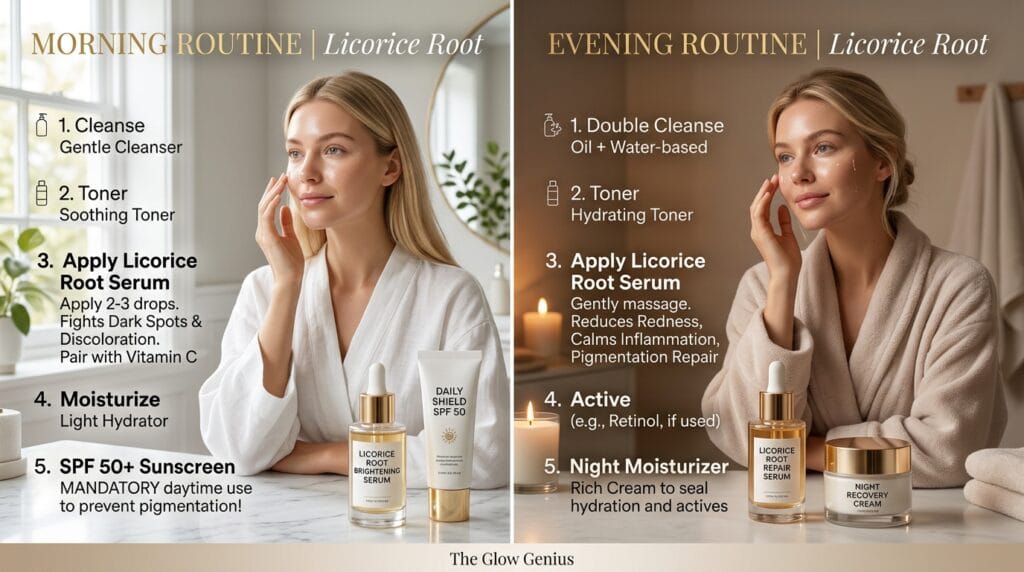
- Morning application of licorice root extract pairs beautifully with SPF for double antioxidant protection against UV-generated melanin. Because sun exposure is the primary daily trigger for new hyperpigmentation, addressing it at the source during your morning routine makes strategic sense.
- Evening application allows the calming compounds — particularly glycyrrhizin — to work while skin undergoes its natural overnight repair process. Because skin experiences less environmental stress at night, the anti-inflammatory benefits of licorice root have uninterrupted time to work.
Both timing choices are genuinely valid. If your specific formula supports it, twice-daily use accelerates results without additional irritation risk, since licorice root carries a strong safety profile. However, if you are introducing licorice root alongside other active ingredients like vitamin C or niacinamide, start with once-daily application and build up as your skin confirms tolerance.
Licorice Root vs Other Brightening Ingredients Comparison
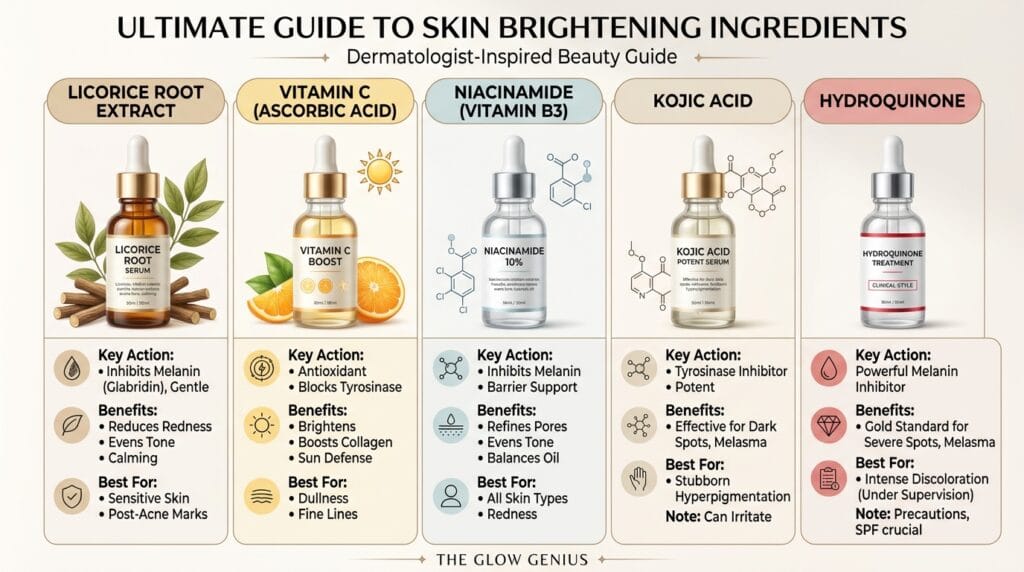
- Compared to vitamin C, licorice root is more chemically stable and does not oxidise the way vitamin C does over time. It also suits sensitive skin more reliably, delivering slower but steadier results with less irritation risk. Choose licorice root if your skin reacts poorly to vitamin C, or choose vitamin C if your skin tolerates stronger actives and you want faster initial results.
- Compared to kojic acid, licorice root carries a stronger long-term safety record and better tolerability with extended use. If kojic acid has previously caused irritation on your skin, licorice root is a gentler alternative that still targets the same tyrosinase-inhibition mechanism.
- Licorice root vs vitamin C aside, this ingredient pairs beautifully alongside niacinamide rather than competing with it. Niacinamide reduces melanin transfer to the skin’s surface, while licorice root slows melanin production itself. Together, they address the pigmentation process from two different angles simultaneously.
- Compared to hydroquinone, Dr. Sheila Farhang describes licorice extract as “similar in effect to hydroquinone, but gentler.” Hydroquinone is stronger and requires a prescription in many countries, carrying rebound pigmentation risk with improper use. Licorice root offers a gentler, over-the-counter alternative for those wanting brightening without prescription-strength intervention.
Safety Rules and Who Should Be Careful With This Ingredient
Licorice root is generally safe for nearly all skin types, including sensitive skin — it ranks among the most well-tolerated brightening ingredients available in skincare. However, specific safety rules still apply.
Always complete a patch test before applying any new licorice root product to your full face. Apply a small amount to your inner arm, wait 24 hours, and check for any reaction before proceeding. While rare, allergic reactions to licorice root can occur, making this step non-negotiable regardless of the ingredient’s overall gentle reputation.
Excessive or prolonged use can cause hypopigmentation, meaning lighter patches that extend beyond your intended dark spots. Because this ingredient actively reduces melanin, overuse can overcorrect on surrounding skin. Follow the recommended usage frequency on your specific product rather than assuming more application accelerates results.
Anyone currently using tretinoin or hydroquinone should consult a dermatologist before adding licorice root to their routine. Combining multiple active brightening or exfoliating ingredients without guidance can increase irritation risk. Most importantly, licorice root does NOT lighten your natural skin tone — it only fades dark spots and areas of uneven pigmentation, leaving your baseline complexion unchanged.

Brightening Ingredients Compared at a Glance
Ingredient | Main Benefit | Best Skin Type | Speed of Results | Risk Level |
|---|---|---|---|---|
Licorice root | Fades dark spots, calms inflammation | Sensitive, all types | Slower, steady (4-8 weeks) | Very low |
Vitamin C | Brightening, antioxidant, collagen support | Normal, resilient skin | Moderate (4-12 weeks) | Moderate (can irritate, oxidises) |
Niacinamide | Reduces melanin transfer, pore refining | All skin types | Moderate (4-8 weeks) | Very low |
Kojic acid | Tyrosinase inhibitor, brightening | Normal, resilient skin | Moderate (6-8 weeks) | Moderate (higher irritation risk) |
Hydroquinone | Strong pigment reduction | Resilient skin, prescription use | Faster (4-6 weeks) | Higher (rebound risk, prescription only) |
You May Also Like
If you loved this guide, these articles were made for you:
- Vitamin C Serum Benefits
- Best Vitamins for Acne
- Skincare Routine for Oily Skin
- Best Facial Cleansers for Every Skin Concern
- Homemade Face Mask for Acne
FAQs
Your Clearest, Calmest Skin Is Three Months Away
Licorice root is one of the most versatile, well-tolerated brightening ingredients available in skincare today. It suits sensitive skin that cannot tolerate vitamin C or kojic acid, while still delivering genuine, research-backed results for dark spots and uneven tone.
For the best results, pair licorice root with niacinamide and daily SPF. This combination addresses melanin production, transfer, and future prevention simultaneously. Give the process four to eight weeks minimum before judging results, since this ingredient works steadily rather than dramatically.
Licorice root for dark spots rewards patience with genuinely visible, lasting change. Save this guide to your Pinterest boards and share it with a friend who keeps spotting Glycyrrhiza glabra on ingredient labels and wondering what it actually does. 🌿