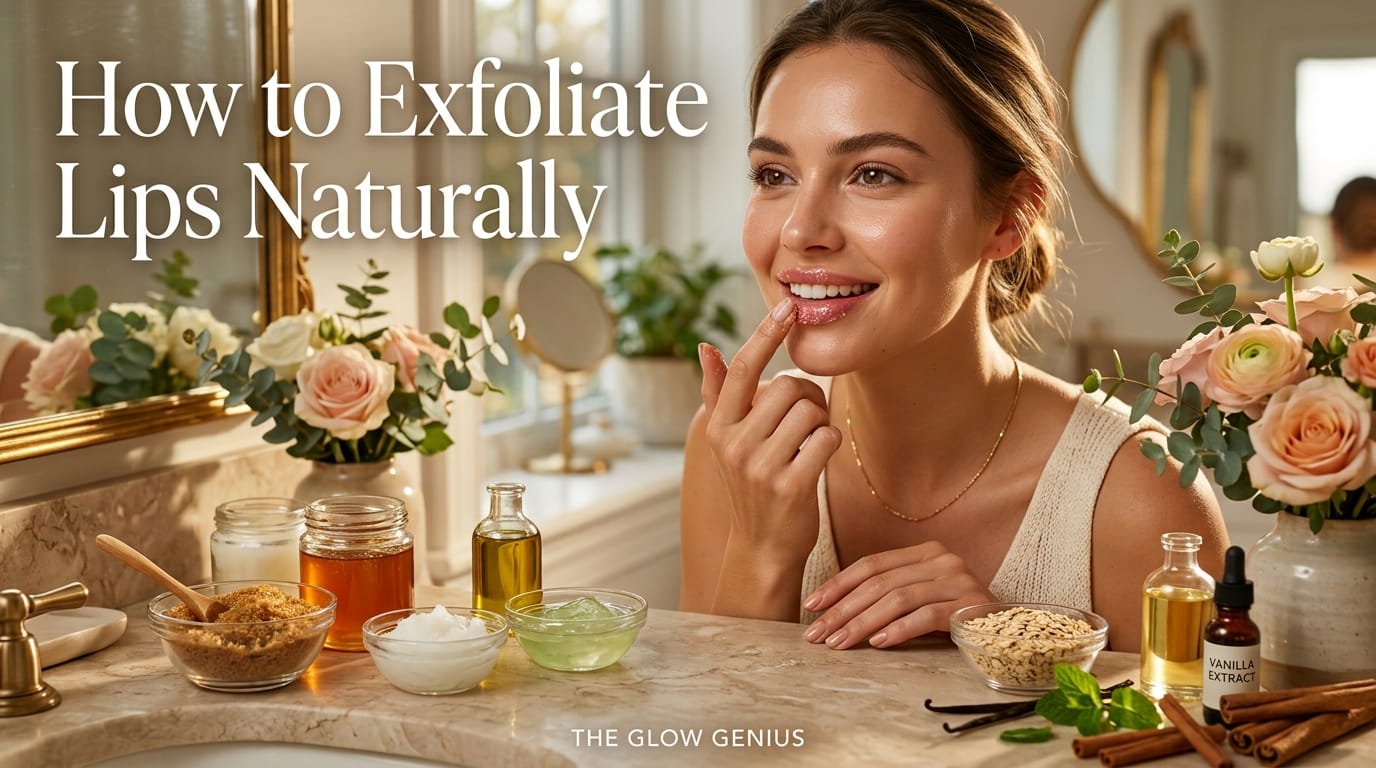
How to Exfoliate Lips Naturally: 7 DIY Scrubs for Soft, Smooth, Kissable Lips
Flaky, dry lips ruin lipstick application every single time. They cling to gloss unevenly and make even the most gorgeous lip colour look dull and patchy.
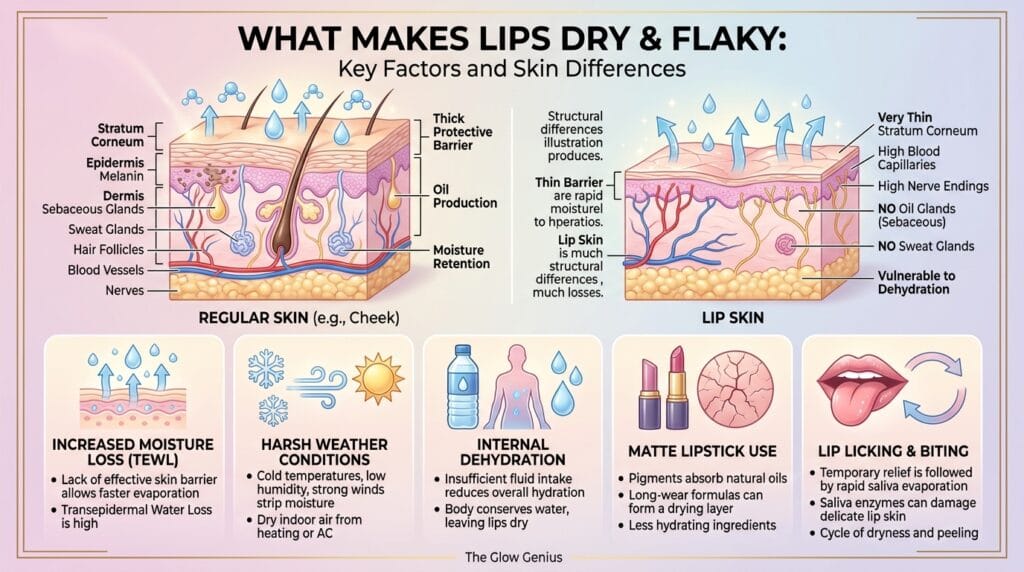
Here is why this happens so often. Lip skin is five times thinner than regular facial skin, according to Curology dermatologists. Furthermore, lips have almost no sebaceous glands, meaning they cannot moisturise themselves the way the rest of your face can.
That is exactly why learning how to exfoliate lips naturally matters so much. Kitchen ingredients you already own are genuinely the most effective and affordable solution available, and they work far better than most people expect. Here are 7 recipes to try tonight.
Why Lip Exfoliation Changes Everything About Your Lip Look
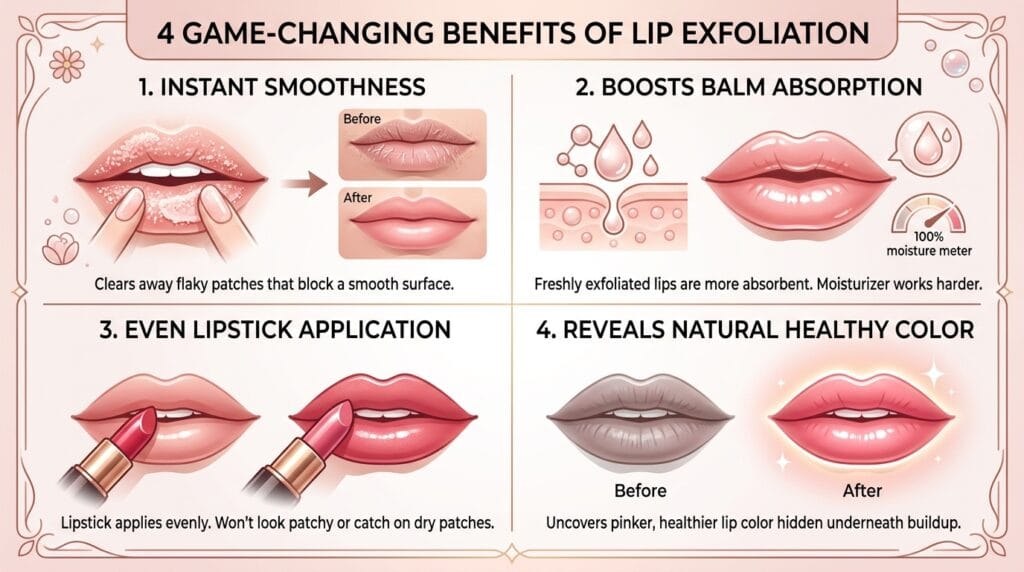
Lip exfoliation delivers four genuine benefits that transform how your lips look and feel. Understanding these makes the small effort feel completely worth it.
First, removing dead skin cells creates instant smoothness. Because flaky patches physically block a smooth surface, clearing them away reveals softer skin immediately. Second, freshly exfoliated lips absorb lip balm far more effectively than lips with buildup sitting on top.
This absorption window matters enormously. Freshly exfoliated lips are significantly more absorbent, which means this is exactly when moisturiser and lip balm work their hardest. Third, smooth lips let lipstick apply evenly without catching on dry patches or looking patchy by midday.
Finally, regular lip exfoliation reveals your naturally pinker, healthier lip colour underneath the buildup of dead skin cells. Because dryness and flaking dull the natural colour of lip skin, removing it lets your true, healthy tone show through.
What Makes Lips Dry and Flaky — The Real Reasons
Understanding why your lips get dry helps you address the root cause, not just the symptoms. Five factors consistently cause chapped lips.
The biggest factor is the complete absence of sebaceous glands on the lips. Because your face relies on these glands to produce natural oils, and your lips have almost none, lip skin cannot hydrate itself the way the rest of your face does automatically.
Lip licking makes dryness significantly worse. Saliva evaporates quickly and takes existing moisture with it, leaving lips drier than before you licked them. Dehydration also shows on lips before almost anywhere else on the body, since thin lip skin loses moisture faster than thicker facial skin.
Harsh weather, particularly cold temperatures and strong wind, strips moisture from lip skin rapidly. In addition, matte lipstick formulas — while beautiful — genuinely dehydrate lips over the course of a day, since the mattifying ingredients absorb natural moisture.
The Best Natural Ingredients for Gentle Lip Scrubs
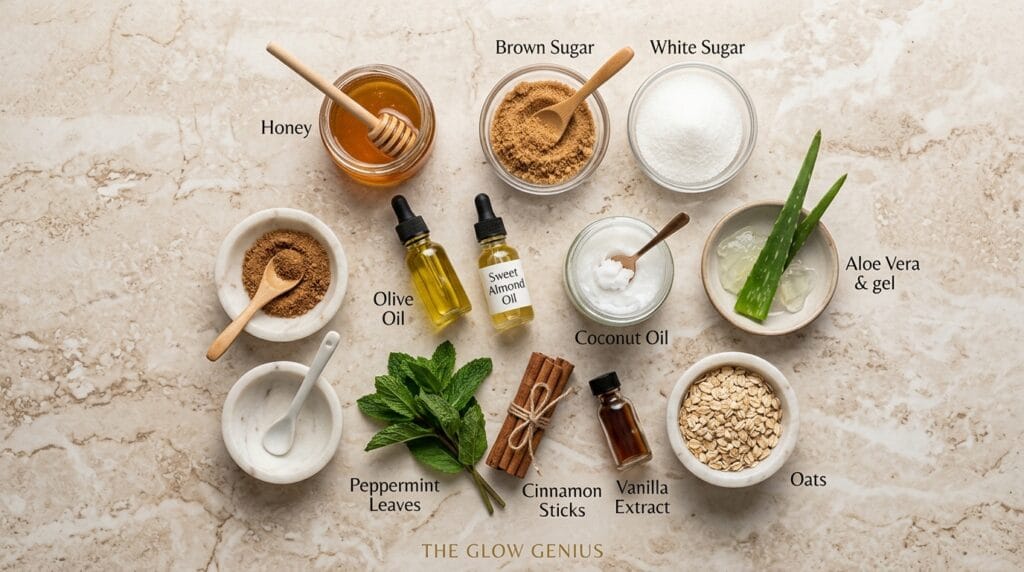
The best natural lip scrub ingredients come straight from your kitchen. Understanding what each one does helps you choose the right recipe for your specific lips.
Brown or white sugar is the gold standard, according to Dr. Angela Brimhall of Sage Dermatology. Its fine granules exfoliate gently without tearing the thin lip skin that surrounds your mouth.
Honey works as both a natural humectant and an antibacterial ingredient. It binds a sugar scrub together beautifully while simultaneously soothing the skin underneath. Coconut oil moisturises deeply while carrying the scrub particles smoothly across your lips.
Olive oil offers similar nourishing benefits and sits in almost every kitchen already. Almond oil is lighter in texture and rich in vitamin E, making it ideal for more sensitive lips. Cinnamon creates a natural plumping sensation, while peppermint oil delivers a tingling, plumping effect that many people love. Vanilla extract adds a lovely scent along with antioxidant properties.
7 DIY Lip Scrub Recipes to Try Tonight
These seven recipes cover every lip type and sensitivity level. Pick the one that matches your specific needs tonight.
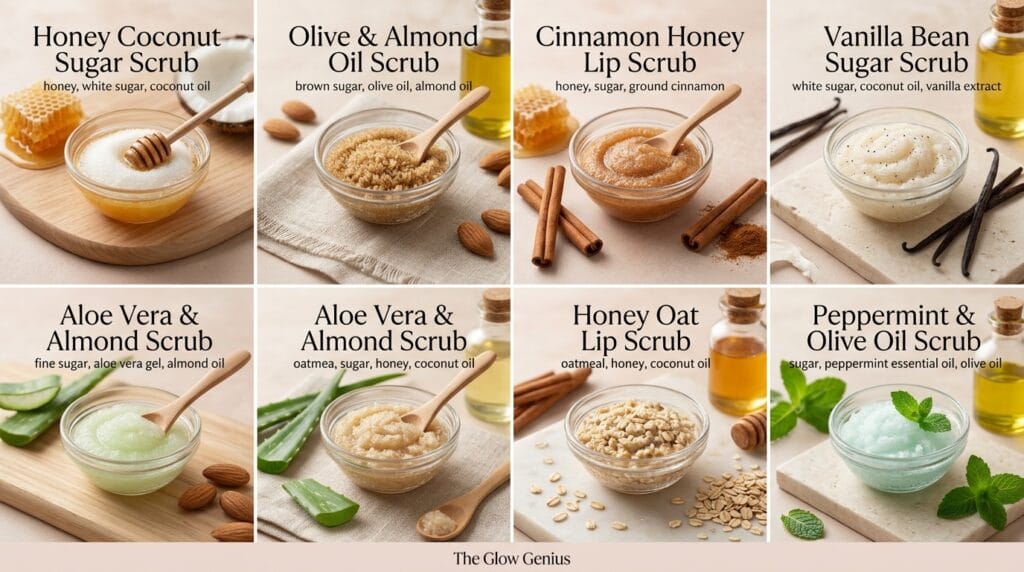
Recipe 1: Classic Honey and Sugar Scrub
This gold-standard DIY lip scrub suits every lip type and makes the perfect starter recipe.
Ingredients: 1 teaspoon brown sugar, 1 teaspoon raw honey
Method: Mix both ingredients in a small bowl. Apply to lips with your fingertip using gentle circular motions for 60 seconds. Wipe off completely with a damp cloth.
How often: Twice weekly. Best for: All lip types — this is the perfect starter recipe for beginners.
Recipe 2: Coconut Oil and Brown Sugar Scrub
Deep moisture meets gentle exfoliation in this recipe designed for genuinely dry lips.
Ingredients: 1 teaspoon brown sugar, 1 teaspoon coconut oil, 1 drop vanilla extract (optional)
Method: Mix all ingredients into a paste. Apply using circular motions, then leave on for 2 minutes before rinsing with warm water.
How often: Twice weekly. Best for: Very dry, chapped lips needing extra moisture.
Recipe 3: Minty Plumping Scrub
This recipe exfoliates while naturally plumping the appearance of thinner lips.
Ingredients: 1 teaspoon white sugar, 1 teaspoon honey, a small pinch of cinnamon, 1 drop peppermint oil (optional)
Method: Mix well and apply gently. Leave on for only 1 minute — never leave cinnamon on lips longer than this. Rinse with cool water immediately after.
How often: Once weekly, since cinnamon is a stronger ingredient than the others. Best for: Thin lips wanting a subtle plumping effect. Warning: Always patch test cinnamon on your inner lip first before full application.
Recipe 4: Olive Oil and Sugar Scrub
This affordable pantry-staple recipe uses ingredients almost everyone already owns.
Ingredients: 1 teaspoon brown sugar, 1 teaspoon olive oil
Method: Mix into a smooth paste. Apply to lips and massage in gentle circular motions for 60 seconds. Rinse thoroughly afterward.
How often: Twice weekly. Best for: All skin and lip types looking for a simple, budget-friendly option.
Recipe 5: Almond Oil and Vanilla Scrub
This recipe delivers a nourishing, almost luxurious feel for delicate lips.
Ingredients: 1 teaspoon white sugar, 1 teaspoon sweet almond oil, half teaspoon vanilla extract
Method: Mix thoroughly and apply to lips using circular motions. Leave on for 2 minutes, then wipe clean with a soft cloth.
How often: Twice weekly. Best for: Sensitive lip skin that needs a gentler touch.
Recipe 6: Aloe Vera and Sugar Scrub
This soothing recipe suits irritated or sun-damaged lips beautifully.
Ingredients: 1 teaspoon white sugar, 1 teaspoon fresh aloe vera gel
Method: Mix together and apply gently to lips. Leave on for 1 minute, then rinse with cool water.
How often: Twice weekly. Best for: Sensitive, irritated, or sun-damaged lips needing extra calming care.
Recipe 7: Honey and Oat Gentle Scrub
This is the gentlest option on the entire list, designed specifically for very reactive lips.
Ingredients: 1 teaspoon finely ground oats, 1 teaspoon raw honey, a few drops of warm water if needed
Method: Mix into a soft paste. Apply to lips using very gentle circular motions, leave on for 1 to 2 minutes, then rinse with warm water.
How often: Once weekly. Best for: Very sensitive, reactive lips that need the gentlest possible formula.
How to Exfoliate Lips Correctly — Step by Step Method
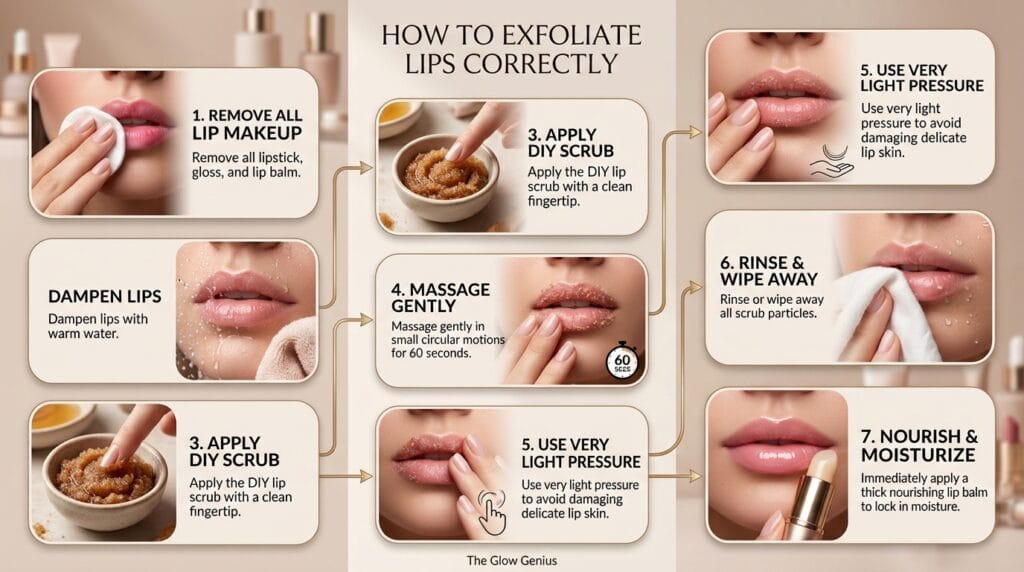
Following the correct method matters just as much as choosing the right recipe. These seven steps apply to every recipe in this guide.
- Step 1. Remove all lip product first, including lipstick, gloss, or balm residue.
- Step 2. Dampen your lips slightly with warm water to help the scrub glide on smoothly.
- Step 3. Apply your chosen lip scrub recipe using your fingertip.
- Step 4. Massage in gentle circular motions for 60 seconds — no more than that.
- Step 5. Do not press hard. Lip skin is five times thinner than regular facial skin, so gentle pressure is essential every time.
- Step 6. Wipe or rinse the scrub off completely, ensuring no sugar granules remain.
- Step 7. Apply a thick lip balm immediately afterward to lock in moisture while your lips are most absorbent.
What to Completely Avoid When Exfoliating Lips
Certain habits and ingredients genuinely harm lip skin rather than helping it. Avoid these completely.
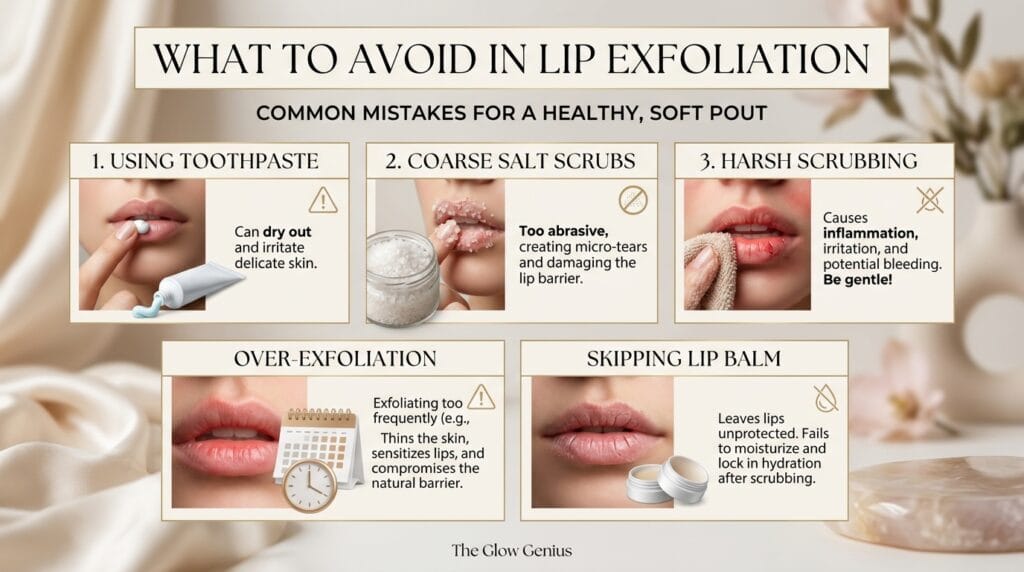
Never use toothpaste on your lips. It contains menthol and fluoride, both of which irritate the thin tissue that makes up lip skin. Never use salt as a scrub ingredient either — it is simply too harsh and abrasive for such delicate skin.
Never exfoliate more than twice weekly. Dermatologist Dr. Loretta Ciraldo warns that over-exfoliating causes redness and swelling on the lips specifically. Because lip skin lacks the resilience of facial skin, it needs significantly more recovery time between exfoliation sessions.
Never use AHA acids on your lips without patch testing first, since even mild formulations can sting sensitive lip skin unexpectedly. Similarly, never scrub with hard pressure — gentle circular motions are always sufficient. Finally, never skip moisturising immediately after exfoliating, since this is the single most important step for locking in results.
How Often to Exfoliate Lips for Best Results
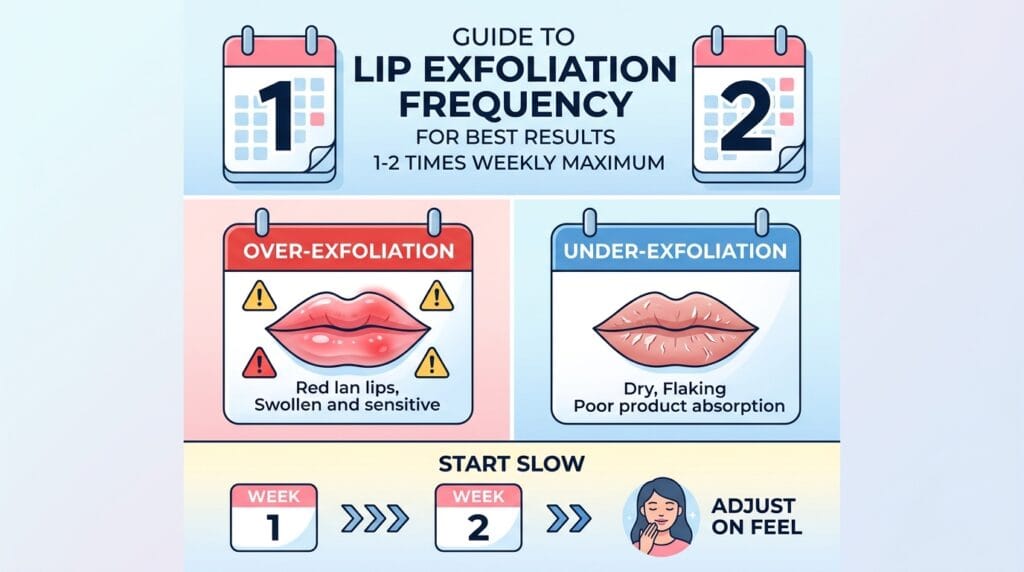
Once to twice weekly is the maximum frequency for lip exfoliation, regardless of which recipe you choose. Starting with once weekly and building up slowly gives your lips time to adjust safely.
Watch for signs of over-exfoliation, including redness, swelling, rawness, or increased sensitivity around your mouth. If any of these appear, reduce your frequency immediately and give your lips extra recovery time.
On the other hand, signs that you need more frequent exfoliation include persistent flaking, dull lip colour, and lip balm that no longer seems to absorb properly. Because everyone’s lip skin responds differently, adjusting within the twice-weekly maximum based on how your lips actually feel makes the most sense.
Lip Care After Exfoliation — What to Apply and When
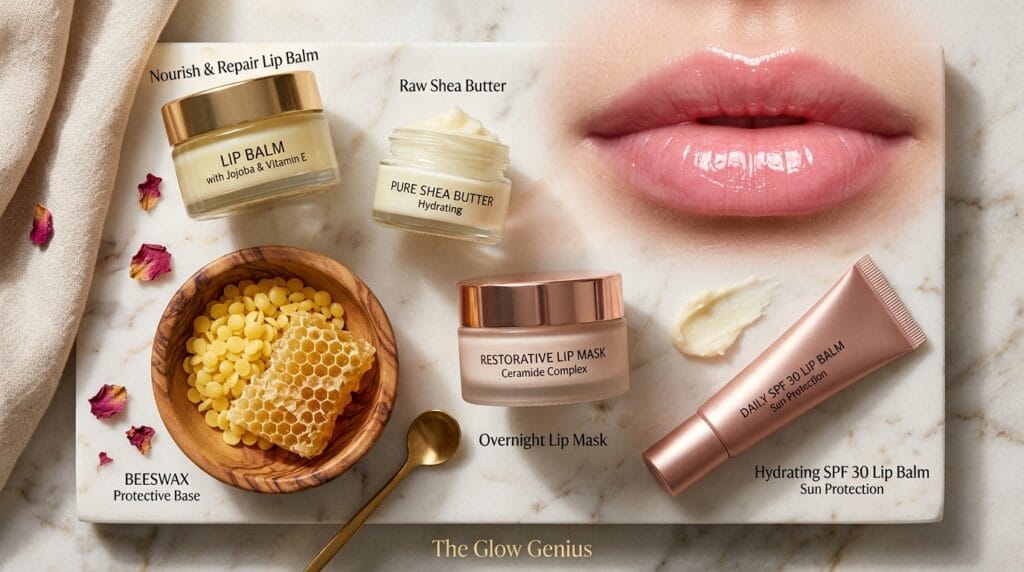
The period right after lip exfoliation is genuinely special. Freshly exfoliated lips absorb moisturiser three to four times more effectively than lips with buildup still present.
Apply a rich lip balm containing shea butter or beeswax immediately after rinsing your scrub. If you plan to go outdoors, reach for an SPF lip balm specifically, since freshly exfoliated lip skin is more vulnerable to sun exposure temporarily.
Overnight, consider a thicker lip mask or plain petroleum jelly to maximise the absorption window while you sleep. However, avoid applying matte lipstick immediately after exfoliating. Wait at least 30 minutes to let your lip balm fully absorb, since matte formulas can dehydrate freshly treated lip skin before it has recovered.
DIY Lip Scrub Recipes at a Glance
Recipe | Main Ingredient | Benefit | Best For | How Often |
|---|---|---|---|---|
Classic Honey and Sugar | Brown sugar + honey | Gentle all-purpose exfoliation | All lip types | Twice weekly |
Coconut Oil and Brown Sugar | Coconut oil + brown sugar | Deep moisture + exfoliation | Very dry, chapped lips | Twice weekly |
Minty Plumping Scrub | Cinnamon + peppermint oil | Subtle plumping effect | Thin lips | Once weekly |
Olive Oil and Sugar | Olive oil + brown sugar | Affordable, simple exfoliation | All skin and lip types | Twice weekly |
Almond Oil and Vanilla | Sweet almond oil + sugar | Nourishing, luxurious feel | Sensitive lip skin | Twice weekly |
Aloe Vera and Sugar | Aloe vera gel + sugar | Soothing, calming | Irritated, sun-damaged lips | Twice weekly |
Honey and Oat Gentle Scrub | Ground oats + honey | Gentlest possible formula | Very sensitive, reactive lips | Once weekly |
You May Also Like
If you loved this guide, these articles were made for you:
- Homemade Face Mask for Acne
- Hailey Bieber Glazed Donut Skin
- Vitamin C Serum Benefits
- How to Repair Damaged Hair
- Gua Sha for Face Slimming
FAQs
Soft Lips Are One Scrub Away
Learning how to exfoliate lips naturally does not require expensive products or complicated routines. The classic honey and sugar scrub remains the best starting point for most lips — simple, gentle, and genuinely effective.
Stick to twice weekly maximum, always moisturise immediately after, and pay attention to how your specific lips respond. Lip skin is delicate, but with the right gentle care, it rewards you quickly with softness and smoothness.
Pick one recipe from this guide and try it tonight. Your lips will feel the difference by tomorrow morning.
Save this guide to your Pinterest boards and share it with a friend who always complains about dry, flaky lips. 💋