Rose Water Benefits for Skin and Hair: The Complete Science-Backed Guide
Rose water has been part of beauty rituals for over 2,000 years. Persian, Ayurvedic, and Middle Eastern traditions all relied on it. Today, science is finally catching up.
This gentle ingredient works for nearly every skin type. It calms, hydrates, and refreshes without harsh side effects. Understanding real rose water benefits starts with knowing what this ingredient actually is.
You have likely seen it everywhere lately, from toner aisles to Pinterest boards. Still, plenty of people wonder if the hype matches the reality. This guide walks through the honest answer, section by section.
We will cover the origin, the research, and the practical routine steps. You will also learn how to spot a genuine bottle versus a weaker imitation. Here is the complete science-backed guide.
What Rose Water Actually Is — And Why It Matters
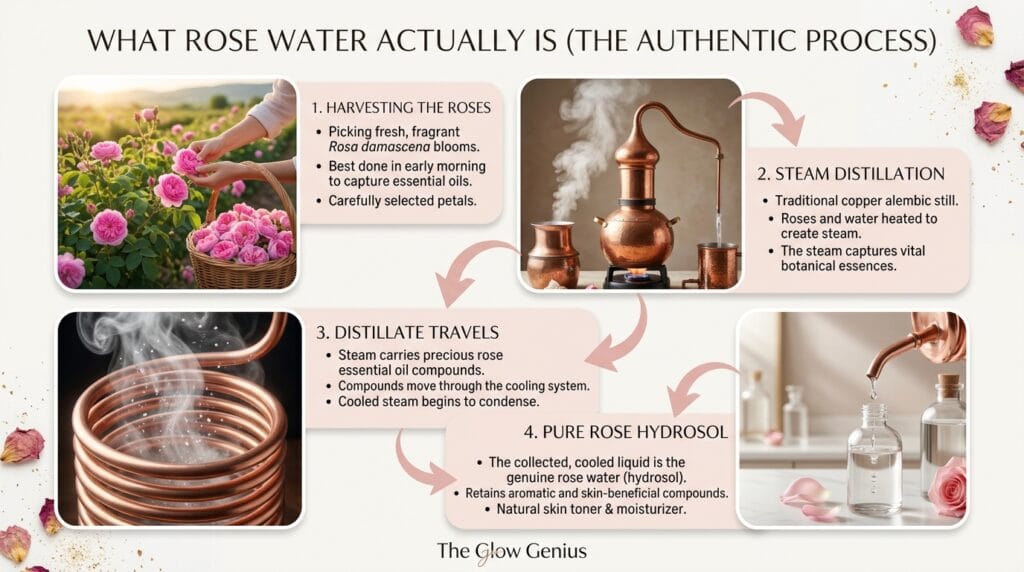
Rose water starts with Rosa damascena, a fragrant flowering rose grown across the Middle East and South Asia. Farmers harvest the petals, then send them through steam distillation. As steam passes through the petals, it pulls out water-soluble plant compounds.
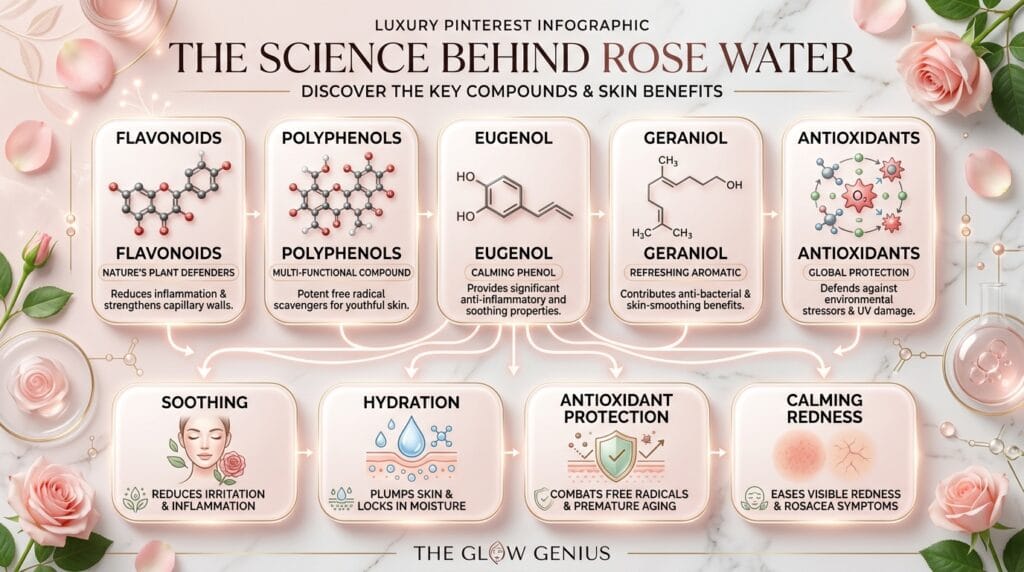
The result is a hydrosol, meaning a water-based extract carrying real botanical actives. True rose water hydrosol contains flavonoids, polyphenols, eugenol, and geraniol. These compounds are why researchers keep studying this humble ingredient.
Both Rosa damascena and Rosa centifolia are used across different regions, though Rosa damascena is the most studied variety. Production methods vary slightly by country, which can influence the final concentration of active compounds. This is part of why quality differs so much between brands and batches.
However, not every bottle labeled “rose water” is the same. Some products are simply water mixed with rose fragrance or a drop of rose oil. These skip the distillation step entirely, so they carry the scent but skip most of the benefit. That distinction is exactly why the real rose water benefits depend so heavily on how a product is made.
This is also why terminology matters so much when you shop. A hydrosol carries the plant’s water-soluble chemistry, not just its smell. That single distinction shapes almost everything covered in this guide.
The Science Behind This Ancient Ingredient
So does the research actually back up the hype around rose water benefits? Mostly yes, though the picture is still developing. Several small studies point in a promising direction, even though larger clinical trials are still limited.
Some laboratory research suggests rose water may calm anti-inflammatory signaling in skin cells after sun exposure. This lines up with why so many people reach for a rose water mist after a day outdoors.
Separately, early trials have looked at regular use over several weeks and possible skin elasticity support. This research is still preliminary, though, and needs larger studies to confirm it. On the antibacterial side, eugenol has shown activity against Cutibacterium acnes in lab settings. This is the bacteria linked to breakouts, which explains growing interest in rose water for acne.
Flavonoids in rose water also act as an antioxidant, helping protect fibroblasts, the cells responsible for collagen production, from oxidative stress. Meanwhile, some researchers have explored whether inhaling rose aromas might influence how the brain processes stress. That work is intriguing, but it remains early and should not be read as a settled conclusion.
Importantly, most rose water research is still small-scale. We do not yet have the large, long-term human trials that exist for ingredients like retinol. Consider rose water a gentle, well-supported addition to your routine rather than a miracle fix.
None of this means the ingredient is overhyped or unworthy of attention. It simply means expectations should stay realistic and grounded in what the evidence currently shows. A gentle, supportive ingredient can still earn a permanent spot in your routine.
Which Skin Concerns This Ingredient Actually Helps
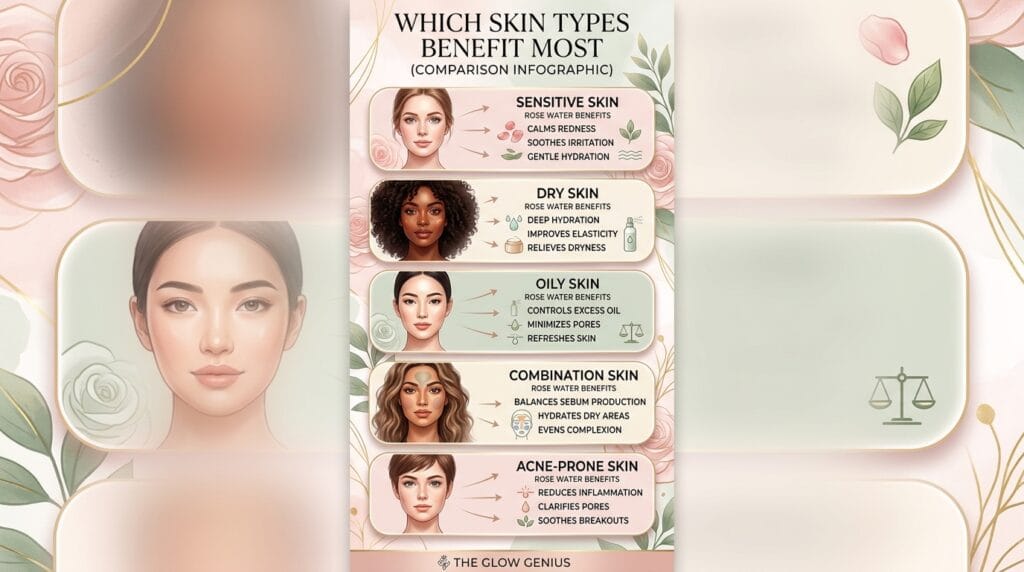
Let’s break down exactly who sees the strongest rose water benefits. Not every concern responds the same way when it comes to rose water for skin.
- Sensitive skin tends to love it first. Rose water contains no alcohol, and its anti-inflammatory nature makes it one of the calmest options for reactive, easily irritated faces.
- Oily and acne-prone skin also benefits, largely thanks to eugenol and its role in supporting a balanced sebum environment. This is where rose water anti-inflammatory properties genuinely earn their keep.
- Dry and dehydrated skin responds well too, since rose water works as a humectant, drawing moisture into the surface layer. If your skin barrier feels compromised, this gentle hydration step can help without adding heaviness.
- For redness and rosacea, rose water may reduce visible irritation, though it should always be introduced slowly and gradually. Dull, uneven tone can improve modestly too, thanks to antioxidant protection that supports a brighter-looking complexion over time. Finally, for early signs of ageing, the elasticity research mentioned earlier is promising. It makes rose water a reasonable, low-risk addition to a firming routine.
- Combination skin also does well with rose water, since it balances oilier zones without over-drying naturally drier patches. This middle-ground behavior is part of why so many people keep a bottle at their sink year-round. It rarely feels like the wrong choice, whatever your skin is doing that day.
How to Use It in Your Morning and Evening Routine
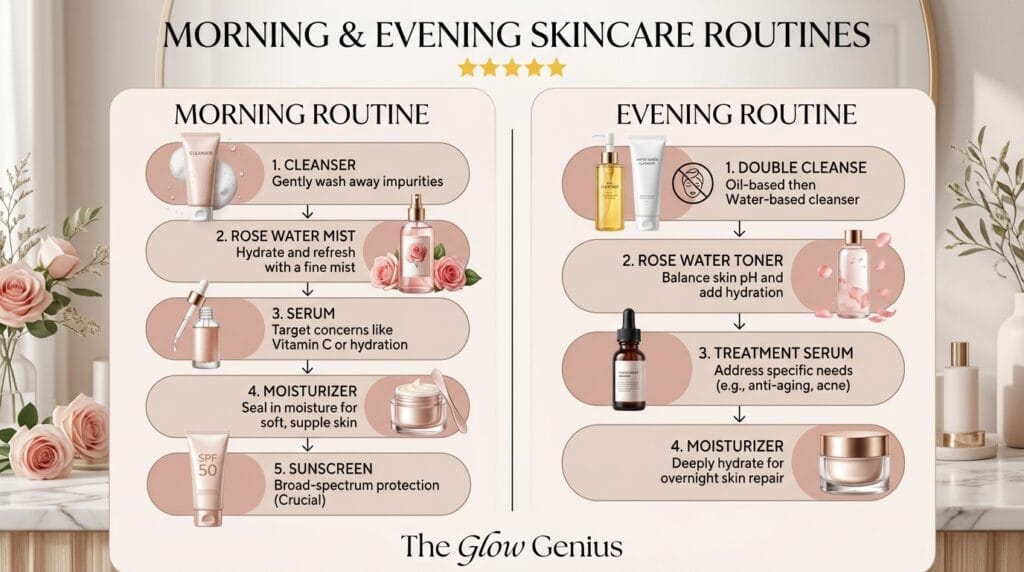
Consistency matters more than complexity here, and it is often the missing piece behind stronger rose water benefits. Below is a simple how to use rose water routine for both morning and evening.
Morning routine:
- Cleanse your face as usual.
- Spritz a rose water toner onto damp skin.
- Pat it in gently. Never rub it in.
- Layer your serum and moisturiser as normal.
- Finish with SPF, always.
Evening routine:
- Double cleanse to remove makeup and SPF.
- Apply a rose water mist right after cleansing.
- Follow with your treatment serum.
- Seal everything in with moisturiser.
Beyond your core routine, rose water has other uses too. Try it as a makeup-setting mist, an under-eye cooling compress, or a soother after shaving. It also works as a refreshing midday rose water for face pick-me-up.
For an under-eye compress, chill a cotton pad soaked in rose water in the fridge first. Press it gently over closed eyes for a few minutes. Many people do this in the morning to reduce puffy, tired-looking eyes before makeup.
Rose Water for Hair and Scalp — What It Actually Does
Rose water for hair is having a moment, and the rose water benefits here track with what we already know about the ingredient. On the scalp, it may help calm inflammation, support pH balance, and leave hair feeling shinier and easier to manage.
Antioxidant compounds may also support a healthier scalp environment by protecting surrounding cells from oxidative stress. Many people also report less oiliness and itchiness, and some early evidence points to mild antifungal activity that could gently support dandruff-prone scalps.
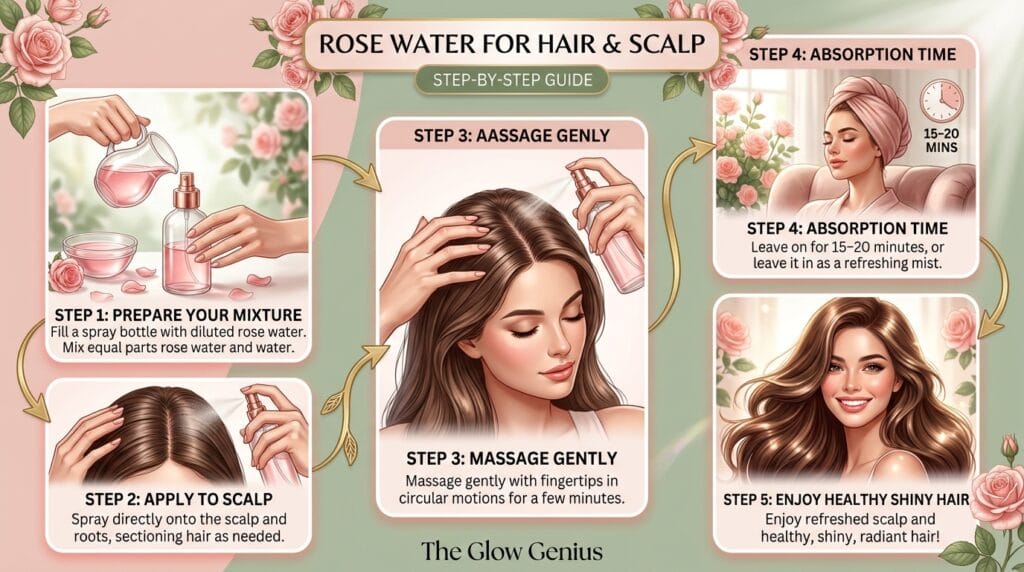
To use it, dilute rose water with plain water in a spray bottle. Spritz it onto your scalp, then massage gently with your fingertips. You can leave it in or rinse after fifteen to twenty minutes, whichever suits your hair type.
This works well as a weekly ritual rather than a daily habit for most hair types. Fine or oily hair may prefer it once or twice weekly, while coarser hair can handle more frequent use. Listen to how your scalp responds and adjust from there.
How to Choose a Genuine Rose Water — The Label Test
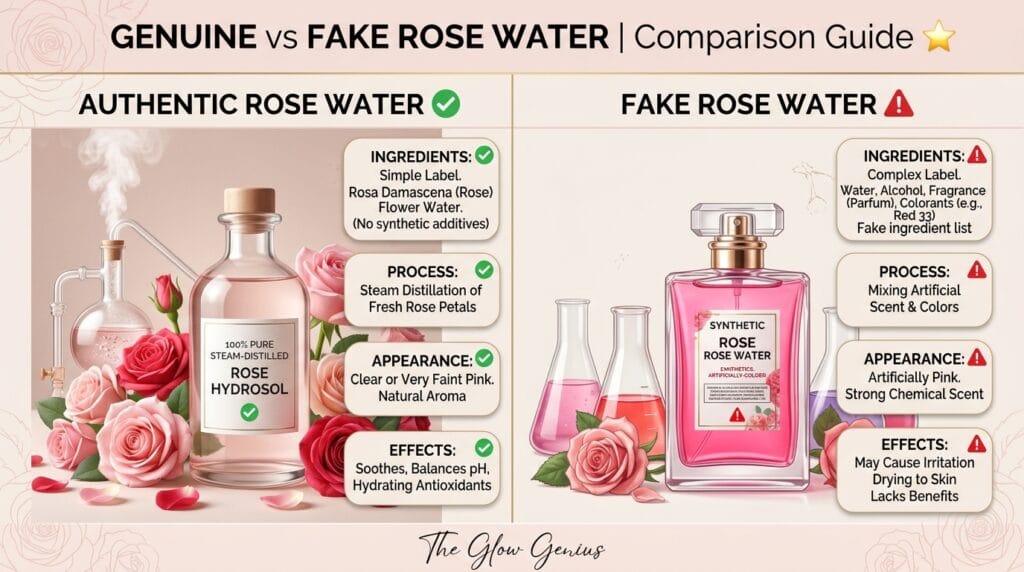
Here is where most people go wrong, and where real rose water benefits quietly disappear. A true rose water hydrosol is steam-distilled and smells gently floral, never like a perfume counter.
Check the ingredient label first. Look for “Rosa damascena hydrosol” or “Rosa centifolia” listed near the top, ideally right after distilled water. A slight, natural variation in colour between batches is a good sign of authenticity, not a flaw.
By contrast, a false version is often just water with rose fragrance or a touch of rose oil stirred in. If the scent hits you as strong or overtly perfumed, that is a giveaway. These versions carry the smell without the therapeutic compounds that make true rose water worthwhile. Avoid heavily preservative-laden formulas too, especially if you have sensitive skin.
When shopping online, read the full ingredient list before checkout, not just the front label. Front labels can say “rose water” prominently while the actual ingredient list tells a different story. A few extra seconds of reading saves you from a disappointing purchase.
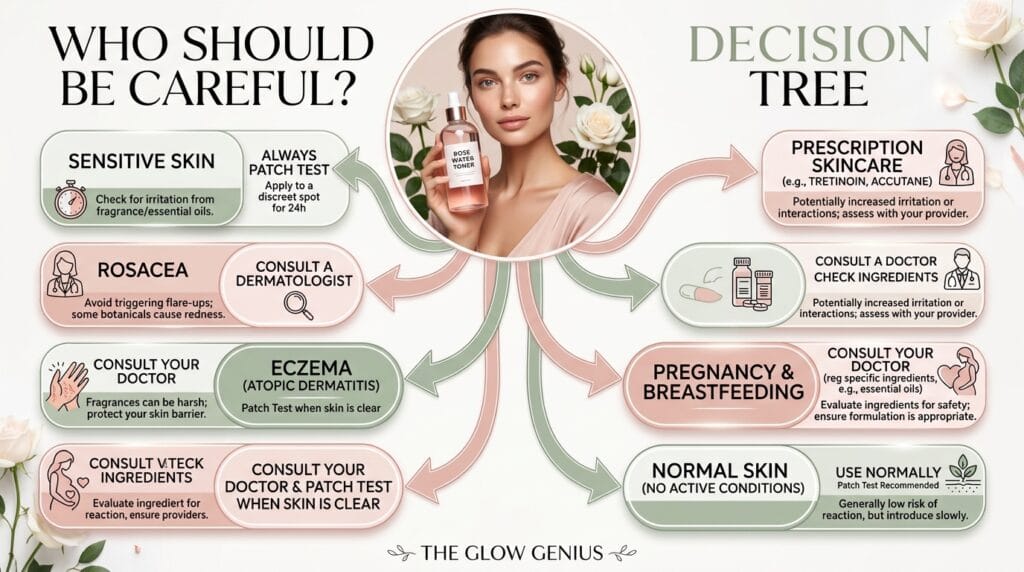
Who Should Be Careful Using Rose Water
Rose water is genuinely one of the gentlest botanicals available, and the rose water benefits extend to nearly everyone. Still, a few groups should take extra care.
Always patch test first, even with an ingredient this mild. Gentle does not mean risk-free for every individual, and reactions can still happen. If you have eczema, choose a preservative-free formulation and check with a dermatologist beforehand.
If you deal with rosacea, introduce rose water very gradually and watch how your skin responds. Anyone using prescription topicals should also check with their dermatologist before adding a new ingredient into the mix. Rose water is a supportive addition to skincare, never a replacement for medical treatment.
Pregnant or breastfeeding readers are generally fine using rose water topically. Still, checking with a doctor first is always a smart habit. The same goes for anyone managing a broader skin condition beyond typical sensitivity.
Children and teens can generally use rose water safely too, since it is one of the gentler botanical options available. As always, a small patch test on the inner arm is worth the extra minute. This applies whether the skin is young, mature, sensitive, or resilient.
Rose Water vs Other Toners — When to Choose It
Compared with alcohol-based toners, rose water never strips the skin barrier. Against synthetic fragrance toners, it is simply gentler on reactive skin. It also tends to outperform witch hazel for anyone with sensitive skin, since witch hazel can be drying for some.
That said, rose water is not always the right tool for every job. If you are actively treating breakouts, niacinamide or salicylic acid will likely work harder. If pigmentation is your main concern, vitamin C or an AHA toner will move the needle faster.
Where rose water truly shines is as a daily gentle toner and a midday refresh mist. That is also where its rose water benefits show up most clearly, as a calming companion alongside stronger actives.
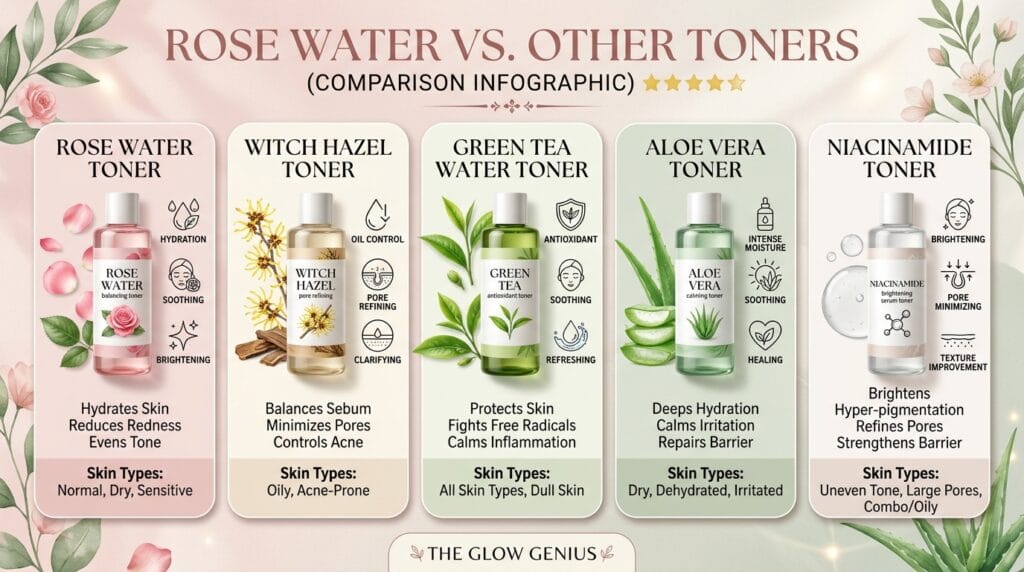
Rose Water vs Other Natural Toners
The table below compares rose water with other popular natural toners side by side. Use it as a quick reference the next time you are standing in the skincare aisle. Each option has its own strengths depending on your specific skin goals.
Ingredient | Main Benefit | Best Skin Type | pH Balancing | Use Frequency |
|---|---|---|---|---|
Rose water | Calming, hydrating | Sensitive, dry, combination | Yes | Daily, twice a day |
Witch hazel | Astringent, oil-control | Oily | Somewhat | Daily |
Green tea water | Antioxidant protection | All types | Yes | Daily |
Aloe vera toner | Soothing, hydrating | Sensitive, dry | Yes | Daily |
Niacinamide toner | Oil regulation, brightening | Oily, acne-prone | Somewhat | Daily |
You May Also Like
If you loved this guide, these articles were made for you:
- Vitamin C Serum Benefits
- Skincare Routine for Oily Skin
- Best Facial Cleansers for Every Skin Concern
- How to Use Licorice Root in Skincare
- Salt Water Benefits for Skin
FAQs
2,000 Years of Beauty Wisdom — Confirmed by Science
Rose water earns its long history honestly. It is one of the gentlest, most versatile botanicals available today, and it suits nearly every skin type without fuss.
It works especially well for sensitive, dry, or acne-prone skin, and it fits easily into almost any routine. Give it real time to work though, since visible results typically take about four weeks of consistent use.
Pair it with a genuine, well-labeled product and reasonable expectations. Used that way, this ancient ingredient earns its place in a modern routine, right alongside your other trusted skincare staples.
Save this guide for the next time you reach for a rose water toner. Share it with a friend who still is not convinced rose water benefits are real.