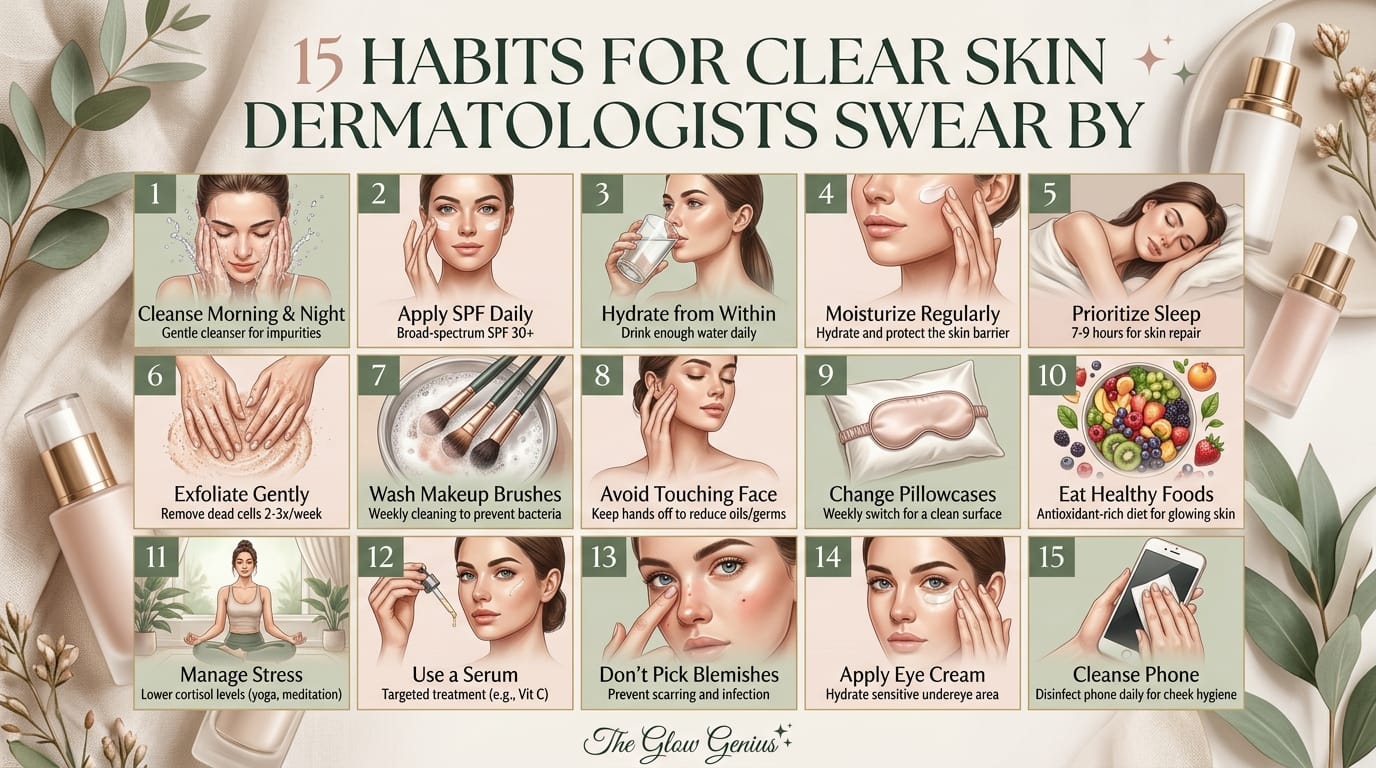
Habits for Clear Skin: 15 Daily Rituals Dermatologists Actually Recommend
All recommendations on The Glow Genius are independently researched by our editors to help you make the best beauty decisions. This article is for informational purposes and does not replace advice from a qualified dermatologist.
You have tried the cleanser, the moisturiser, the serums, and still your skin will not fully cooperate. This is one of the most common frustrations in skincare, and it is not your fault.
Dermatologists consistently say daily lifestyle habits influence skin clarity more than most product routines. Diet, hydration, sleep, stress, hygiene, and environmental exposure all affect your skin’s inflammation levels, collagen production, oil balance, and skin barrier function.
This means your products might be working exactly as intended. Meanwhile, daily habits outside your skincare cabinet could be quietly working against you. Here are 15 habits that actually work.
Why Your Products Alone Won’t Clear Your Skin
Your skin responds directly to hydration, sleep quality, stress patterns, and daily hygiene — not just the products you apply. When these factors remain imbalanced, breakouts persist despite an excellent skincare routine.
Alamo Heights Dermatology confirms that diet, hydration, sleep, exercise, stress levels, and environmental exposure all influence inflammation, collagen production, oil balance, and skin barrier function. Because these systems work together constantly, no single product can fully compensate when several of them are out of balance.
This is exactly why the search for habits for clear skin matters as much as the search for the perfect serum. A gentle cleanser applied to skin that is dehydrated, sleep-deprived, and chronically stressed will always underperform compared to the same cleanser used alongside supportive daily habits.

The Skincare Habits That Actually Matter Most
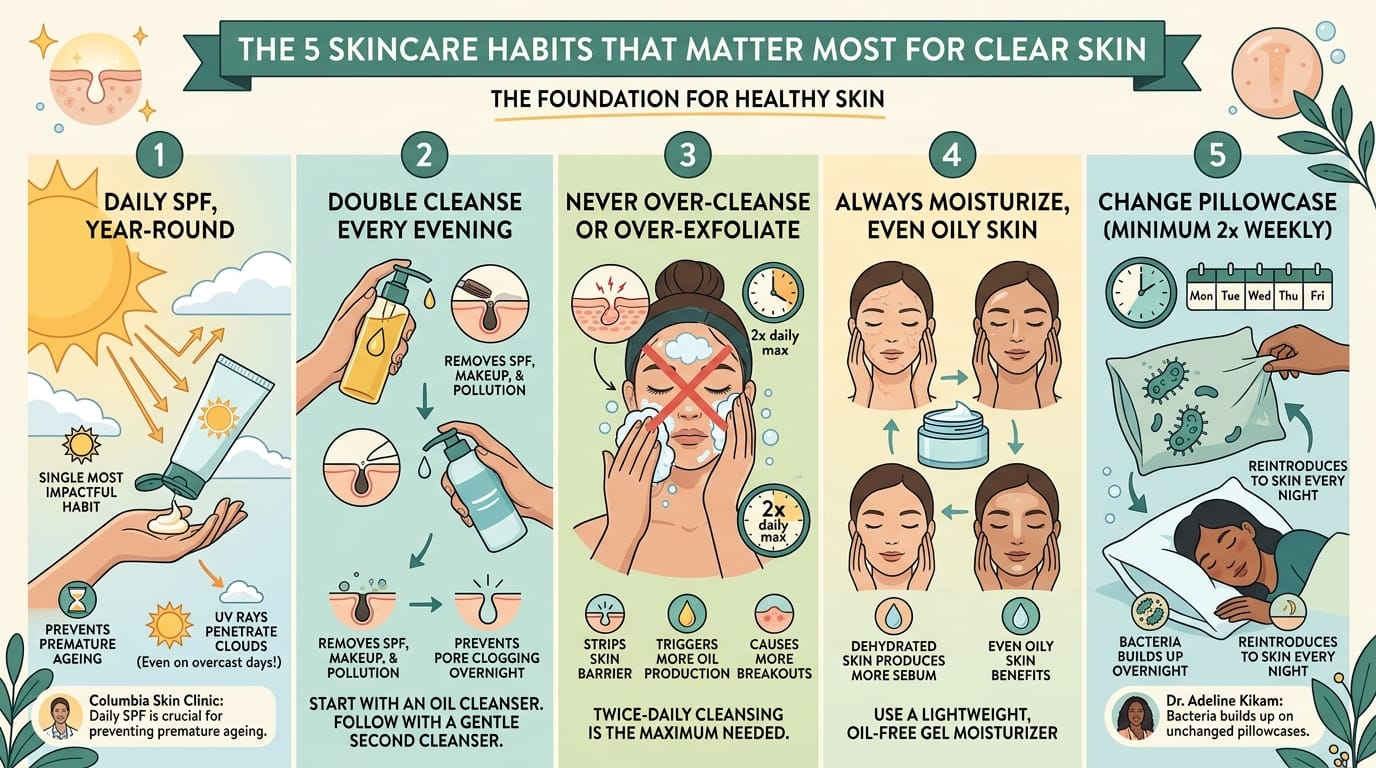
These five skincare routine for clear skin habits form the foundation everything else builds on.
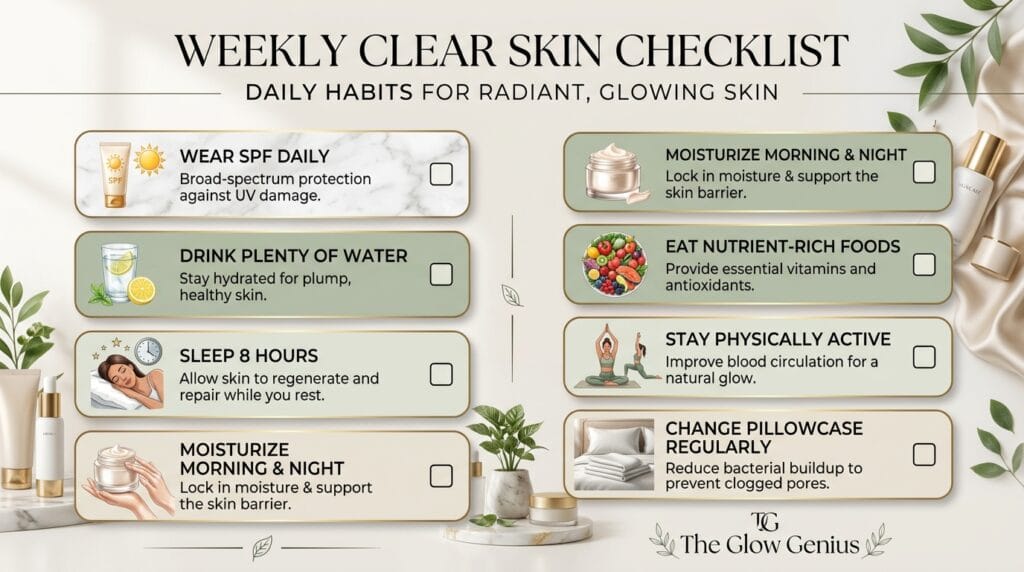
Habit 1: Daily SPF, year-round, non-negotiable. Columbia Skin Clinic identifies daily SPF as the single most impactful habit for preventing premature ageing. Because UV rays penetrate clouds significantly, skipping SPF on overcast days still causes cumulative damage.
Habit 2: Double cleanse every evening. An evening double cleanse removes SPF, makeup, and pollution that otherwise clog pores overnight. Start with an oil cleanser, then follow with a gentle second cleanser for thorough results.
Habit 3: Never over-cleanse or over-exfoliate. Excessive cleansing strips the skin barrier, which triggers more oil production and more breakouts as a direct result. Twice-daily cleansing is the maximum most skin needs.
Habit 4: Always moisturise, even oily skin. Dehydrated skin produces more sebum as compensation. Even oily skin genuinely benefits from a lightweight, oil-free gel moisturiser applied consistently.
Habit 5: Change your pillowcase at minimum twice weekly. Dr. Adeline Kikam, a board-certified dermatologist, confirms that bacteria builds up on a pillowcase and reintroduces itself to skin every single night it goes unchanged.
Diet and Lifestyle Habits That Directly Affect Your Skin
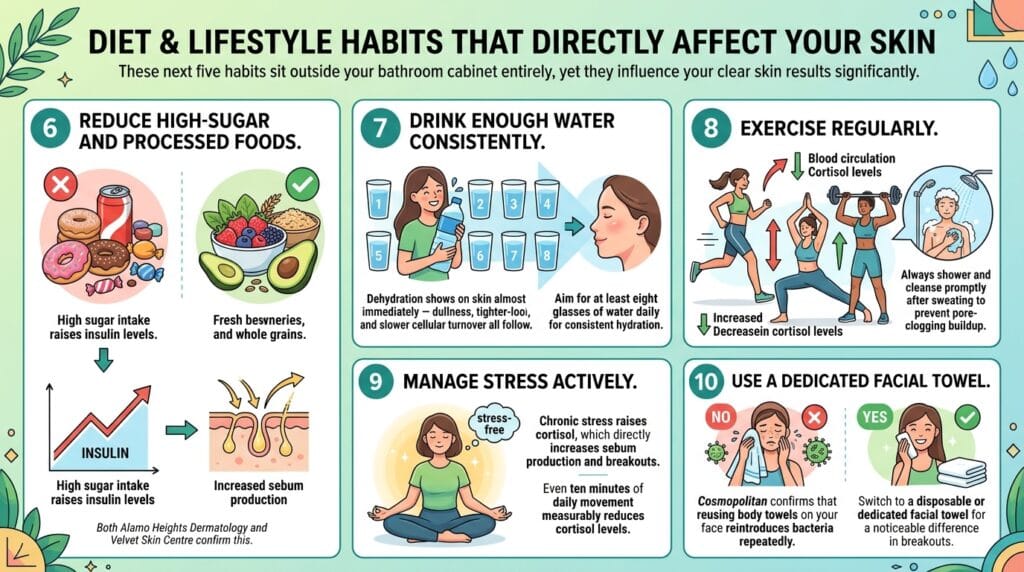
These next five habits sit outside your bathroom cabinet entirely, yet they influence your clear skin results significantly.
Habit 6: Reduce high-sugar and processed foods. Both Alamo Heights Dermatology and Velvet Skin Centre confirm that high sugar intake raises insulin levels, which increases sebum production and can trigger breakouts. Reducing processed sugar supports a diet for clear skin meaningfully over time.
Habit 7: Drink enough water consistently. Dehydration shows on skin almost immediately — dullness, tighter-looking pores, and slower cellular turnover all follow. Aim for at least eight glasses of water daily for consistent hydration.
Habit 8: Exercise regularly. Movement increases blood circulation, delivering oxygen directly to skin cells while reducing cortisol over time. Always shower and cleanse promptly after sweating to prevent pore-clogging buildup.
Habit 9: Manage stress actively. Chronic stress raises cortisol, which directly increases sebum production and breakouts. Even ten minutes of daily movement measurably reduces cortisol levels.
Habit 10: Use a dedicated facial towel. Cosmopolitan confirms that reusing body towels on your face reintroduces bacteria repeatedly. Switch to a disposable or dedicated facial towel for a noticeable difference in breakouts.
Sleep and Stress — The Skin Connection Most People Miss
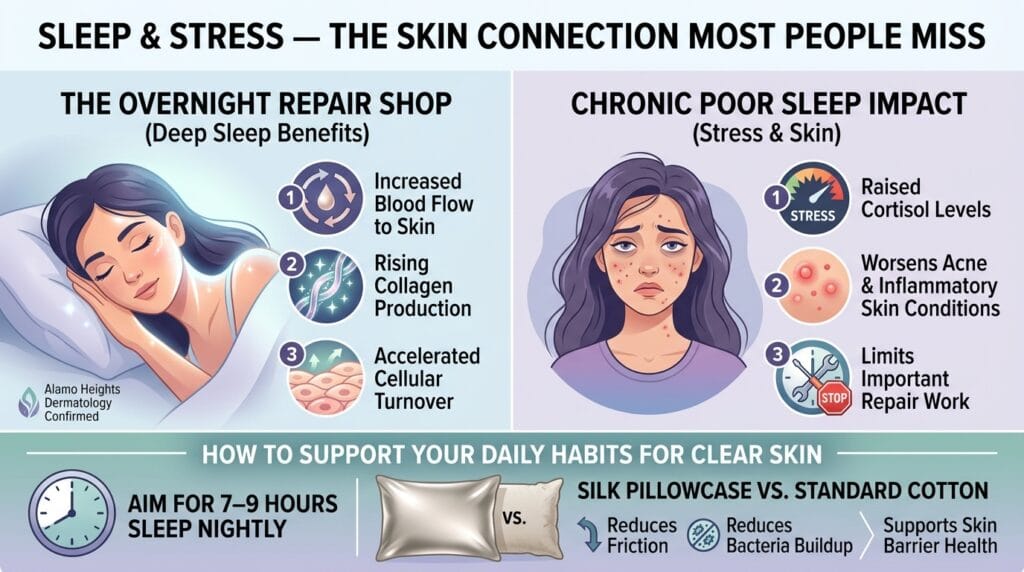
Sleep quality affects your skin far more than most people realise. Alamo Heights Dermatology confirms that during deep sleep, blood flow to the skin increases, collagen production rises, and cellular turnover accelerates significantly.
Chronic poor sleep raises cortisol, which worsens acne and other inflammatory skin conditions over time. Because your skin does its most important repair work overnight, consistently shortchanging sleep limits that process considerably.
Aim for seven to nine hours of sleep nightly as your target. In addition, a silk pillowcase reduces friction and bacteria buildup compared to standard cotton, supporting both skin barrier health and your daily habits for clear skin simultaneously.
Hygiene Habits Most People Overlook for Clear Skin
These five hygiene habits are easy to forget, yet they meaningfully affect your skin’s clarity every single day.
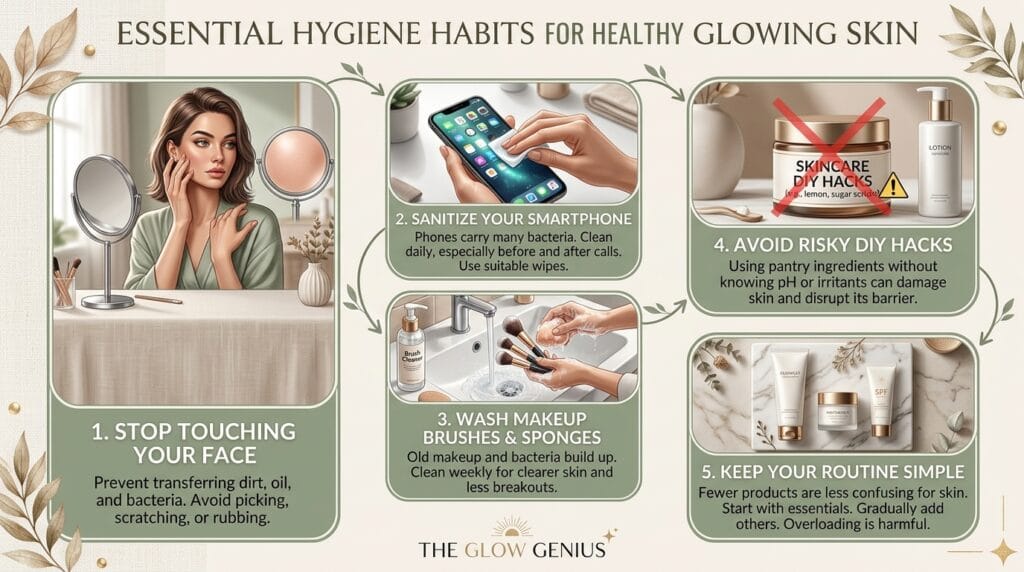
Habit 11: Stop touching your face. Cosmopolitan beauty director Lauren Balsamo confirms that touching and picking disrupts the skin barrier and leads to scarring and more breakouts. Hands carry bacteria constantly throughout the day.
Habit 12: Clean your phone screen regularly. Your phone screen presses directly against your cheek, transferring bacteria to the exact area most prone to breakouts along the jawline and cheeks.
Habit 13: Wash makeup brushes weekly. Bacteria and old product buildup on brushes applies directly onto your skin with every single use, undermining even the best skincare routine.
Habit 14: Avoid DIY internet skin “hacks.” Dr. Joyce Park, a board-certified dermatologist, warns that trends like lemon juice, baking soda, and beef tallow have no evidence base and can genuinely damage the skin barrier.
Habit 15: Choose consistency over complexity. Columbia Skin Clinic confirms that a simple, consistent routine outperforms a complicated multi-step one used inconsistently. Less is often genuinely more.
What to Stop Doing for Clearer Skin Starting Today
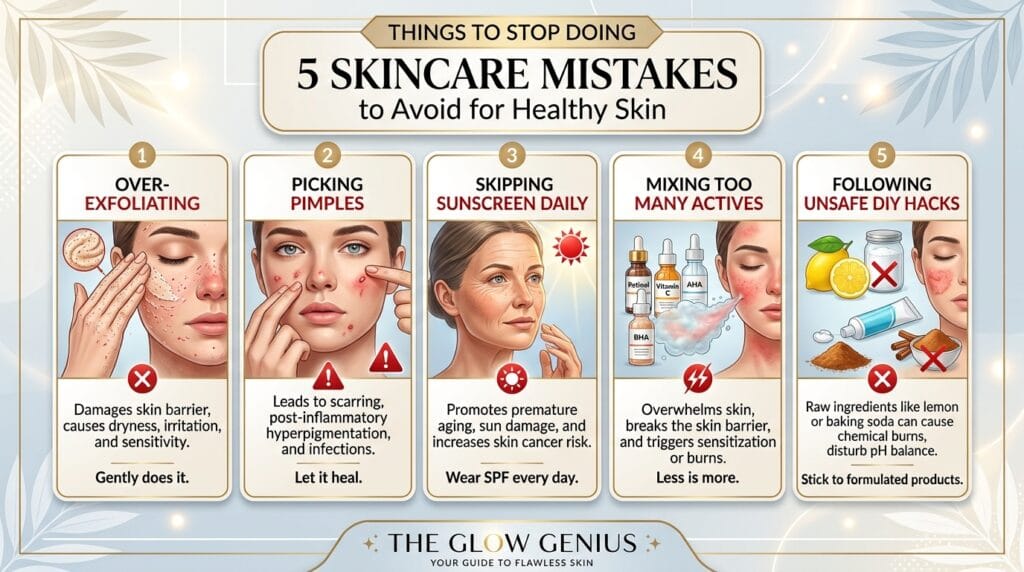
Five specific behaviours quietly undermine clear skin progress. Stopping these matters as much as starting anything new.
Stop over-exfoliating immediately. It strips the skin barrier and triggers a rebound of excess oil production. Stop picking and squeezing breakouts, since this single habit causes the scarring that lingers long after the original blemish heals.
Stop skipping SPF, since doing so accelerates every type of visible skin damage, from collagen breakdown to uneven tone. Also stop layering too many active ingredients at once — this combination frequently causes irritation and genuine skin barrier damage rather than faster results.
Finally, stop following unverified TikTok skin trends. Dr. Joyce Park has confirmed that lemon juice, baking soda, and similarly unproven “hacks” carry no evidence base and risk real harm to your skin.
How to Build a Consistent Clear Skin Daily Routine
A sustainable clear skin routine does not need to be complicated. In fact, simplicity is the entire point.
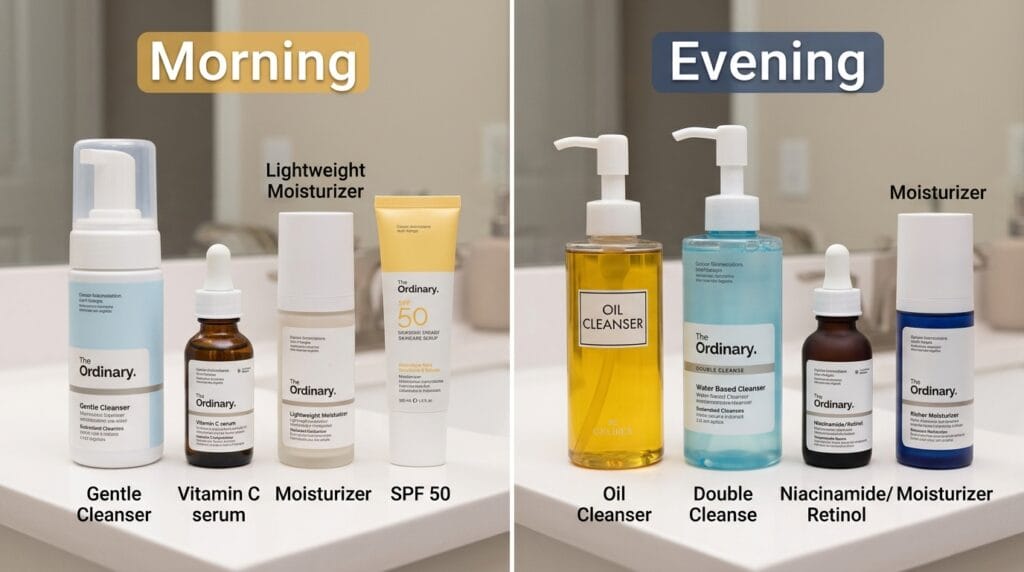
At morning, use a gentle cleanser, followed by a vitamin C serum, a moisturiser, and SPF as your final step. And in the evening, double cleanse thoroughly, apply a treatment product — either niacinamide or retinol depending on your skin’s needs — and finish with moisturiser.
Weekly, exfoliate only once or twice at most, since more frequent exfoliation strips rather than supports the skin barrier. Monthly, revisit your pillowcase change frequency and consider upgrading to a silk pillowcase if you have not already.
Throughout all of this, consistency matters more than complexity. A simple four-step morning and evening routine, followed daily without fail, consistently outperforms an elaborate ten-step routine used only occasionally.
Clear Skin Takes Time — The Honest Timeline
Understanding the realistic timeline for habits for clear skin prevents the frustration that comes from expecting overnight results.
Weeks one and two involve your skin adjusting to new habits, including any dietary or sleep changes. Weeks three and four often bring early improvement in overall skin texture, even before breakouts visibly reduce.
Months two and three typically deliver visible improvement in breakouts and overall clear skin progress, assuming consistent habit maintenance throughout. From month three onward, consistent clarity becomes the norm — provided you maintain the habits that got you there, rather than abandoning them once results appear.
Habits That Help vs Habits That Hurt Clear Skin
Habit | Helps or Hurts | Why | How Often |
|---|---|---|---|
Daily SPF | Helps | Prevents UV damage and premature ageing | Every single day |
Double cleansing at night | Helps | Removes SPF, makeup, pollution buildup | Every evening |
Over-cleansing (3+ times daily) | Hurts | Strips skin barrier, triggers more oil | Avoid entirely |
Changing pillowcase twice weekly | Helps | Reduces bacteria reintroduction | Twice weekly minimum |
High sugar diet | Hurts | Raises insulin, increases sebum production | Reduce consistently |
Adequate hydration (8 glasses) | Helps | Prevents dullness, supports cell turnover | Daily |
Touching or picking face | Hurts | Spreads bacteria, causes scarring | Avoid entirely |
Regular exercise | Helps | Increases circulation, reduces cortisol | 3-5 times weekly |
Reusing body towel on face | Hurts | Reintroduces bacteria repeatedly | Avoid — use dedicated towel |
Consistent simple routine | Helps | Outperforms complicated inconsistent routines | Daily, without fail |
You May Also Like
If you loved this guide, these articles were made for you:
- Skincare Routine for Oily Skin
- Homemade Face Mask for Acne
- Best Facial Cleansers for Every Skin Concern
- Vitamin C Serum Benefits
- Habits of Women Who Age Slowly
FAQs
Your Clearest Skin Starts With Today’s Habits
Your products work better when your daily habits for clear skin actually support them, rather than working against them silently in the background.
Start with the three most impactful and most overlooked habits: daily SPF, consistent sleep, and regular pillowcase changes. These three alone address inflammation, collagen support, and bacteria exposure simultaneously.
From there, layer in the diet, hygiene, and stress management habits at your own pace. Clear skin is not built overnight, but it is genuinely built — one consistent daily choice at a time.
Save this guide to your Pinterest boards and share it with a friend who feels like she has tried everything already. 🌿