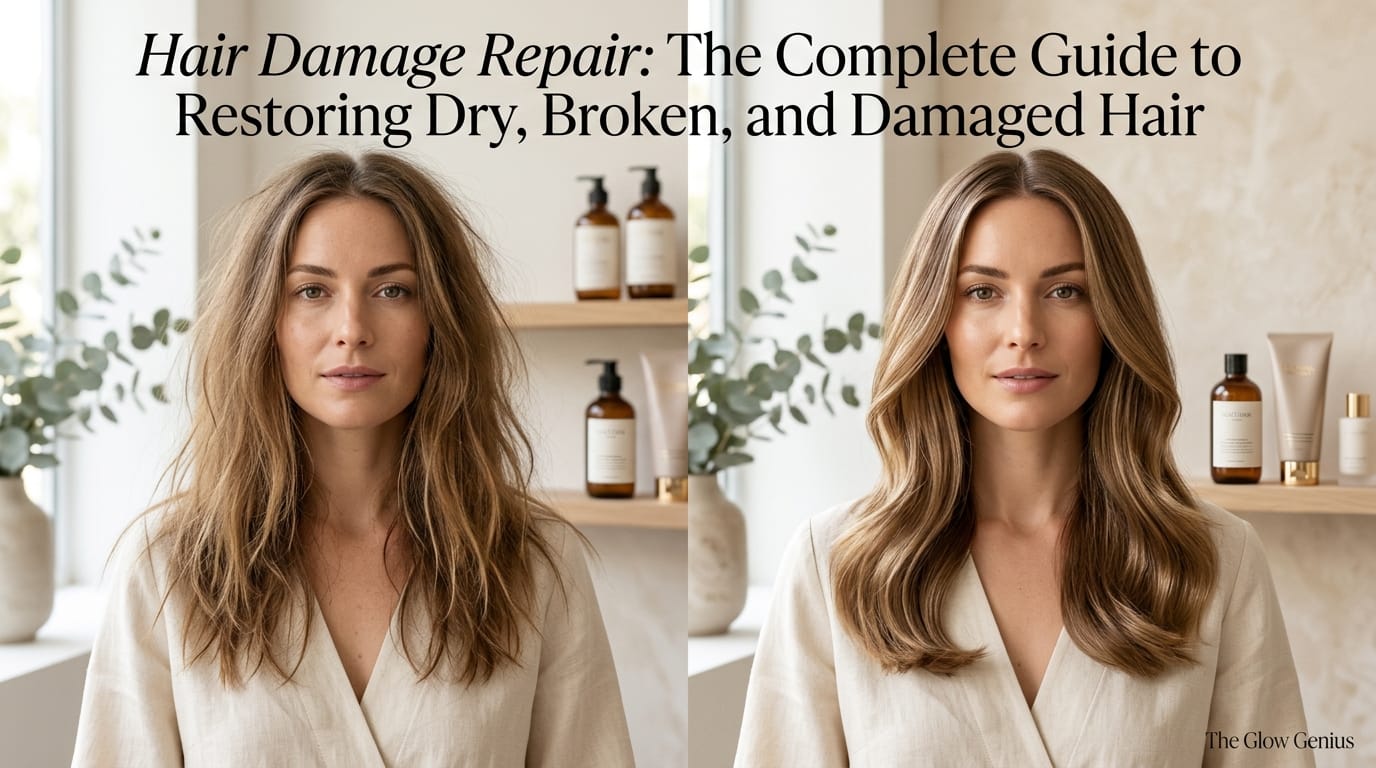
Hair Damage Repair: The Complete Guide to Restoring Dry, Broken, and Damaged Hair
All recommendations for hair damage repair on The Glow Genius are independently researched by our editors to help you make the best beauty decisions.
More women are dealing with dry hair, breakage, and hair damage than ever before. Pinterest saves for hair damage repair content are up 300% this month alone. That surge reflects a genuine shift toward restorative, nourishing hair care tips at home.
Heat damage, chemical processing, and daily styling take a real toll on the hair shaft. However, most hair damage is reversible with the right approach. Your hair wants to recover. It simply needs the right conditions and the right treatments to do so.
This guide covers everything. You will learn why hair damage happens, how to diagnose your specific type, which DIY treatments work best, and how to build a restorative routine that sticks. Here is the complete repair guide.
Signs Your Hair Is Damaged — And Why It Happens
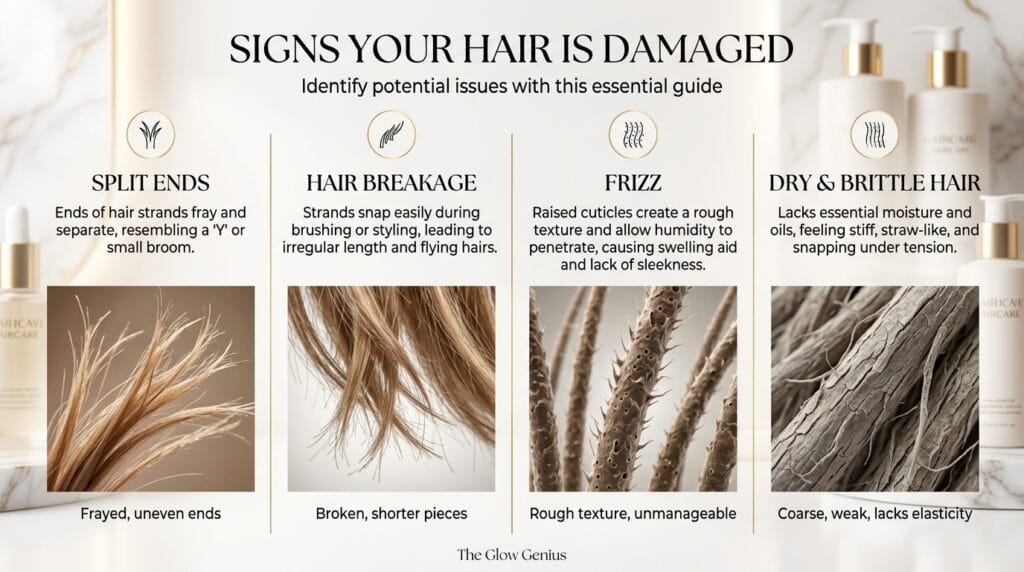
Hair damage shows up in five clear ways. Knowing which signs you have helps you choose the right repair approach. Because not all damage looks the same, diagnosis comes before treatment.
Split ends are the most visible sign. The cuticle, which is the protective outer layer of each strand, breaks apart at the tip, leaving the inner hair shaft exposed. Split ends signal that your ends need urgent trimming and that your routine is stripping moisture faster than it replaces it.
Breakage means strands snap mid-shaft rather than shedding from the root. You will notice shorter, uneven pieces throughout your hair. This indicates your hair has lost elasticity, meaning its ability to stretch and return without snapping. Dry hair and hair damage from chemicals are the two most common causes of lost elasticity.
Excessive frizz signals a damaged, lifted cuticle that struggles to lay flat. The rough surface lets moisture escape and humidity enter unevenly. Similarly, dry hair that never feels hydrated, even after conditioning, usually points to high porosity, meaning the cuticle is too open to retain moisture retention effectively.
Why Hair Breaks and Loses Strength — The Real Causes
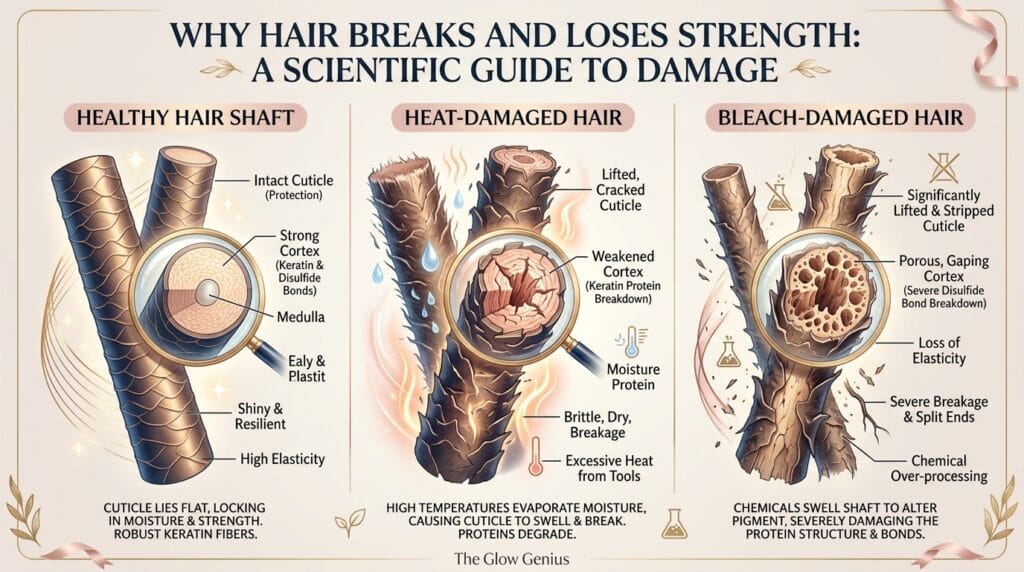
Understanding the cause of hair damage changes everything about how you fix it. Bleach damage works differently to heat damage, and each requires a different treatment approach.
Heat damage happens when styling tools reach temperatures high enough to disrupt the keratin bonds inside the hair shaft. Keratin is the protein that gives hair its structure and strength. Repeated heat without protection progressively weakens those bonds, leading to breakage and permanent split ends that no conditioner can reverse.
Bleach damage opens the cuticle aggressively and strips natural oils along with the pigment. Because bleached strands lose their protective coating, moisture retention becomes extremely difficult. As a result, bleach damage causes the most severe dry hair of any chemical process.
Over-washing with a harsh shampoo strips natural oils from the scalp health and the hair shaft simultaneously. That is why switching to a sulphate-free shampoo matters — sulphates, which are strong detergents, remove far more oil than hair needs. Brushing wet hair is another major cause of breakage, since wet strands stretch and snap much more easily than dry ones.
Protein vs Moisture — What Damaged Hair Actually Needs
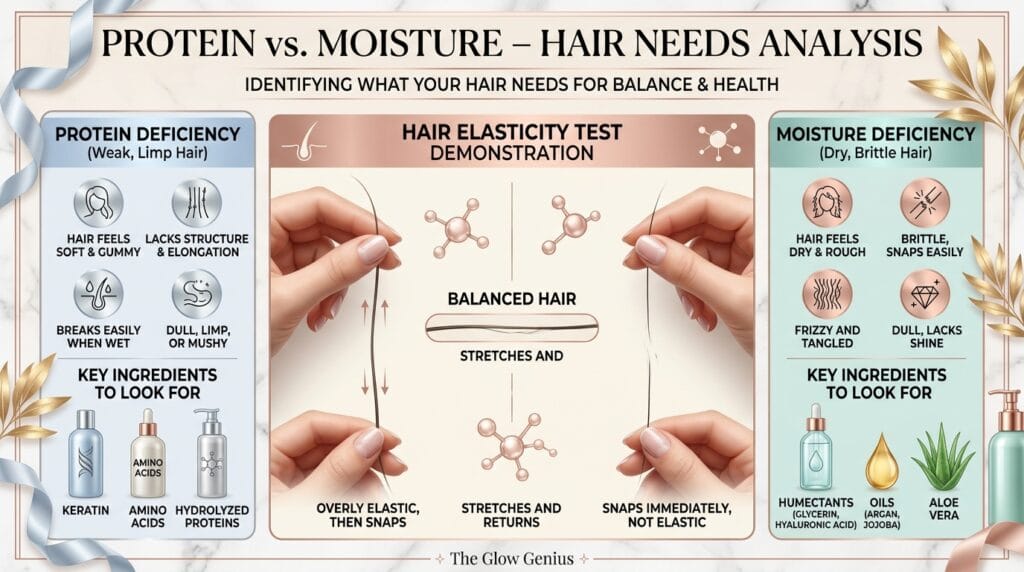
Porosity describes how well your hair absorbs and retains water. It determines exactly which hair treatment your strands need most. Understanding yours changes how you approach hair damage repair completely.
Low porosity hair has a tight cuticle that resists moisture entering. Products tend to sit on top rather than absorbing. Because of this, low porosity hair needs lightweight, penetrating moisture formulas rather than heavy creams. It benefits more from deep conditioner treatments applied under heat, which helps open the cuticle temporarily.
High porosity hair has a raised, damaged cuticle that absorbs moisture easily but loses it just as fast. This is the most common porosity type in hair damage situations. High porosity hair needs regular protein treatment applications to fill the gaps in the cuticle and reduce rapid moisture loss. In addition, sealing with natural oils after every wash helps lock in moisture retention.
The elasticity test tells you which your hair needs right now. Wet a single strand and stretch it gently. If it snaps immediately with no stretch, it needs moisture. If it stretches far but feels mushy and does not return, it needs a protein treatment. Healthy hair stretches a little and then snaps cleanly. This test guides every hair damage repair decision you make.
DIY Hair Restoration Treatments to Try at Home
DIY treatments are genuinely effective for dry hair and moderate hair damage. These eight options target different types of damage. Use the elasticity test from Section 3 to guide your choices.
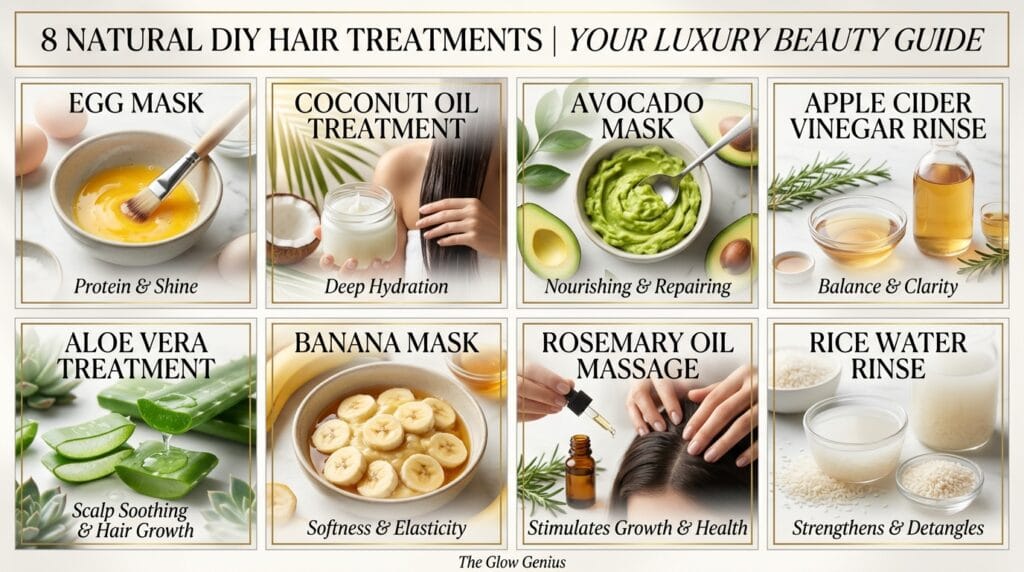
1. Egg and Olive Oil Protein Mask
An egg and olive oil mask delivers protein treatment benefits from the egg alongside nourishing natural oils from the olive oil. Beat two eggs with two tablespoons of olive oil and apply thoroughly to damp hair, focusing on mid-lengths and ends. Leave for 20 to 30 minutes, then rinse with cool water. Use this every two weeks for hair damage repair on protein-deficient strands.
2. Coconut Oil Pre-Wash Treatment
Coconut oil penetrates the hair shaft before washing, reducing the protein loss that shampooing causes. Apply generous amounts of warm coconut oil from root to tip the night before washing. Cover with a shower cap and allow to absorb overnight. Because this pre-wash step prevents moisture stripping during cleansing, it benefits all porosity types.
3. Avocado and Honey Deep Moisture Mask
Avocado delivers fatty acids that soften and restore dry hair, while honey attracts and seals in water. Mash one ripe avocado with two tablespoons of honey and apply to clean, damp hair. Leave for 30 to 45 minutes before rinsing thoroughly. This hair mask suits high porosity and bleach damage especially well. Use weekly during an intensive repair period.
4. Apple Cider Vinegar Rinse
An apple cider vinegar rinse gently seals the lifted cuticle and restores the hair’s natural pH level. Mix one tablespoon of apple cider vinegar into one cup of water and pour over hair after conditioning. Do not rinse it out. However, limit this to once a week, since overuse can cause dryness over time. This treatment visibly reduces frizz and adds shine.
5. Aloe Vera Scalp and Strand Treatment
Aloe vera soothes scalp health, reduces inflammation, and adds lightweight moisture to the hair shaft simultaneously. Apply fresh aloe vera gel directly to the scalp and work it through the lengths with your fingers. Leave for 20 minutes, then rinse with a sulphate-free shampoo. Therefore, this treatment suits both scalp health concerns and dry hair in one step.
6. Banana and Yoghurt Mask
Banana contains potassium and natural sugars that soften and strengthen dry hair, while yoghurt provides gentle lactic acid and protein. Blend one ripe banana with three tablespoons of plain yoghurt until smooth, ensuring no lumps remain. Apply to damp hair and leave for 30 minutes before rinsing. This hair mask works well for hair damage caused by heat styling.
7. Rosemary Oil Scalp Massage
A rosemary oil scalp massage stimulates circulation at the scalp, which supports hair growth from healthy follicles. Mix five drops of rosemary oil into two tablespoons of a carrier oil like jojoba or sweet almond oil. Massage into the scalp for five minutes using firm, circular motions. In addition, regular scalp massage improves scalp health and reduces tension-related hair damage over time.
8. Rice Water Rinse
Rice water is rich in inositol, a compound that strengthens the hair shaft and improves elasticity in damaged strands. Soak half a cup of uncooked rice in two cups of water for 30 minutes, then strain and use the cloudy water as a final rinse after conditioning. Because the proteins bind to the cuticle, results appear within a few uses. Apply once a week for best results.
Building a Restorative Hair Routine Step by Step
A consistent routine matters more than any single treatment. These seven steps build a complete damaged hair repair system that works whether you start with moderate or severe hair damage.
- Step 1. Swap to a sulphate-free shampoo. A sulphate-free shampoo cleanses without stripping natural oils from the hair shaft. This single swap reduces breakage and dry hair visibly within a few weeks of consistent use.
- Step 2. Use a deep conditioner every wash day. A deep conditioner penetrates the cuticle and replenishes lost moisture from within the hair shaft. Apply from mid-length to ends, cover with a shower cap, and leave for a minimum of 20 minutes.
- Step 3. Apply a protein treatment every two weeks. A protein treatment rebuilds the keratin structure inside damaged strands. Because overuse leads to stiffness and breakage, every two weeks is the right frequency for most hair damage repair situations.
- Step 4. Apply a leave-in conditioner to damp hair after every wash. A leave-in conditioner provides ongoing moisture support between washes. It also reduces friction during detangling, which minimises breakage significantly.
- Step 5. Never brush soaking wet hair. Wet hair has reduced elasticity and snaps far more easily than dry hair. Therefore, wait until hair is at least 70% dry before detangling, or use a wide-tooth comb on conditioner-coated hair only.
- Step 6. Trim split ends every eight to ten weeks. Regular trimming removes split ends before they travel up the hair shaft and cause further breakage. This step preserves length rather than sacrificing it.
- Step 7. Protect hair from heat before every styling session. Apply a heat protectant to damp or dry hair before any hot tool contact. Furthermore, lowering your heat setting even slightly makes a measurable difference to cumulative heat damage over time.
How to Repair Bleached or Heat Damaged Hair Specifically
Bleach damage and heat damage both require targeted approaches. Because they affect the hair shaft differently, one treatment does not suit both equally.
A bond-building treatment is the most effective response to bleach damage. Bleach breaks the disulfide bonds inside the hair shaft that give hair its strength and shape. A bond-building treatment reconnects those bonds at a molecular level. Therefore, adding a bond-building treatment to your wash routine makes a rapid and visible difference to bleach damage recovery.
Heat damage causes protein denaturation, meaning the keratin inside the strand changes structure and loses its function. A protein treatment helps rebuild some of that lost structure. However, the most effective step for heat damage is also prevention — consistent use of heat protectant before every styling session stops the damage from deepening.
Bleached hair needs significantly more moisture than uncoloured hair. Because the cuticle stays permanently more open after bleach, moisture retention is an ongoing challenge rather than a temporary one. Expect full hair damage repair from severe bleach damage to take six to twelve months of consistent care, depending on starting damage levels.
Hair Treatment Guide at a Glance
Treatment Type | What It Does | Best For | How Often | Time Needed |
|---|---|---|---|---|
Protein mask | Rebuilds keratin structure | Breakage, elasticity loss | Every 2 weeks | 20 to 30 minutes |
Deep conditioner | Replenishes moisture in hair shaft | All damage types | Every wash | 20 to 45 minutes |
Bond-building treatment | Reconnects broken disulfide bonds | Bleach damage | Every wash or weekly | 20 to 30 minutes |
Hot oil treatment | Seals cuticle and adds natural oils | Dry, porous hair | Weekly | 20 to 30 minutes |
Scalp massage with oil | Stimulates circulation, supports growth | Scalp health, hair growth | 2 to 3 times weekly | 5 minutes |
ACV rinse | Seals cuticle, restores pH | Frizz, dull hair | Once a week | Instant |
You May Also Like
If you loved this guide, these articles were made for you:
- 10 Best Deep Conditioners for 4C Hair
- 6 DIY Deep Conditioner for 4C Hair Hacks
- Rosemary Oil for Hair Growth vs Minoxidil
- 10 Best Heat Protection Sprays for Straighteners
- Braided Cornrow Hairstyles for Black Women
FAQs
Your Hair Deserves Better Than This
Hair damage repair is not a quick fix. It is a commitment to changing how you care for your hair, day after day, wash after wash.
Start with the elasticity test. Identify your primary damage type. Build your routine around protein or moisture first, then balance both over time. Add DIY treatments where they fit naturally into your week.
Most importantly, be patient with the process. New hair growth will come in stronger. Existing strands will improve steadily. The frizz will settle. The breakage will reduce. The softness will return.
Save this guide to your Pinterest boards and share it with a friend whose hair deserves a little more love this season. Your best hair is not behind you. It is growing. 🌿