Eucalyptus Globulus Leaf Oil: The Complete Guide to This Powerful Skincare Ingredient
All recommendations on The Glow Genius are independently researched by our editors to help you make the best beauty decisions. This article is for informational purposes and does not replace advice from a qualified dermatologist.
You flip over your new cleanser or toner and spot “Eucalyptus Globulus Leaf Oil” near the bottom of the ingredient list. It sounds clinical. It sounds chemical. In reality, it is the INCI name for eucalyptus essential oil — the same botanical ingredient you already know from cold remedies and muscle rubs.
Eucalyptus globulus leaf oil comes from the Blue Gum eucalyptus tree, a species originally native to Australia. Cosmetic chemists use the full INCI name on ingredient labels for accuracy and regulatory transparency. Because “eucalyptus oil” could technically refer to dozens of eucalyptus species, the specific name “globulus” identifies exactly which plant the oil comes from.
Understanding this ingredient properly helps you read labels with confidence and choose products that genuinely suit your skin type. Here is the complete ingredient guide.
What This Botanical Ingredient Actually Is
Eucalyptus globulus leaf oil comes from the Blue Gum eucalyptus tree, originally from southeastern Australia and Tasmania. Today, manufacturers cultivate the trees commercially across Europe, India, China, and Africa due to widespread global demand. The oil reaches your skincare products through steam distillation, a process where steam passes through the eucalyptus leaves and carries the volatile compounds upward into a collection chamber, where they cool and condense into the final oil.
The primary active compound in eucalyptus globulus leaf oil is eucalyptol, also known as 1,8-cineole. Eucalyptol makes up 60 to 90% of the oil’s composition and drives most of its documented skin and health benefits. Because this molecule is both oil-soluble and highly bioactive, it penetrates the outer layers of skin more effectively than many water-based actives.
Eucalyptus globulus has been used medicinally and cosmetically for centuries. However, its modern skincare research base has grown significantly in recent years, providing evidence beyond traditional use.
What Eucalyptol Actually Does to Your Skin
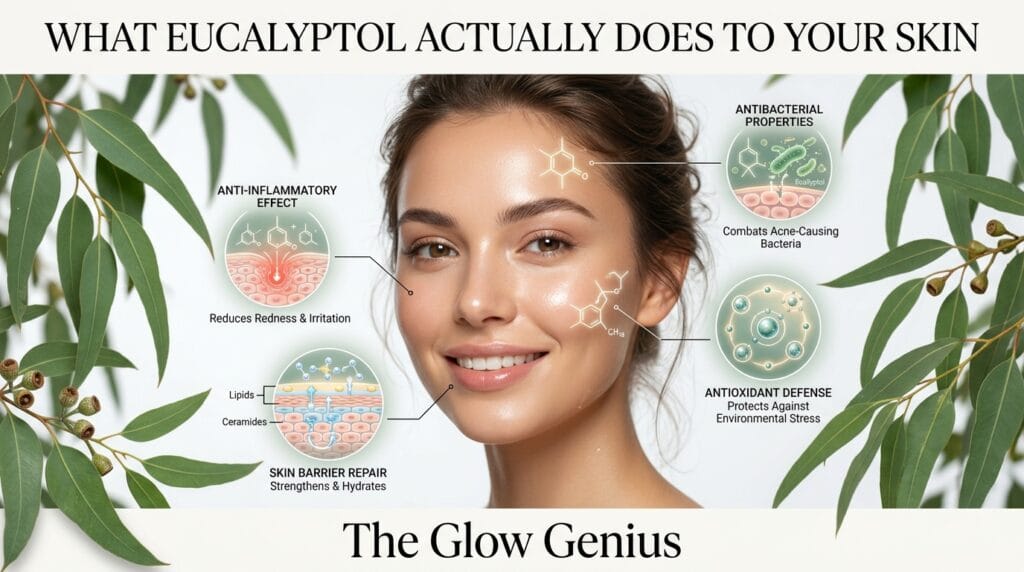
Eucalyptus globulus leaf oil performs six distinct functions on skin, each supported by research. Understanding these helps you identify whether a product containing this ingredient suits your specific concerns.
First, eucalyptol carries significant anti-inflammatory properties. It works by inhibiting the enzyme arachidonate 5-lipoxygenase, which drives inflammatory pathways in skin cells. Because inflammation underlies most visible skin concerns including acne, redness, and irritation, this mechanism makes eucalyptus oil anti-inflammatory action genuinely valuable.
Second, eucalyptus globulus leaf oil is antimicrobial and specifically active against Cutibacterium acnes, the bacteria responsible for inflammatory acne breakouts. This makes it a relevant ingredient for oily skin and acne-prone skin specifically. Third, it acts as an antioxidant, neutralising the free radicals that accelerate visible ageing. Fourth, it carries antifungal properties that benefit scalp and skin conditions where fungal overgrowth plays a role.
Fifth, a 2012 study in the International Journal of Cosmetic Science found that eucalyptus increases ceramides production in keratinocytes (skin cells), which improves stratum corneum (the skin’s outermost protective layer) function and strengthens the skin barrier. Sixth, it inhibits tyrosinase, the enzyme that produces melanin, giving it depigmenting effects that support more even skin tone over time.
The Research Behind This Botanical Ingredient
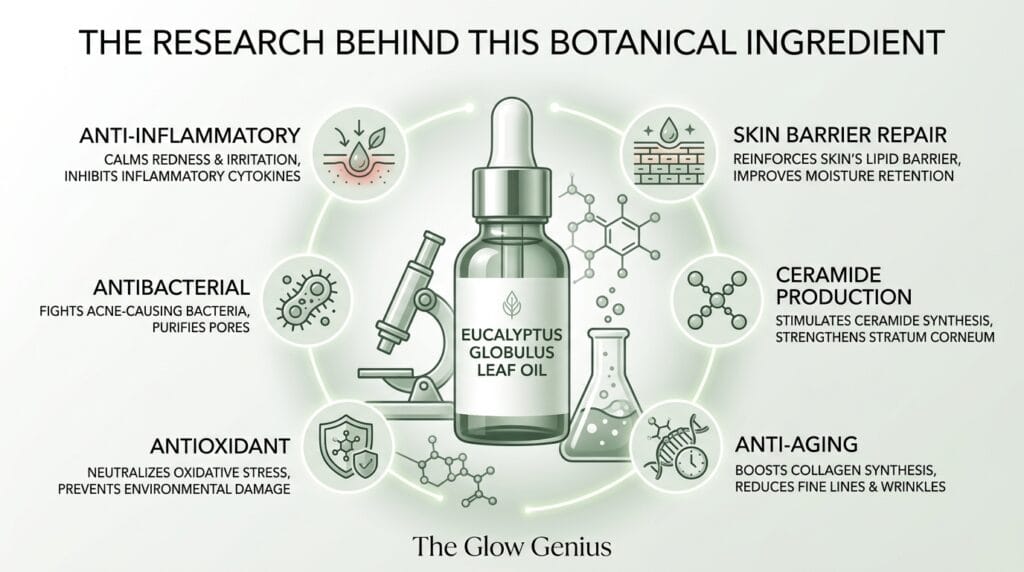
The research base behind eucalyptus globulus leaf oil has strengthened meaningfully in recent years. Two landmark studies deserve particular attention.
A 2022 study published on PubMed, conducted by University of Coimbra researchers, examined eucalyptus globulus extracts for anti-aging potential in vitro (in laboratory cell studies). The findings showed decreased senescence markers — specifically beta-galactosidase and matrix metalloproteinases, which are biological indicators of cellular ageing. The study also confirmed depigmenting effects through tyrosinase inhibition and melanin production reduction. Most importantly, the researchers found no skin irritation or sensitisation at the tested concentrations.
A 2012 study in the International Journal of Cosmetic Science confirmed that eucalyptus increases ceramide levels in keratinocytes. Because ceramides are the lipids that hold the skin barrier together, this finding directly links eucalyptus to improved stratum corneum function. As a result, products containing eucalyptus globulus leaf oil may actively support the skin barrier rather than simply sitting on top of it.
Furthermore, laboratory research confirms active antibacterial action against Cutibacterium acnes, the primary bacteria driving inflammatory acne. This adds specific relevance for acne-prone and oily skin users.
Which Skin Types Benefit Most From This Ingredient
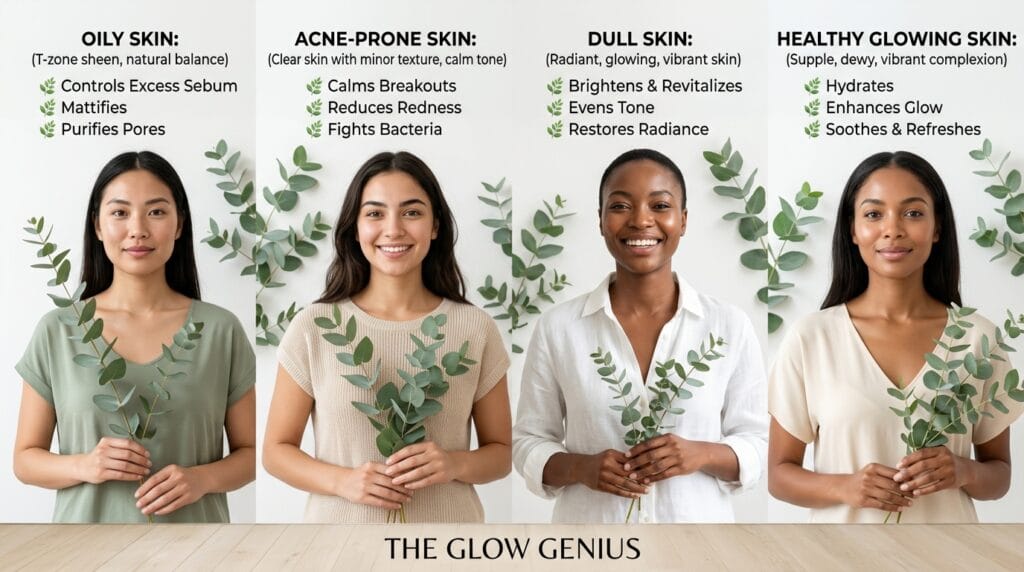
Eucalyptus globulus leaf oil suits some skin types far better than others. Matching its benefits to your actual skin type helps you determine whether products containing it are genuinely useful for you.
- Oily skin benefits most directly. Eucalyptol carries antimicrobial properties and controls the environment in which excess sebum creates bacterial overgrowth. In addition, its anti-inflammatory action reduces the redness and swelling that overactive sebaceous glands often trigger. Therefore, eucalyptus oil for oily skin functions as a targeted, multi-action ingredient rather than a generic botanical addition.
- Acne-prone skin also benefits significantly. The active antimicrobial effect against Cutibacterium acnes targets one of the primary biological causes of inflammatory acne directly. Combined with the anti-inflammatory action of eucalyptol, this makes eucalyptus oil for acne a genuinely relevant active rather than a cosmetic fragrance ingredient.
- Dull skin concerned with uneven tone benefits from the tyrosinase-inhibiting and antioxidant actions. Skin with ageing concerns benefits from the senescence marker reduction found in the 2022 Coimbra research. However, very dry skin, reactive sensitive skin, and compromised skin barrier skin types should approach this ingredient cautiously, ensuring adequate dilution and always completing a patch test before regular use.
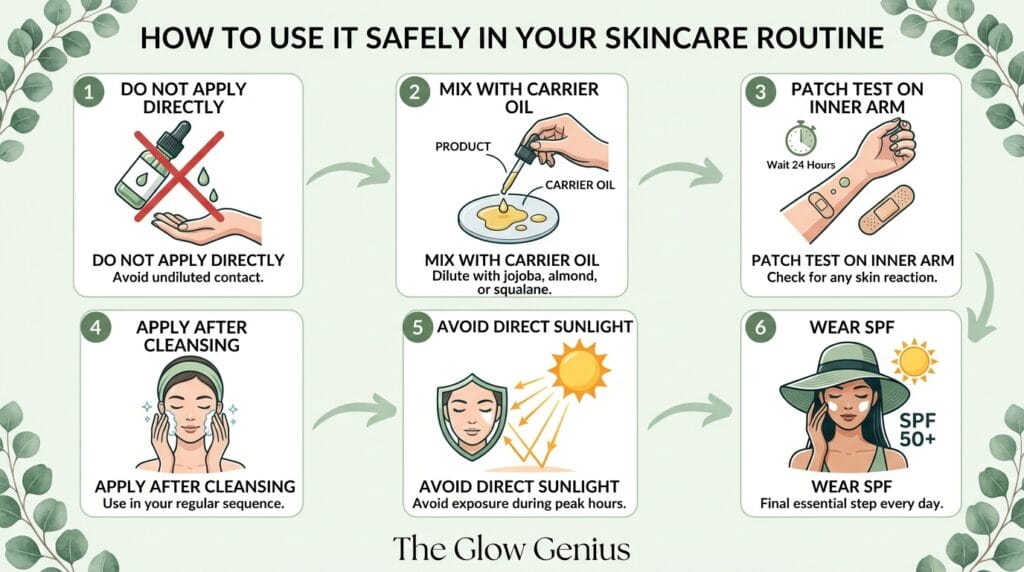
How to Use It Safely in Your Skincare Routine
Using eucalyptus globulus leaf oil correctly requires specific safety steps. These rules apply whether you add the raw essential oil to a DIY recipe or use a pure essential oil directly.
- Step 1. Never apply undiluted essential oil directly to skin. Raw eucalyptus globulus leaf oil is highly concentrated. Applying it neat to skin can cause burns, severe irritation, and contact dermatitis. This rule applies without exception, regardless of how small the amount.
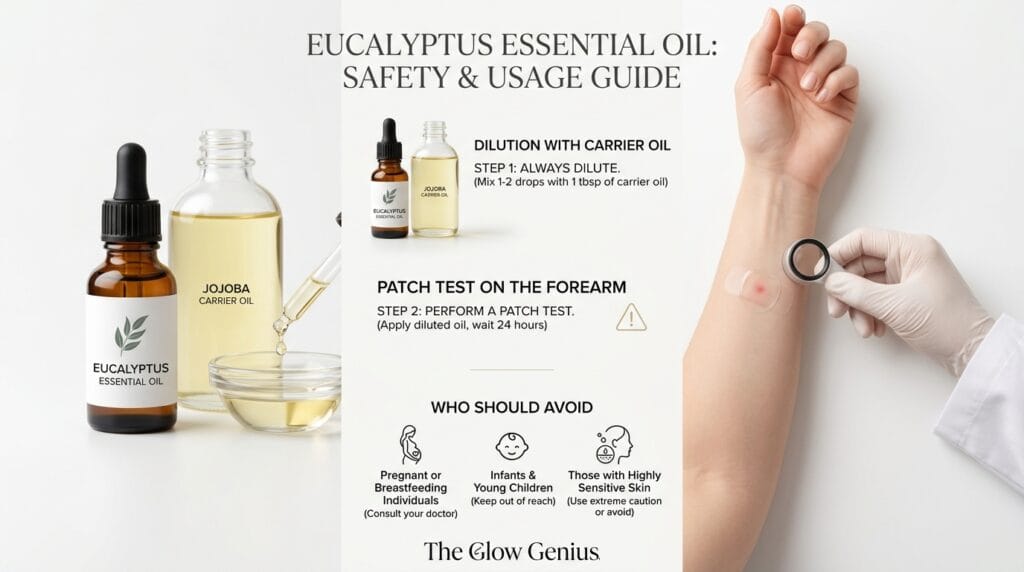
- Step 2. Mix one to two drops into a carrier oil before face application. Suitable carrier oils include jojoba, rosehip, and sweet almond oil. The carrier oil dilutes the essential oil to a safe concentration while also providing its own skin benefits. A maximum dilution of 1% (one drop per teaspoon of carrier) suits face use safely.
- Step 3. Always complete a patch test on your inner arm 24 hours before face use. Apply the diluted mixture to a small patch of skin on your inner forearm. Wait 24 hours and observe for redness, itching, or swelling before applying to your face.
- Step 4. Apply to cleansed skin as part of your regular routine. Do not use raw eucalyptus globulus leaf oil as a standalone undiluted product. Instead, incorporate it at the correct dilution within your existing routine after cleansing.
- Step 5. Avoid direct sun exposure immediately after use. Some sources note a photosensitivity concern associated with eucalyptus oil. Therefore, apply products containing this ingredient in the evening where possible, and always follow morning use with SPF.
- Step 6. Prefer evening use to reduce photosensitivity risk. Evening application allows the ingredient to work overnight without immediate sun exposure. This approach also removes the need to remember SPF as a protective follow-up step.
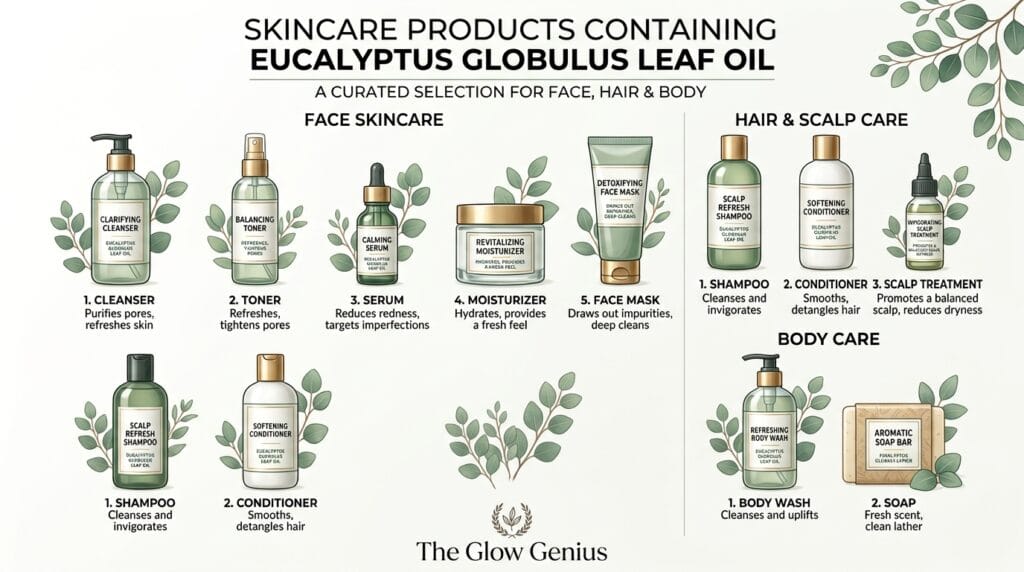
What Skincare Products Contain This Ingredient
You find eucalyptus globulus leaf oil in a wide range of formulated skincare and body care products. Common product types include cleansers, toners, face moisturisers, soaps, bath oils, deodorants, and hair care products. It also appears in some scalp treatments and masks.
When you see eucalyptus globulus leaf oil on a formulated product’s ingredient label, the brand’s cosmetic chemists have already calculated a safe, appropriate dilution for skin contact. This is fundamentally different from raw essential oil DIY use. Because professional formulations are tested for irritation and safety at specific concentrations, using formulated products is significantly lower risk than adding the raw oil yourself.
Therefore, if you see this ingredient on the label of a cleanser, toner, or moisturiser you buy from a reputable skincare brand, there is no reason for alarm. The ingredient works as a supportive active within the larger formula. In addition, its position toward the bottom of most ingredient lists indicates a relatively low but functional concentration.
Eucalyptus Oil for Hair and Scalp — What the Research Shows
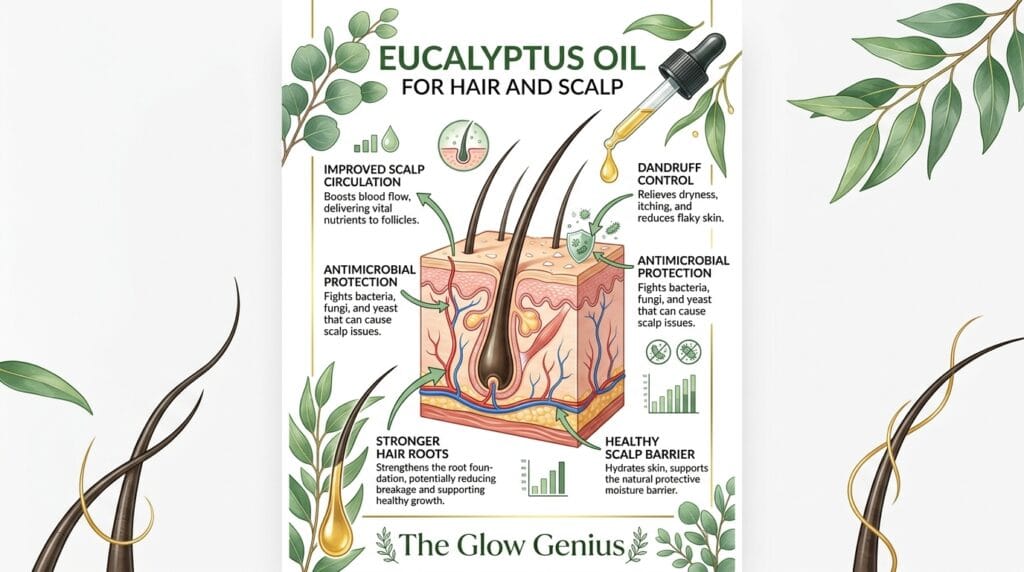
Eucalyptus globulus leaf oil appears in hair care products for several well-supported reasons. Its antimicrobial action targets the scalp bacteria and fungi that contribute to dandruff and scalp irritation. Because Malassezia fungus drives most dandruff, an ingredient with documented antifungal properties can meaningfully reduce flaking and scalp discomfort with consistent use.
In addition, eucalyptol improves blood circulation to the area it contacts. Applied to the scalp, this increased circulation delivers more oxygen and nutrients to hair follicles. As a result, a healthier scalp environment supports stronger, better-nourished hair growth from the root.
Hair care products containing eucalyptus globulus leaf oil include scalp treatments, anti-dandruff shampoos, hair masks, and some conditioners. If you consider adding raw eucalyptus oil directly to your scalp, always dilute it into a carrier oil first and apply the diluted mixture, following the same safety rules that apply to face use. The scalp carries the same contact dermatitis risk as facial skin for concentrated essential oil contact.
Safety Warnings and Who Should Avoid This Ingredient
Eucalyptus globulus leaf oil requires respect and specific safety practices. These warnings apply to raw essential oil use — formulated products containing this ingredient at appropriate concentrations are generally safer for most adults.
Never apply undiluted eucalyptus globulus leaf oil to skin directly. This rule has no exceptions. Undiluted essential oil on skin causes burns, blistering, and severe contact dermatitis reactions in many people. Always dilute in a carrier oil first.
Always complete a patch test 24 hours before face use. Even at correct dilution levels, eucalyptus globulus leaf oil can cause contact dermatitis in individuals with essential oil sensitivities. Never skip this step, regardless of how well you have tolerated other botanical ingredients previously.
This ingredient is not suitable for children under two years of age. The eucalyptol content poses specific risks to young children’s respiratory and neurological systems even through topical application. Pregnant women should also consult their healthcare provider before using products containing eucalyptus globulus leaf oil, since safety during pregnancy has not been fully established. In addition, eucalyptus globulus leaf oil is toxic if ingested — it is for topical use only, and any product containing it must be stored safely away from children. Use SPF after morning application to address potential photosensitivity risk.
How This Ingredient Compares to Similar Botanicals
Ingredient | Main Benefit | Best Skin Type | Key Concern | Acne Use |
|---|---|---|---|---|
Eucalyptus globulus leaf oil | Anti-inflammatory, antimicrobial, ceramide support | Oily, acne-prone | Must be diluted, patch test required | Strong — active against C. acnes |
Tea tree oil | Antimicrobial, anti-inflammatory | Oily, acne-prone | More concentrated, higher irritation risk | Strong — well-researched for acne |
Rosemary oil | Antioxidant, antimicrobial, circulation | Oily, dull, scalp | Dilution required, patch test needed | Moderate — some antimicrobial evidence |
Lavender oil | Soothing, anti-inflammatory, calming | Sensitive, dry, stressed skin | Dilution required, some allergy risk | Mild — less directly targeted |
Niacinamide | Pore refining, sebum control, barrier repair | Oily, combination, sensitive | Excellent tolerability, low risk | Strong — regulates sebum and inflammation |
You May Also Like
If you loved this guide, these articles were made for you:
- Homemade Face Mask for Acne
- Vitamin C Serum Benefits
- Best Facial Cleansers for Every Skin Concern
- Skincare Routine for Oily Skin
- Best Vitamins for Acne
FAQs
Should You Use Products With This Ingredient?
Eucalyptus globulus leaf oil is a genuinely well-researched botanical ingredient with specific, documented benefits for oily skin, acne-prone skin, and anyone wanting antioxidant and anti-inflammatory support in their routine.
If you see it in a formulated cleanser, toner, or moisturiser, it is already safely diluted and working as a supportive active within the product. You do not need to do anything differently — the brand has handled the safety formulation for you.
If you want to use raw eucalyptus globulus leaf oil directly, always dilute it properly, always complete a patch test, and always follow the safety rules in this guide. This ingredient rewards careful, respectful use with real skin benefits.
Save this guide to your Pinterest boards and share it with a friend who keeps seeing this ingredient name and wondering what it means. Your label-reading confidence just got a significant upgrade. 🌿