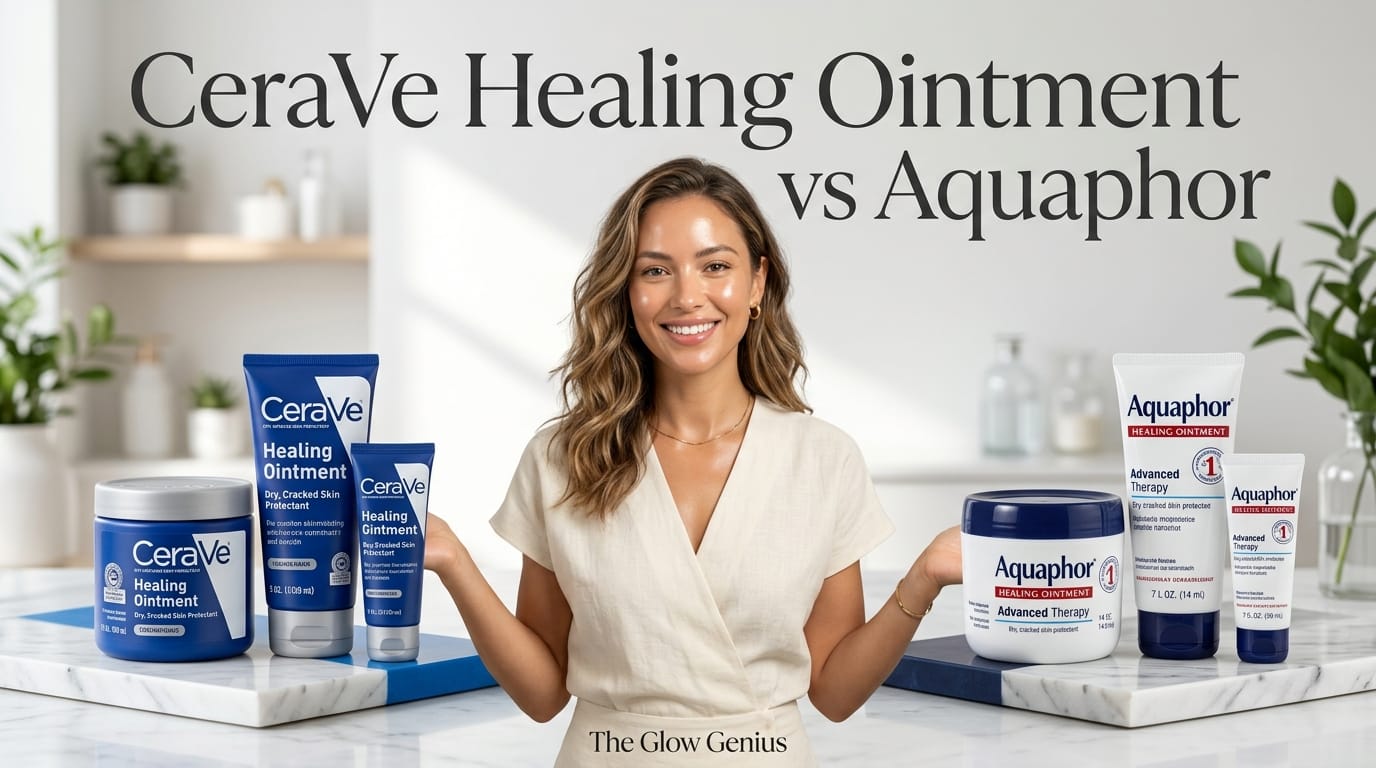
CeraVe Healing Ointment vs Aquaphor: Which One Is Actually Better for Your Skin?
CeraVe Healing Ointment vs Aquaphor is one of the most searched skincare comparisons online. Both are widely recommended by dermatologists. Both look like thick, shiny ointments in a tub or tube. However, they work in genuinely different ways.
The ingredient differences matter more than most people realise. CeraVe Healing Ointment contains ceramides, hyaluronic acid, and niacinamide — none of which appear in Aquaphor. Aquaphor, on the other hand, contains lanolin, glycerin, and bisabolol — none of which appear in CeraVe. Because of these differences, each product suits slightly different skin concerns and situations.
This guide uses only verified ingredient facts from both brands to give you an honest, complete answer. Here is the honest comparison.
What Is in Each Healing Ointment — Ingredients Compared
CeraVe Healing Ointment contains 46.5% petrolatum as its primary active ingredient. In addition, it contains ceramides, hyaluronic acid, niacinamide, paraffin, and mineral oil. The ceramides repair the skin barrier by replenishing the lipid layer that holds skin cells together. Hyaluronic acid acts as a humectant, meaning it draws moisture into the skin. Niacinamide calms inflammation and supports barrier function simultaneously.
Aquaphor Healing Ointment contains 41% petrolatum alongside mineral oil, ceresin, lanolin alcohol, panthenol (vitamin B5), glycerin, and bisabolol (derived from chamomile). The glycerin draws moisture into the skin as a humectant, similar to hyaluronic acid in CeraVe. Bisabolol provides gentle anti-inflammatory and soothing properties. Panthenol supports wound healing and skin repair.
Both products use petrolatum as their core occlusive ingredient. Petrolatum forms a physical barrier on the skin’s surface that locks in moisture and prevents water loss. However, CeraVe Healing Ointment contains a higher petrolatum percentage — 46.5% versus Aquaphor‘s 41%.
Key Ingredient Differences Between the Two Ointments
The most important ingredient difference between CeraVe Healing Ointment vs Aquaphor is ceramides. CeraVe contains three essential ceramides that actively rebuild the skin barrier. Because a damaged skin barrier underlies most dry skin, eczema, and irritation issues, this addition makes CeraVe a more therapeutically targeted product for barrier repair.
Aquaphor contains lanolin alcohol — the ingredient that creates the most meaningful difference for sensitive and allergy-prone skin. The American Contact Dermatitis Society named lanolin its 2023 “Allergen of the Year” due to increasing rates of skin reactions. This does not mean lanolin is inherently dangerous, but it does mean anyone with sensitive skin or known contact allergies faces a higher risk with Aquaphor than with CeraVe Healing Ointment, which contains no lanolin at all.
Both products contain mineral oil and function as occlusive emollient ointments. Furthermore, both are fragrance-free, which makes both suitable as baseline comparisons for sensitive skin — with the lanolin content being the key differentiating factor for allergy risk.
Which Ointment Suits Sensitive and Allergy-Prone Skin
For sensitive skin, CeraVe Healing Ointment holds a clear advantage. It contains no lanolin, no fragrance, and no known common contact allergens. It also includes niacinamide and ceramides, which actively support rather than simply protect the skin barrier. These properties make it suitable for very sensitive skin and even baby skin.
The lanolin concern with Aquaphor is clinically documented. One study found that 52% of surgical wounds treated with Aquaphor developed redness, compared to fewer with plain petrolatum. Dermatologist Katherine Scherling ARNP has noted that she shifted her general recommendation toward CeraVe Healing Ointment or plain petroleum jelly for sensitive post-procedure patients specifically because of this lanolin reaction risk.
However, many people use Aquaphor without any reaction — most individuals tolerate lanolin well. The concern applies most directly to those with a history of contact allergies, post-procedure wound healing, or known lanolin sensitivity. For anyone in those categories, CeraVe Healing Ointment is the lower-risk choice.
Best Ointment for Slugging — Which One to Use at Night
Slugging refers to applying a thick occlusive product as the final step in your night routine to seal all previous skincare underneath. The occlusive layer prevents moisture from evaporating overnight. Both CeraVe Healing Ointment and Aquaphor suit slugging effectively.
Aquaphor has been used for slugging longer and has a more established reputation in online skincare communities for this specific use. Its slightly thinner, more transparent texture spreads easily as a final layer. Because it feels less heavy on the face, many people find it comfortable to sleep in. However, its lanolin content means sensitive skin users should approach Aquaphor slugging cautiously.
CeraVe Healing Ointment adds a therapeutic dimension to slugging that Aquaphor does not. The ceramides and hyaluronic acid work during the overnight period to actively repair the skin barrier, rather than simply sealing it. As a result, CeraVe Healing Ointment suits people who want barrier repair as part of their overnight routine, while Aquaphor suits those who primarily want maximum occlusive sealing.
Which One to Choose for Eczema and Dry Skin
Both CeraVe Healing Ointment and Aquaphor help eczema and dry skin — petrolatum is one of the most clinically supported ingredients for both conditions. It relieves itching, seals cracked skin, and locks in the moisture that dry skin desperately needs. The question is which one does this better and more safely for each person’s specific situation.
For eczema-prone sensitive skin, particularly in cases where lanolin sensitivity is a factor, CeraVe Healing Ointment is the safer option. The ceramides specifically address the skin barrier dysfunction that underlies most eczema. Because eczema involves a deficiency in ceramides in the skin barrier, replenishing them topically with a fragrance-free occlusive formula creates a more targeted response.
For general dry skin without specific lanolin sensitivity, Aquaphor‘s glycerin and bisabolol add soothing and extra moisturising properties that some people find more comfortable. Glycerin as a humectant pulls water into the skin alongside the occlusive petrolatum barrier, creating a two-step moisture effect. Both are valid choices — skin type and sensitivity history should guide the decision.
Aquaphor for Tattoos — Why It Is the More Recommended Choice
Aquaphor for tattoos has an established, widely recommended role in fresh tattoo aftercare. Tattoo artists and dermatologists frequently recommend Aquaphor as the first ointment applied to fresh ink. Its combination of petrolatum, panthenol, and glycerin creates an environment that keeps fresh tattoo skin moist, protected, and soothed during the critical first healing days.
CeraVe has confirmed directly that it does not design its healing ointment products for tattoo aftercare specifically. This does not mean CeraVe Healing Ointment would harm a fresh tattoo, but it does mean the brand has not developed or tested it for that purpose. Aquaphor‘s panthenol (vitamin B5) specifically supports wound healing and skin regeneration, making it particularly suited to the skin repair required after tattooing.
Therefore, if tattoo aftercare is your primary reason for choosing between these two products, Aquaphor is the more appropriate and purpose-designed choice. For all other skin concerns, the comparison is more nuanced.
Which Ointment Works Better for Lips, Cuticles, and Minor Wounds
Both CeraVe Healing Ointment and Aquaphor suit lip care and cuticle repair effectively. The thick occlusive texture protects cracked lips and dry skin around nails from further moisture loss. Many people use Aquaphor as a lip balm specifically because its panthenol and glycerin provide both sealing and active healing benefits. CeraVe Healing Ointment works equally well on lips with the added benefit of ceramides for people who need barrier repair even in that small area.
For minor wound care and abrasion healing, the research provides an interesting finding. One clinical comparison found that plain Vaseline (pure petrolatum) actually healed minor wounds faster and with less redness than Aquaphor. This suggests that the additional ingredients in Aquaphor, including lanolin, do not necessarily enhance wound healing over simple petrolatum for everyone. Nevertheless, both products genuinely support minor wound healing and neither replaces medical wound care for anything beyond minor cuts and abrasions.
Both CeraVe Healing Ointment and Aquaphor work as a barrier along the hairline during hair dyeing, protecting skin from chemical dye contact. Because both are thick, fragrance-free, and occlusive, either suits this protective use case effectively.
CeraVe vs Aquaphor at a Glance
Feature | CeraVe Healing Ointment | Aquaphor Healing Ointment |
|---|---|---|
Petrolatum % | 46.5% | 41% |
Ceramides | ✅ Yes | ❌ No |
Lanolin | ❌ No (lanolin-free) | ✅ Yes (lanolin alcohol) |
Hyaluronic acid | ✅ Yes | ❌ No |
Niacinamide | ✅ Yes | ❌ No |
Glycerin | ❌ No | ✅ Yes |
Bisabolol | ❌ No | ✅ Yes (chamomile) |
Panthenol (B5) | ❌ No | ✅ Yes |
Texture | Lighter, white/creamy | Thicker, clear/transparent |
Best for | Sensitive skin, barrier repair, eczema | Tattoo aftercare, slugging, general dry skin |
Tattoo use | Not designed for tattoo care | ✅ Widely recommended |
Fragrance-free | ✅ Yes | ✅ Yes |
Lanolin-free | ✅ Yes | ❌ No |
Suitable for baby skin | ✅ Yes | Use with caution if lanolin sensitivity |
You May Also Like
If you loved this guide, these articles were made for you:
- CeraVe vs The Ordinary
- 10 Best Drugstore Skincare Under £5 UK
- Best Facial Cleansers for Every Skin Concern
- Skincare Routine for Oily Skin
- Vitamin C Serum Benefits
FAQs
The Honest Verdict — Which One Should You Buy
Choose CeraVe Healing Ointment if you have sensitive skin, a lanolin allergy concern, eczema, or a specific goal of repairing your skin barrier alongside sealing in moisture. The ceramides, hyaluronic acid, and niacinamide make it a more therapeutically targeted option for barrier-compromised skin, and the lanolin-free formula removes a meaningful allergy risk.
Choose Aquaphor if you need tattoo aftercare, want a classic long-established occlusive formula, or prefer the comfort of glycerin and bisabolol for very cracked or chapped dry skin. Aquaphor has over 100 years of use and a well-supported role in tattoo healing that CeraVe Healing Ointment simply does not have.
Save this guide before your next pharmacy or Amazon shopping trip. Share it with a friend who has been asking which one to buy.