Best Vitamins for Acne: What Dermatologists Actually Recommend for Clearer Skin
All recommendations on The Glow Genius are independently researched by our editors to help you make the best beauty decisions. This article is for informational purposes only and does not replace advice from a qualified dermatologist or healthcare provider.
Vitamins for acne can genuinely support your skin, but they work best alongside a proper skincare routine. They do not replace dermatologist care for persistent or severe acne. Understanding this distinction from the start saves you money, time, and unnecessary frustration.
Some vitamins and supplements for acne carry real research behind them. Others have very limited evidence. Most importantly, some vitamins can actually worsen acne when taken in high doses — and that warning almost never appears in supplement marketing.
This guide covers the best vitamins for acne with honest research, real warnings, and specific guidance on what to take, what to avoid, and when to consult a professional. Here is what the research actually shows.
What Causes Acne at the Nutrient Level
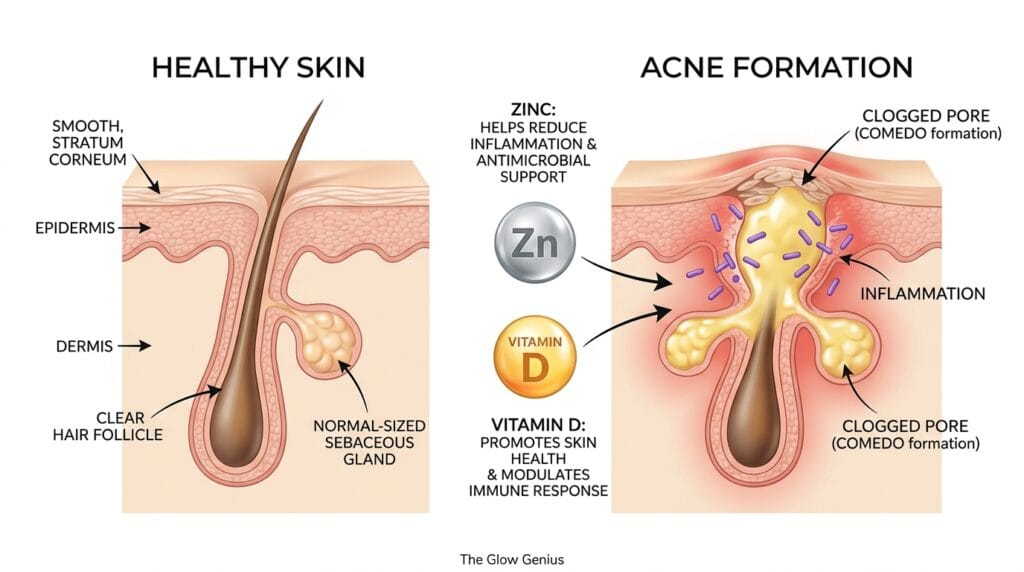
Understanding how acne forms explains why certain vitamins for acne target it effectively. Acne involves four main mechanisms that work together to create a breakout.
Excess sebum production from overactive sebaceous glands clogs pores. Dead skin cells accumulate and trap that sebum inside the pore, creating a blocked follicle. Acne-causing bacteria then multiply in that blocked environment. Finally, the immune system responds with inflammation, which produces the redness, swelling, and pain around active breakouts.
Zinc deficiency increases sebum production and weakens the skin’s natural defence against bacterial infection. Research published in the Journal of Clinical Medicine also found that people with acne tend to have lower vitamin D levels than those without acne. Because nutrient levels directly influence sebum regulation and inflammation, the right vitamins for clear skin target these specific mechanisms rather than just treating the surface.
Which Vitamins Have the Strongest Research Behind Them
Dermatologist Dr. Joel Spitz identifies three vitamins and supplements with the strongest evidence for acne management. These represent the most researched and consistently supported options available.
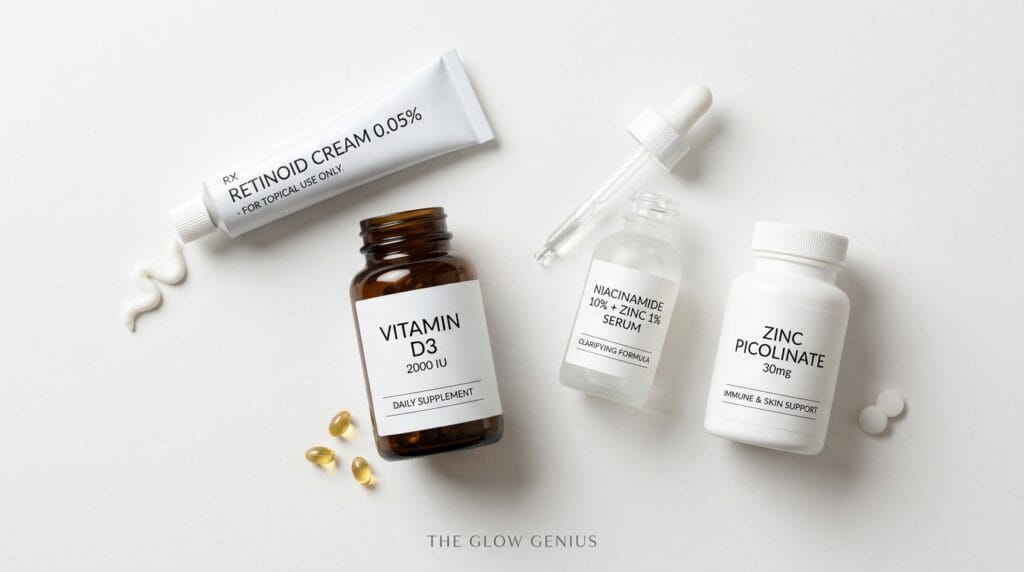
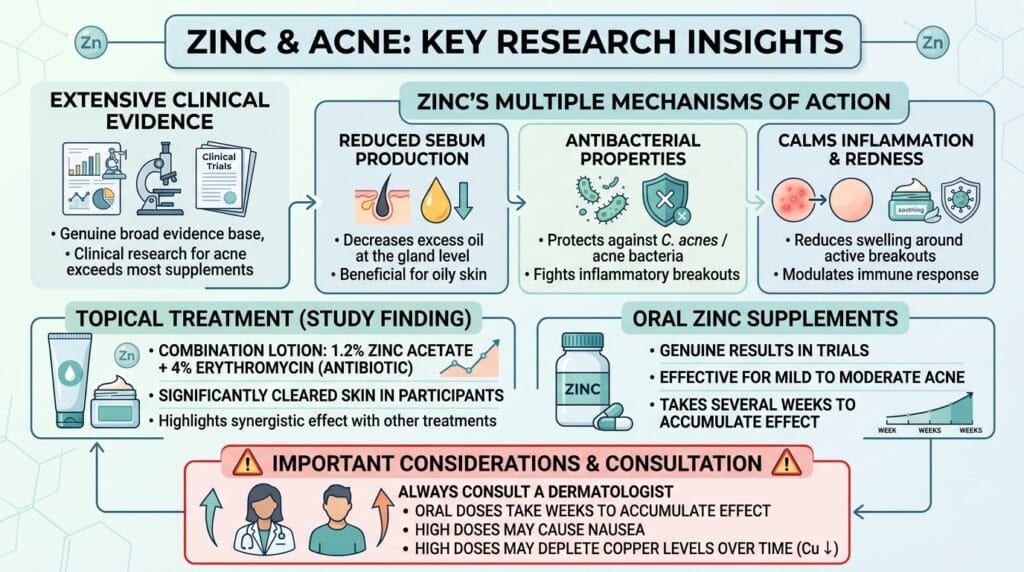
Zinc is one of the most evidence-backed oral supplements for acne. It reduces sebum production, fights bacterial infection inside pores, and reduces the inflammation that drives active breakouts. Both oral and topical zinc formulas have been studied extensively, and multiple clinical trials support its effectiveness for mild to moderate acne.
Niacinamide for acne, which is topical vitamin B3, reduces sebum production, shrinks the appearance of pores, and calms the inflammation around active breakouts. Because niacinamide also strengthens the skin barrier, it provides multiple acne-supporting functions in one topical application. Furthermore, niacinamide has an excellent safety profile with very low irritation risk.
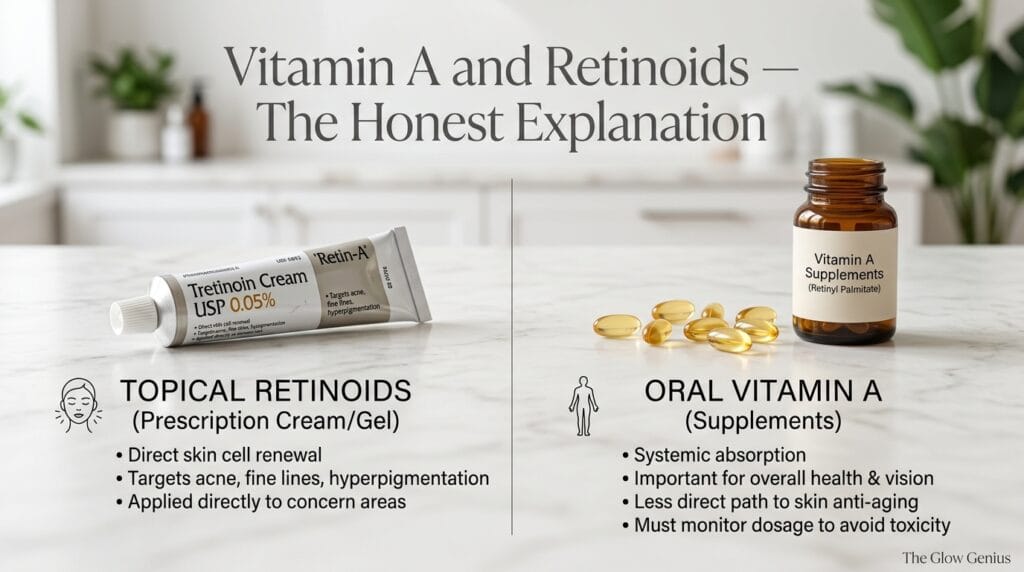
Vitamin A derivatives, specifically prescription topical retinoids, are described by the Mayo Clinic as the most effective treatment for acne. Retinoids regenerate skin cells, clear pores, and reduce sebum production simultaneously. However, these are prescription medications — not the same as oral vitamin A supplements bought from a health store.
Zinc and What the Research Actually Shows
Zinc for acne has more clinical research behind it than almost any other supplement in this category. Because zinc targets multiple acne mechanisms simultaneously, its evidence base is genuinely broad.
Zinc reduces sebum production at the sebaceous gland level, making it particularly useful for oily skin where excess oil contributes directly to blocked pores. It also carries antibacterial properties that protect against the bacteria responsible for inflammatory acne. In addition, zinc reduces the inflammation and redness around active breakouts by modulating the immune response.
One study found that a lotion combining 1.2% zinc acetate with 4% erythromycin (an antibiotic) significantly cleared skin in participants. This combination highlights how zinc works synergistically alongside other treatments rather than in isolation. Oral zinc supplements also show genuine results in trials for mild to moderate acne, though they take several weeks to accumulate measurable effect. Always consult a dermatologist before starting oral zinc supplements, since high doses can cause nausea and deplete copper levels over time.
Vitamin A and Retinoids — The Honest Explanation
Vitamin A for acne is one of the most misunderstood areas in the supplement world. The confusion between oral vitamin A supplements and prescription retinoids is significant and genuinely matters for your safety.
University of Michigan clinicians confirm that oral vitamin A supplements do NOT work the same way as prescription topical retinoids. Topical retinoids — including tretinoin, adapalene, and tazarotene — reach the skin cells directly in targeted, controlled concentrations. They regenerate skin cell turnover, clear pores, and reduce sebum production at the cellular level. This is why the Mayo Clinic describes prescription topical retinoids as the most effective acne treatment available.
Oral vitamin A supplements carry serious risks at high doses. Vitamin A toxicity develops from excess accumulation in the body, causing headaches, liver damage, and bone issues. Furthermore, high doses of oral vitamin A do not produce the same targeted skin benefits as retinoids, which makes the risk-to-benefit ratio poor compared to prescription options. Never take high-dose oral vitamin A without medical supervision. If you want the genuine benefits of vitamin A for acne, speak to a dermatologist about prescription topical retinoids instead.
Vitamin D, Omega-3s, and Emerging Evidence
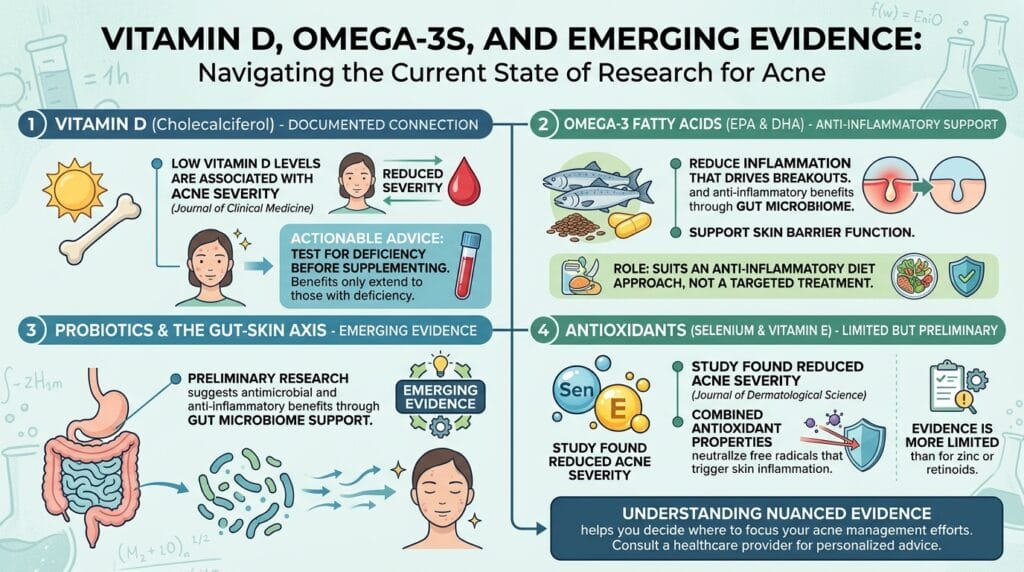
Several other vitamins for acne carry meaningful but less definitive evidence. Understanding the current state of research helps you decide where to focus.
Vitamin D for acne has a documented connection. Research published in the Journal of Clinical Medicine found that people with acne tend to have lower vitamin D levels than those without it. Supplementation appears to reduce acne severity in people who are genuinely deficient. However, this benefit does not extend to people who already have adequate vitamin D levels. Therefore, getting tested for deficiency before supplementing makes sense rather than assuming supplementation will help.
Omega-3 for acne works through its anti-inflammatory properties. Omega-3 fatty acids reduce the inflammation that drives breakouts and support skin barrier function. As a result, they suit an anti-inflammatory diet approach to acne management rather than functioning as a targeted acne treatment. In addition, probiotics carry emerging evidence through the gut-skin axis, with preliminary research suggesting antimicrobial and anti-inflammatory benefits for acne sufferers through gut microbiome support.
One study published in the Journal of Dermatological Science found reduced acne severity from a selenium and vitamin E combination, attributing the benefit to their combined antioxidants properties. These antioxidants reduce the free radicals that trigger inflammation in skin tissue. However, the evidence for this combination remains more limited than for zinc and retinoids.
Which Supplements May Make Acne Worse — Important Warning
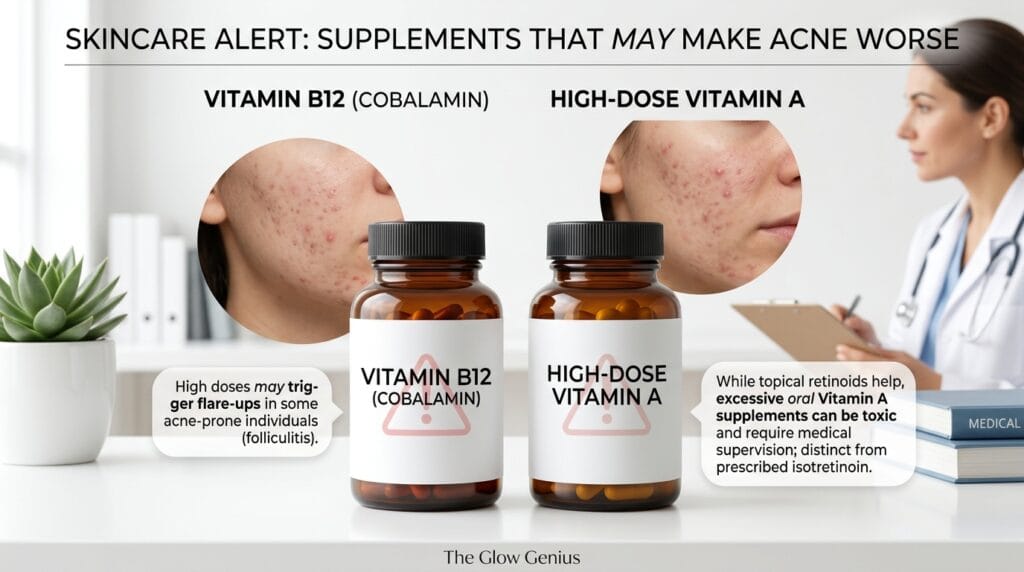
Not all supplements support clearer skin. Several commonly taken vitamins can actively worsen acne in certain doses or forms. These warnings appear rarely in supplement marketing but matter enormously for your skin.
High-dose vitamin B12 supplements can worsen acne in some people. Research suggests that excess vitamin B12 alters the skin’s microbiome and promotes the inflammatory activity of acne-causing bacteria. Because many people take vitamin B12 for energy support without realising this connection, awareness matters. If you already take vitamin B12 supplements and notice worsening breakouts, discuss this with a dermatologist or healthcare provider.
High-dose oral vitamin A supplements carry toxicity risk and can worsen skin issues rather than improving them. As discussed in Section 4, oral vitamin A does not replicate the benefits of prescription retinoids and accumulates in the body to potentially toxic levels over time. In addition, supplements in general are not regulated by the FDA the same way medications are. This means purity, potency, and safety are not guaranteed across all products. Always consult a dermatologist or healthcare provider before starting any high-dose supplement for acne management.
How Diet Affects Breakouts — The Food Connection
Acne and diet have a real but nuanced relationship. No single food causes acne universally, but certain dietary patterns consistently influence sebum production and inflammation levels.
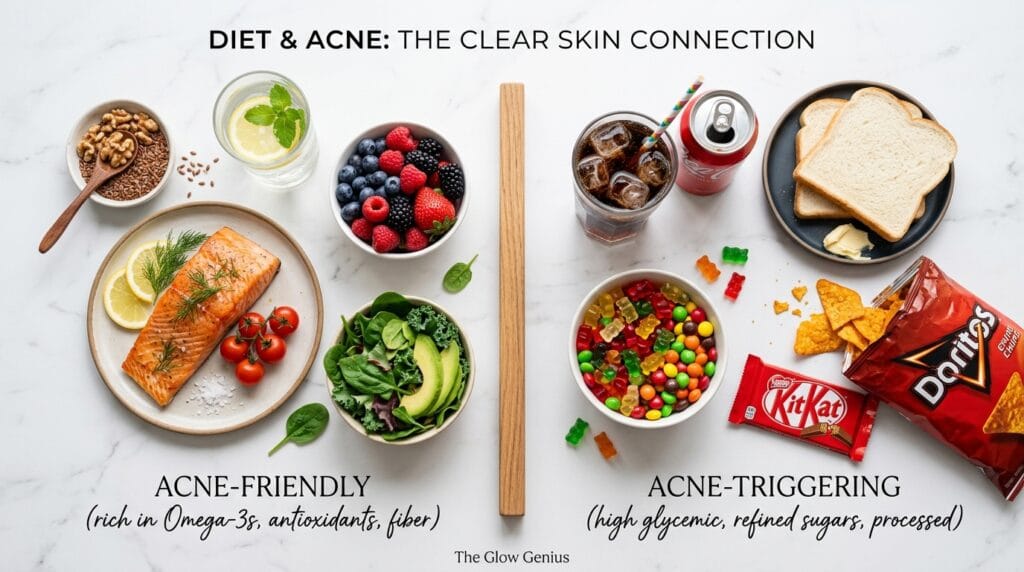
High glycaemic foods — including white bread, sugar, and heavily processed carbohydrates — spike insulin levels rapidly. Elevated insulin triggers the sebaceous glands to increase sebum output, which directly contributes to pores becoming blocked. Because of this, a lower glycaemic diet reduces the hormonal driver of oily skin and acne for many people, even without specific supplement use.
Dairy consumption may worsen hormonal acne in some individuals, though the evidence is not universal. The relationship appears strongest for skim milk specifically. On the other hand, an anti-inflammatory diet approach — built around omega-3-rich foods like oily fish, walnuts, and flaxseeds — reduces the systemic inflammation that drives active breakouts. Furthermore, adequate hydration supports skin barrier function and helps the body clear metabolic waste more efficiently, which benefits acne-prone skin generally.
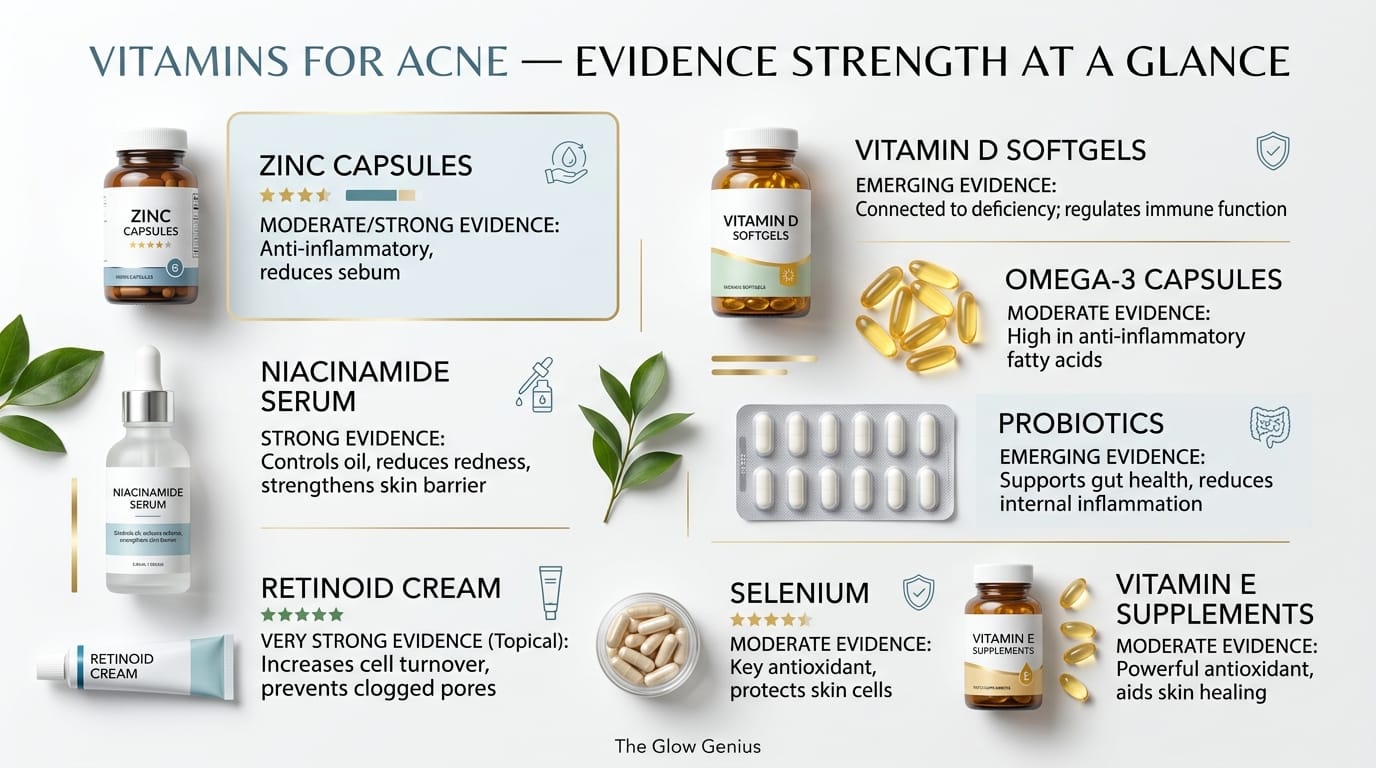
Vitamins for Acne — Evidence Strength at a Glance
Vitamin/Supplement | Evidence Level | How It Helps | Form | Caution |
|---|---|---|---|---|
Zinc | Strong | Reduces sebum, antibacterial, anti-inflammatory | Oral supplement or topical | High doses deplete copper, cause nausea |
Niacinamide (vitamin B3) | Strong | Reduces sebum, pores, inflammation | Topical serum | Generally very safe |
Retinoids (vitamin A derivatives) | Very strong | Cell turnover, clears pores, reduces sebum | Prescription topical only | Requires dermatologist prescription |
Vitamin D | Moderate (if deficient) | Reduces severity in deficient individuals | Oral supplement | No benefit if already adequate |
Omega-3 | Moderate | Reduces inflammation, supports skin barrier | Dietary or oral supplement | Generally safe |
Vitamin B5 (pantothenic acid) | Limited | May reduce sebum production | Oral or topical | Limited evidence |
Selenium + vitamin E | Limited | Antioxidant, reduces inflammatory severity | Oral combination | Limited evidence base |
Probiotics | Emerging | Gut-skin axis, antimicrobial, anti-inflammatory | Oral | Research ongoing |
Vitamin B12 | Negative evidence | High doses can worsen acne | Oral | Avoid high-dose supplementation |
You May Also Like
If you loved this guide, these articles were made for you:
- Homemade Face Mask for Acne
- Skincare Routine for Oily Skin
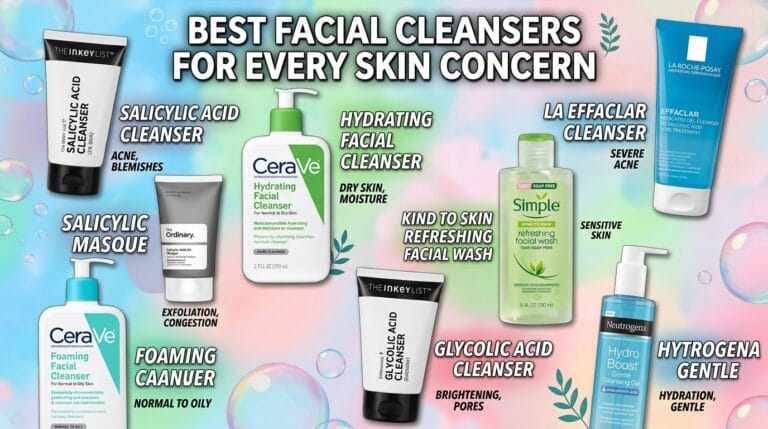
- Best Facial Cleansers for Every Skin Concern
- Red Light Therapy for Acne Scars
- Vitamin C Serum Benefits
FAQs
The Honest Starting Point for Clearer Skin
The best vitamins for acne with the strongest research are zinc and topical niacinamide. Add prescription retinoids if a dermatologist confirms they suit your acne type. Check your vitamin D levels and supplement only if deficient. Support your routine with an anti-inflammatory diet, omega-3-rich foods, and consistent hydration.
The best supplements for acne work alongside a consistent skincare routine — a good cleanser, appropriate treatment, and daily SPF. They do not replace professional care for persistent, hormonal, or moderate-to-severe acne. If breakouts continue despite six to eight weeks of consistent effort, consult a dermatologist who can assess whether prescription treatment offers a better path forward.
Save this guide to your Pinterest boards and share it with a friend trying to figure out which vitamins for acne are actually worth taking. The honest answer is simpler than the supplement aisle suggests. 🌿