Red Light Therapy for Acne Scars: What the Research Actually Shows About This Popular Treatment
Red light therapy for acne scars appears on every skincare platform right now. Devices are marketed with dramatic before and afters. The claims are bold. The truth is more nuanced and more honest than most advertisements admit.
The research on red light therapy is real, and the results are genuinely promising. However, they are supportive and gradual — not dramatic or instant. Understanding what the evidence actually shows helps you decide whether this treatment suits your specific situation and expectations.
This guide uses only published research findings and the Cleveland Clinic’s explanation of the mechanism. No invented statistics. No overclaiming. Just an honest read of what red light therapy for acne scars actually delivers. Here is what the research actually shows.
How This Light Treatment Actually Works on Skin
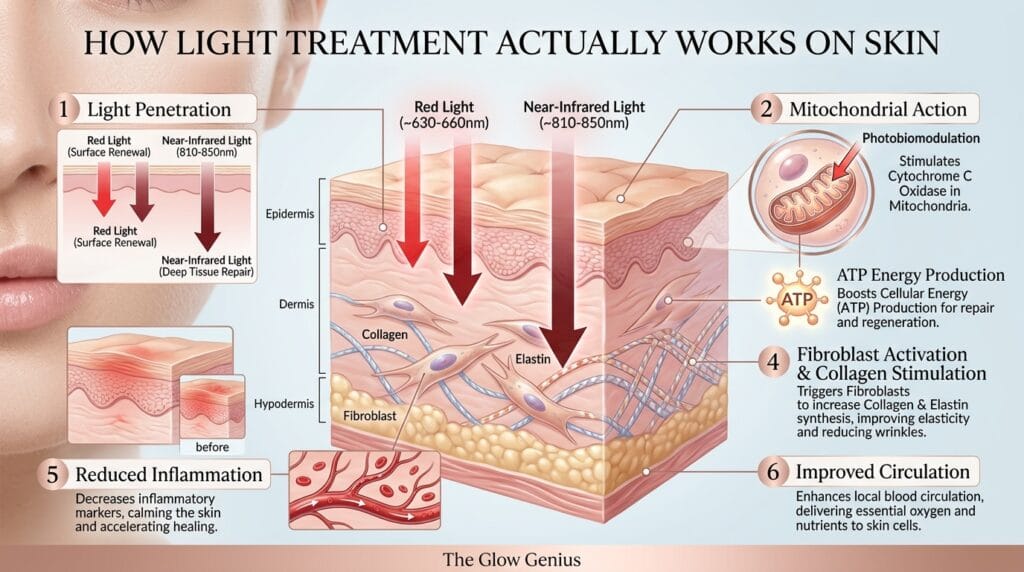
Red light therapy works by exposing the skin to wavelengths of red or near-infrared light, typically between 600 and 850 nanometers (nm). The nanometer measurement refers to the length of the light wave, which determines how deeply it penetrates the skin. As the Cleveland Clinic explains, at these wavelengths, light reaches the mitochondria inside skin cells — the structures that generate energy.
When mitochondria absorb this light, they produce more cellular energy (called ATP). This increased energy stimulates fibroblasts, which are the skin cells responsible for collagen production. Because collagen is the protein that gives skin structure and fills in areas of scarring, stimulating its production directly addresses the mechanism behind scar appearance.
Red light therapy also reduces inflammation by modulating cytokines, which are chemical signals the immune system uses to communicate. Reduced cytokines means reduced redness and inflammation around acne scars and active breakouts. In addition, improved blood circulation from red light therapy delivers more oxygen and nutrients to scar tissue, further supporting the repair process.
What the Research Actually Shows
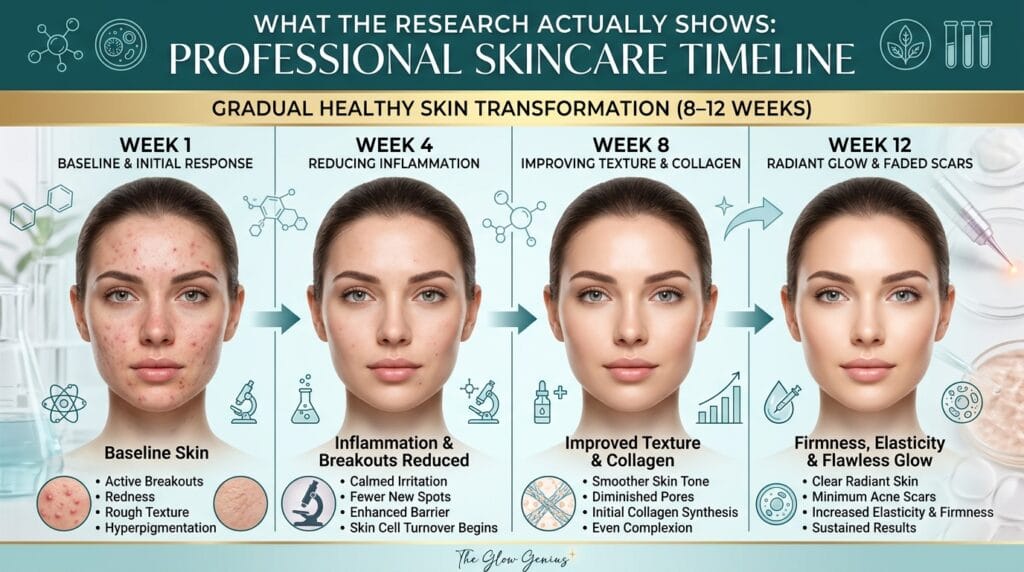
Red light therapy research shows real results — but understanding what “real results” means prevents disappointment. The improvements are measurable, gradual, and significantly better for surface-level scarring than for deep structural scars.
For active acne with inflammation, studies show a 30 to 60% reduction in inflammatory lesions over 8 to 12 weeks of consistent use. Because red light therapy reduces cytokines and inflammation rather than killing acne-causing bacteria directly, it suits inflammatory acne particularly well. This range varies between individuals, but the consistency of findings across studies gives it genuine credibility.
For acne scars specifically, research shows a 20 to 40% improvement in scar appearance, skin texture, and hyperpigmentation with consistent long-term use. One clinical trial found significantly enhanced skin complexion and increased collagen density after 30 sessions conducted over 8 weeks. These numbers confirm that red light therapy for acne scars delivers real improvements — while also being honest that a 20 to 40% improvement means visible progress rather than elimination.
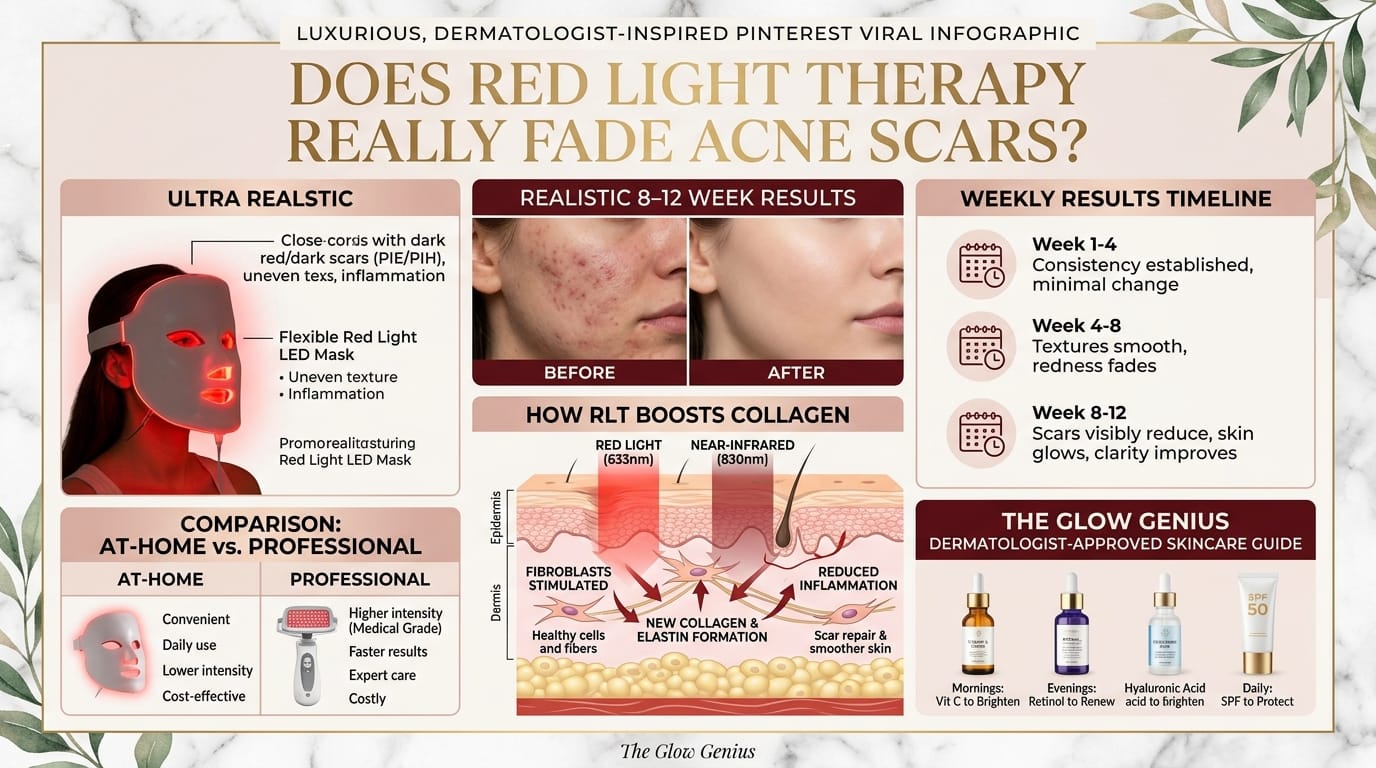
Furthermore, this process works because fibroblasts produce new collagen in response to the light stimulation. New collagen fills in the shallow depression of surface scars and improves the overall texture and tone of the surrounding skin. Nevertheless, these changes require weeks to months of consistent treatment to accumulate.
Who Benefits Most From This Treatment
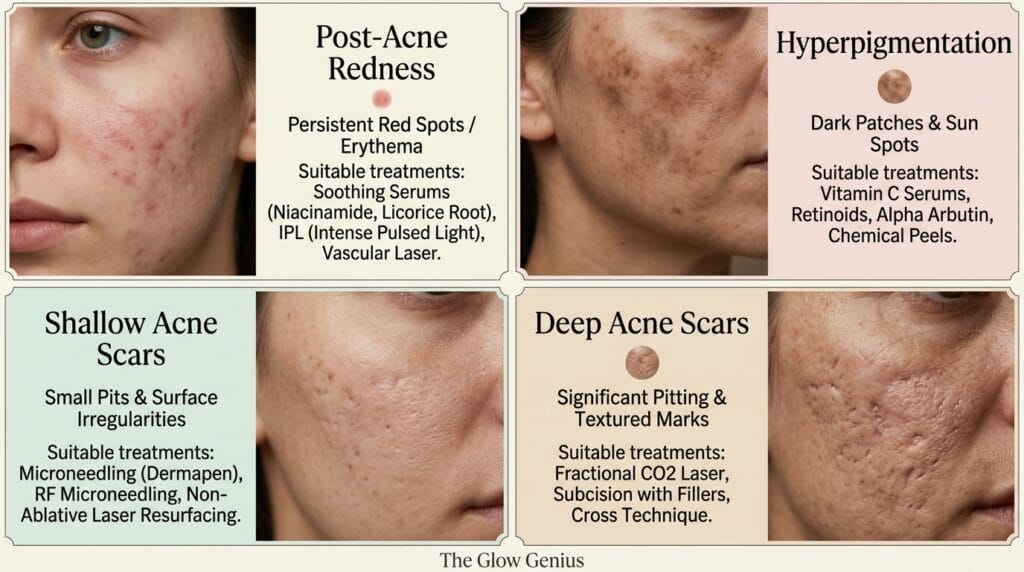
Red light therapy for acne scars delivers the most visible benefits for specific scar types and skin situations. Understanding whether your scarring falls within this range helps you set accurate expectations before starting.
Surface-level post-acne marks — particularly hyperpigmentation and redness that remains after breakouts heal — respond well to red light therapy. These are not structural changes to the skin’s depth but rather colour and texture concerns in the upper skin layers. Because red light therapy improves blood circulation, reduces inflammation, and stimulates collagen, it addresses all three of those concerns simultaneously.
For deep, depressed scars, which involve actual loss of skin tissue below the surface, results are more modest. Red light therapy supports the skin’s repair process but does not fully fill in significant structural depressions. These deeper scars usually produce better results from combination approaches that include microneedling, low-level laser therapy, or other clinical treatments alongside red light therapy as a supportive component.
One genuine advantage of red light therapy over some other scar treatments is its safety across all skin tones. Some laser treatments carry meaningful risk of hyperpigmentation on deeper skin tones. Red light therapy does not carry this same risk, making it a genuinely accessible option for a wider range of people, including those with darker skin tones for whom other treatments require extra caution.
At-Home Devices vs Professional Treatments
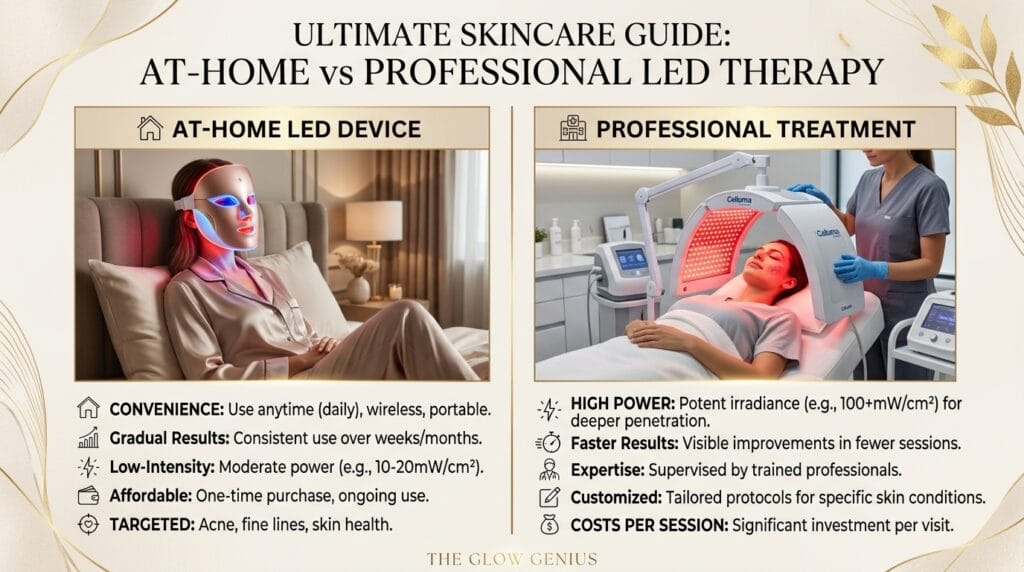
Red light therapy is available both at home and in clinical settings. Each option offers different power levels, results timelines, and cost structures. Understanding the difference helps you choose the approach that fits your situation.
At-home LED masks and handheld red light therapy devices offer convenience and significantly lower cost per session. However, most at-home devices operate at lower power output than in-clinic machines. Because of this, at-home results take longer to accumulate and tend to be more modest overall. Nevertheless, clinical trials supporting red light therapy improvements often use device parameters achievable at home, which means consistent at-home use does deliver real results for surface-level acne scars.
Professional red light therapy treatments in clinics use higher power output and often combine red light therapy with near-infrared light or other treatments simultaneously. As a result, in-clinic sessions produce faster and stronger results. They also cost considerably more per session and require regular appointments. For anyone with moderate-to-severe depressed scars, professional treatment supervised by a dermatologist typically delivers better outcomes than at-home use alone.
How to Use It Correctly for Best Results
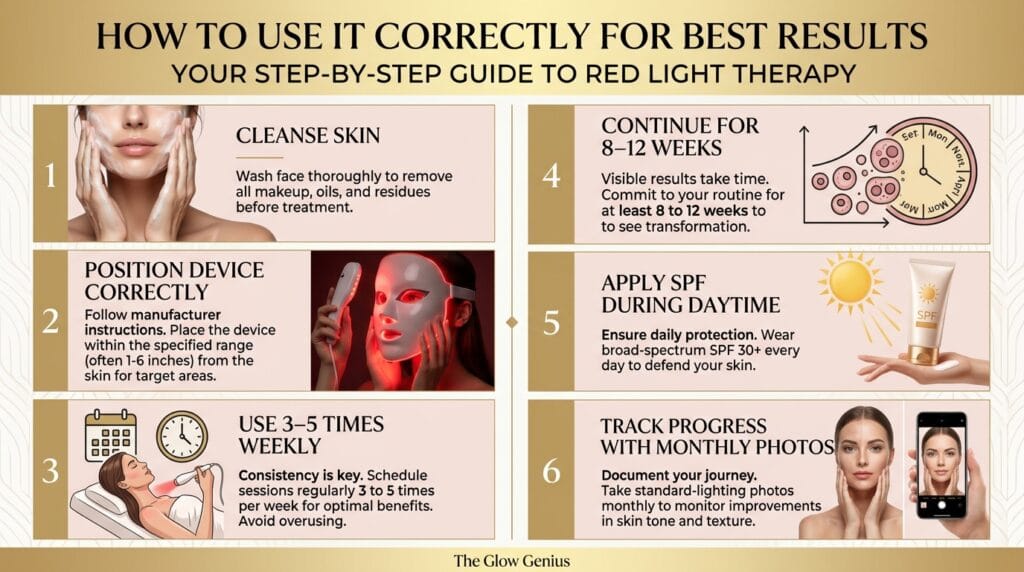
Using red light therapy correctly maximises results and reduces the chance of inconsistent outcomes from poor technique. These six steps apply to both at-home and professional red light therapy sessions.
- Cleanse skin thoroughly before every session. Clean skin allows light to reach the mitochondria in skin cells without obstruction from makeup, SPF, or skin oils. Any barrier between the light and skin reduces the treatment’s effectiveness.
- Follow the device’s recommended distance and session length exactly. Most at-home LED devices specify an exact distance from the face and a session duration. Sitting too close or too far from the device significantly reduces the wavelengths reaching the skin at the intended intensity.
- Use consistently — three to five times weekly for most devices. Consistency is the most important factor in red light therapy outcomes. Irregular sessions prevent the cumulative collagen stimulation and inflammation reduction from building effectively.
- Continue for at least 8 to 12 weeks before judging results. Because fibroblasts produce collagen gradually, significant changes in acne scars and skin texture take weeks to become visible. Stopping before eight weeks denies the skin the time it needs to show real improvement.
- Apply SPF afterward if using during the day. While red light therapy does not increase photosensitivity the way some treatments do, SPF protects the new collagen forming during treatment from immediate UV breakdown.
- Track progress with monthly photographs in consistent lighting. Because changes accumulate slowly, monthly photos in the same lighting reveal improvements that daily observation misses.
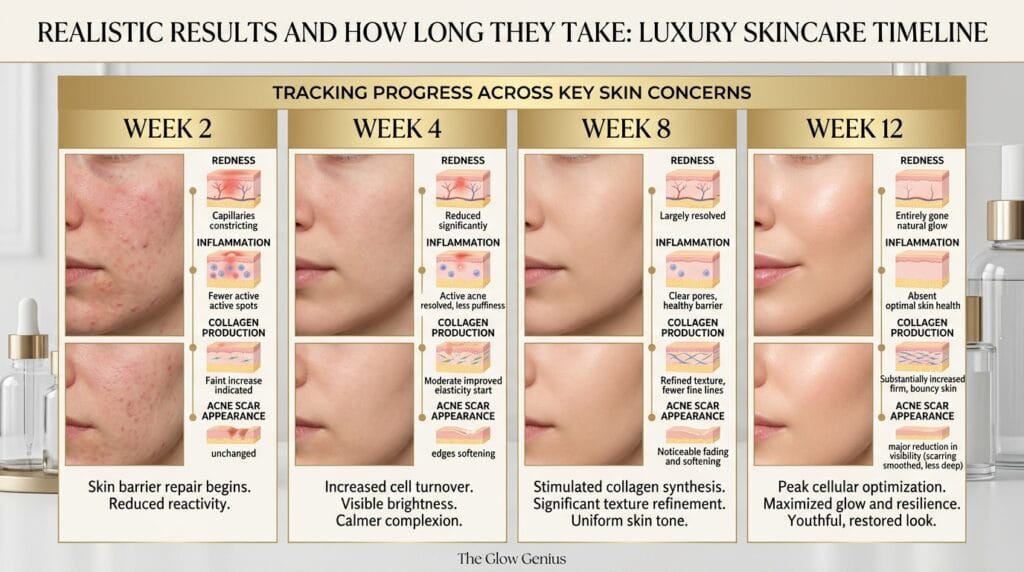
Realistic Results and How Long They Take
Red light therapy for acne scars produces changes on a specific timeline. Understanding this timeline prevents the early abandonment that causes most people to miss the point where real improvements become visible.
Early changes — reduced redness, calmer inflammation, and skin that feels more comfortable — typically appear within two to four weeks of consistent use. These initial improvements reflect the anti-inflammatory cytokine response rather than new collagen formation, which takes longer to accumulate.
Visible skin texture and tone improvement becomes more noticeable at eight to twelve weeks. This is when the collagen production stimulated by fibroblasts over many sessions starts to show at the surface. Most people report the most noticeable changes in surface-level acne scars and hyperpigmentation somewhere in this window, particularly those using devices three to five times weekly without breaks.
Most importantly, red light therapy is not a one-time treatment. Results require ongoing, consistent use to maintain and continue improving. Many people continue sessions indefinitely as a supportive part of their routine, reducing frequency after the initial intensive period.
Safety Considerations and Who Should Avoid It
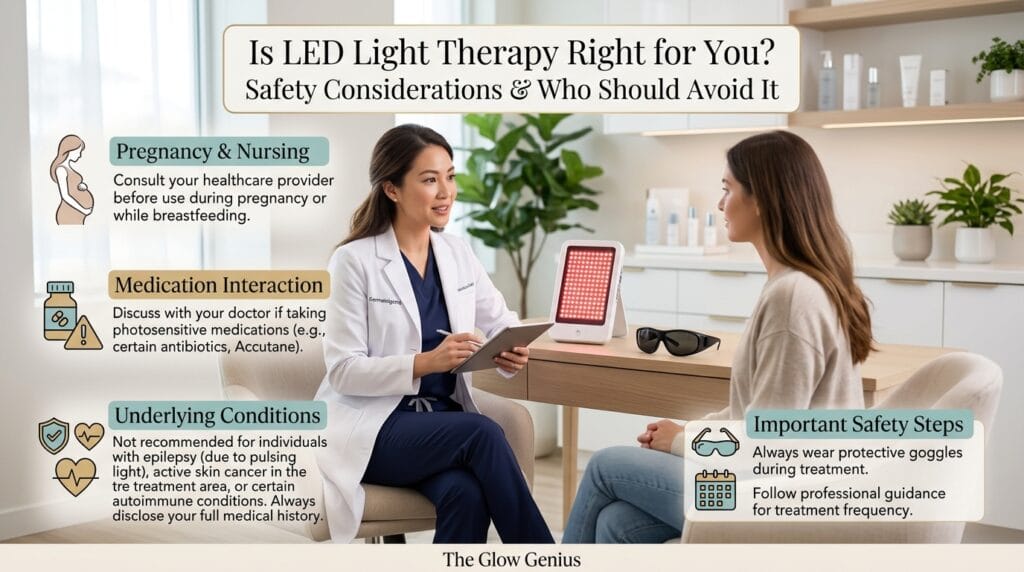
Red light therapy is generally well-tolerated and carries a low risk profile when used correctly. However, specific situations require caution or a conversation with a dermatologist before starting.
Anyone taking photosensitising medication should consult a dermatologist before beginning red light therapy. Certain antibiotics, oral retinoids, and other medications increase the skin’s sensitivity to light. Using red light therapy while taking photosensitising drugs risks adverse skin reactions that neither the user nor an at-home device manual will reliably predict. Similarly, pregnant women should consult their healthcare provider before beginning any LED or red light therapy routine, since research on its safety during pregnancy remains limited.
Never direct red light therapy devices toward the eyes without the provided eye protection. The intensity of the light at these wavelengths can damage vision with prolonged unprotected exposure. Use all provided goggles or eye covers exactly as instructed.
Beyond these considerations, red light therapy at the recommended wavelengths and session lengths is considered safe for all skin tones, a genuine advantage over some laser and light-based treatments that require more careful screening for darker skin tones to avoid post-treatment hyperpigmentation.
How It Compares to Other Scar Treatments
Treatment | Downtime | Cost | Best For | Risk Level |
|---|---|---|---|---|
Red light therapy | None | Low to moderate | Mild-moderate surface scars, hyperpigmentation | Very low |
Chemical peels | 3 to 7 days | Moderate | Surface texture, hyperpigmentation | Moderate (higher on darker tones) |
Microneedling | 2 to 5 days | Moderate to high | Depressed scars, collagen rebuilding | Low to moderate |
Laser resurfacing | 7 to 14 days | High | Deep scars, significant texture | Moderate to high (higher on darker tones) |
Topical retinoids | None | Low | Surface hyperpigmentation, mild texture | Low (can cause initial irritation) |
You May Also Like
If you loved this guide, these articles were made for you:
- Homemade Face Mask for Acne
- Best Facial Cleansers for Every Skin Concern
- Vitamin C Serum Benefits
- Skincare Routine for Oily Skin
- Gua Sha for Face Slimming
FAQs
Is Red Light Therapy Worth Trying?
Red light therapy for acne scars deserves a measured yes. The research is real. The mechanism is understood. The results are gradual, supportive, and genuine — particularly for surface-level marks, hyperpigmentation, and ongoing inflammation reduction.
It is not a cure. And it does not eliminate depressed scars alone. It works most effectively as part of a consistent skincare routine, alongside SPF and appropriate topical treatments. For moderate-to-severe scarring, a dermatologist consultation remains essential before relying on any single treatment, including this one.
However, for surface-level acne scars, hyperpigmentation, and general skin texture improvement — particularly for those seeking a low-risk, no-downtime option — red light therapy offers genuinely supported evidence for results over consistent, committed use.
Save this guide to your Pinterest boards and share it with a friend who is trying to figure out whether red light therapy for acne scars is actually worth investing in. Now they have the honest answer. 💡