
Vitamin C Serum Benefits: The Complete Guide to Brighter, Firmer, and Glowing Skin
Vitamin C serum appears on more dermatologist-recommended lists than almost any other single skincare ingredient. The reason is simple. Ascorbic acid, which is the active form of vitamin C, works on multiple layers of skin concern simultaneously.
It fights the environmental damage that dulls skin. And slows the production of melanin, which is the pigment that creates dark spots. It also stimulates collagen production, which keeps skin firm and plump over time. Because no other affordable ingredient does all three things at once, vitamin C serum has earned its reputation genuinely.
Understanding the vitamin C serum benefits correctly helps you use the ingredient more effectively and set realistic expectations for results. Most people give up too early because they expect overnight change. This guide explains what actually happens and when. Here is the complete guide.
What Vitamin C Actually Does to Your Skin
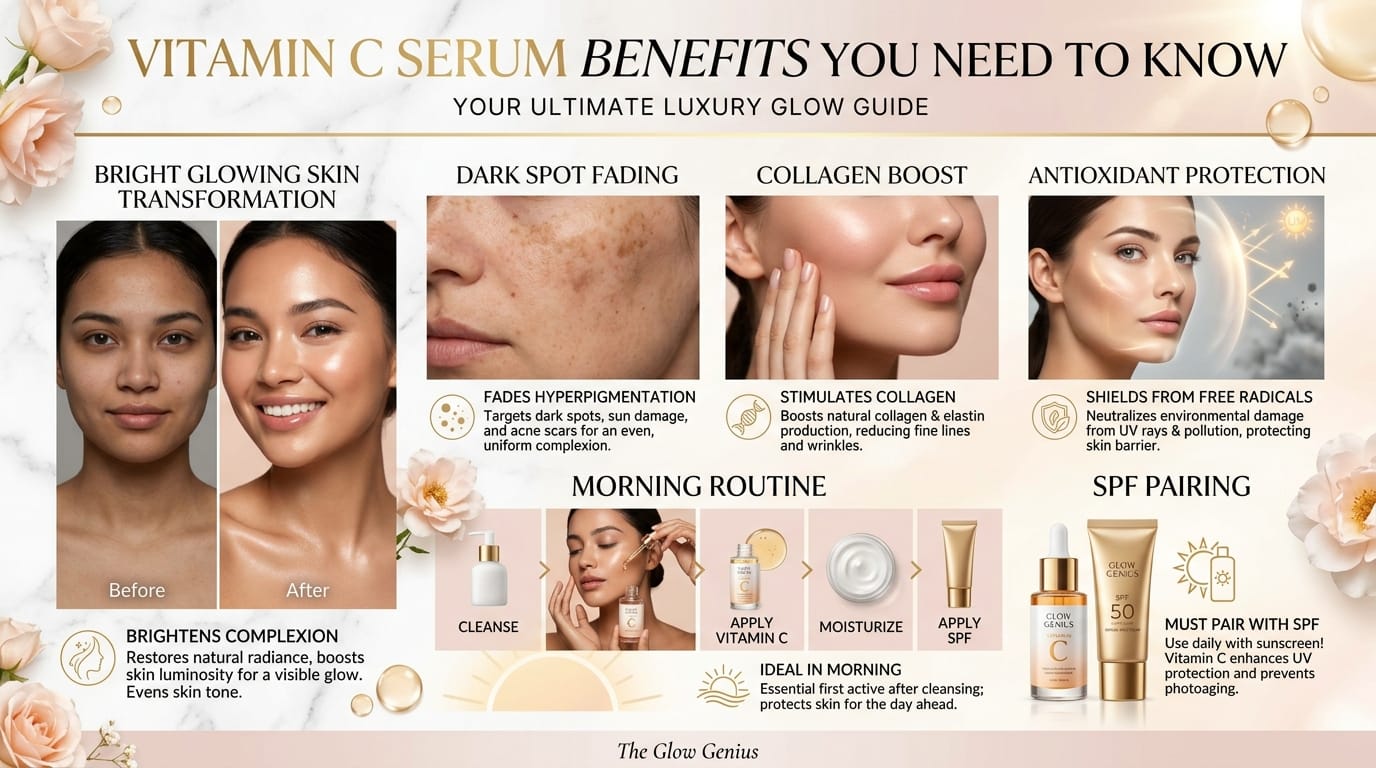
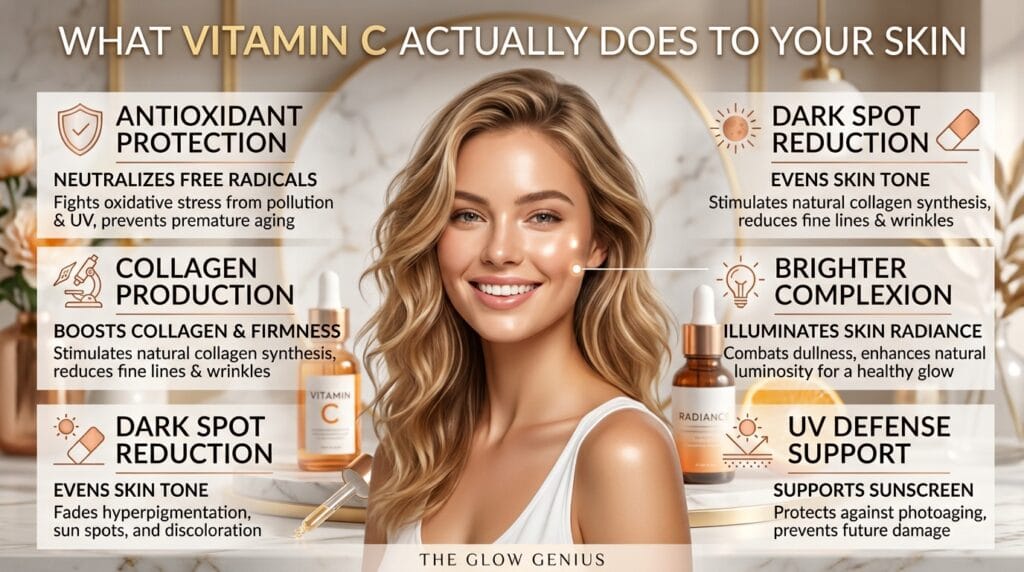
Vitamin C serum benefits come from five distinct actions that ascorbic acid performs inside and on top of the skin. Understanding each one explains why dermatologists recommend it so consistently.
First, L-ascorbic acid acts as a powerful antioxidant. It neutralises free radicals, which are unstable molecules created by UV exposure, pollution, and stress. Because free radicals damage collagen and DNA in skin cells, neutralising them reduces visible ageing over time.
Second, vitamin C for skin inhibits the enzyme tyrosinase, which triggers melanin production. Less melanin means fewer dark spots, less hyperpigmentation, and a more even skin tone. Third, ascorbic acid signals cells to produce more collagen, the protein that gives skin its firmness. As a result, consistent use gradually reduces the appearance of fine lines. Fourth, vitamin C serum applied in the morning enhances the effectiveness of your SPF by neutralising the free radicals that sunscreen alone cannot block. Fifth, the combined effect of all four actions produces the visible brightening and glow that makes vitamin C so widely searched.
Who Should Use a Vitamin C Serum — And Who Should Be Careful
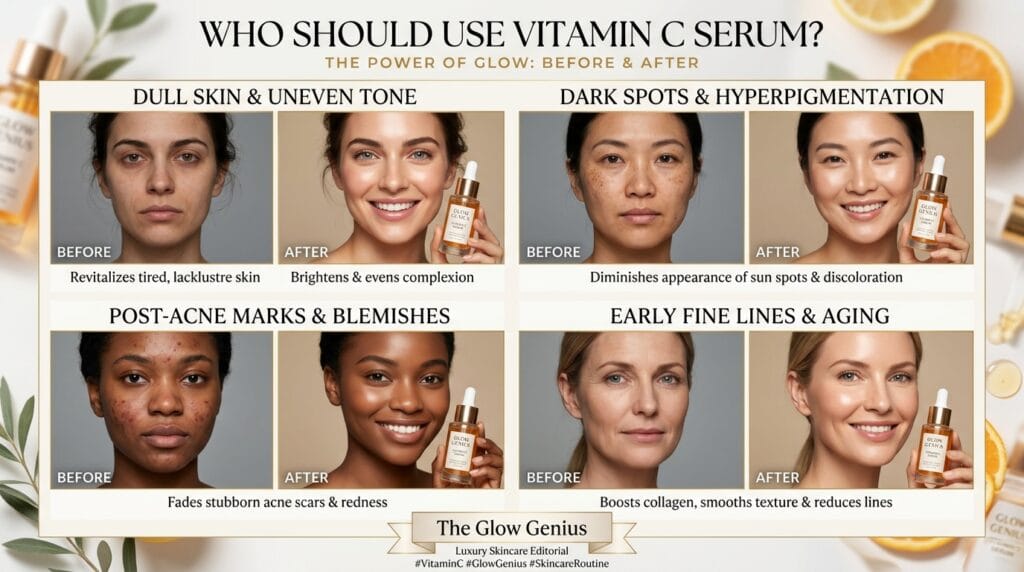
Vitamin C serum benefits suit a wide range of skin concerns and age groups. However, not every skin type tolerates it the same way, and knowing your starting point changes how you approach it.
People dealing with dark spots, sun damage, post-acne marks, or general dullness gain the most visible benefits from daily vitamin C serum use. Similarly, anyone who wants to slow visible ageing and maintain firmness finds that collagen-stimulating effects accumulate meaningfully over months. Most importantly, anyone applying SPF daily benefits from layering antioxidant serum underneath, since the two work synergistically to protect against UV damage.
Sensitive skin types should start cautiously. A lower concentration ascorbic acid serum, around 10%, reduces the tingling and mild irritation that higher concentrations sometimes cause. People with rosacea or very reactive skin should always complete a patch test on the inner arm 24 hours before applying any vitamin C serum for face more broadly.
Choosing the Right Vitamin C Concentration for Your Skin
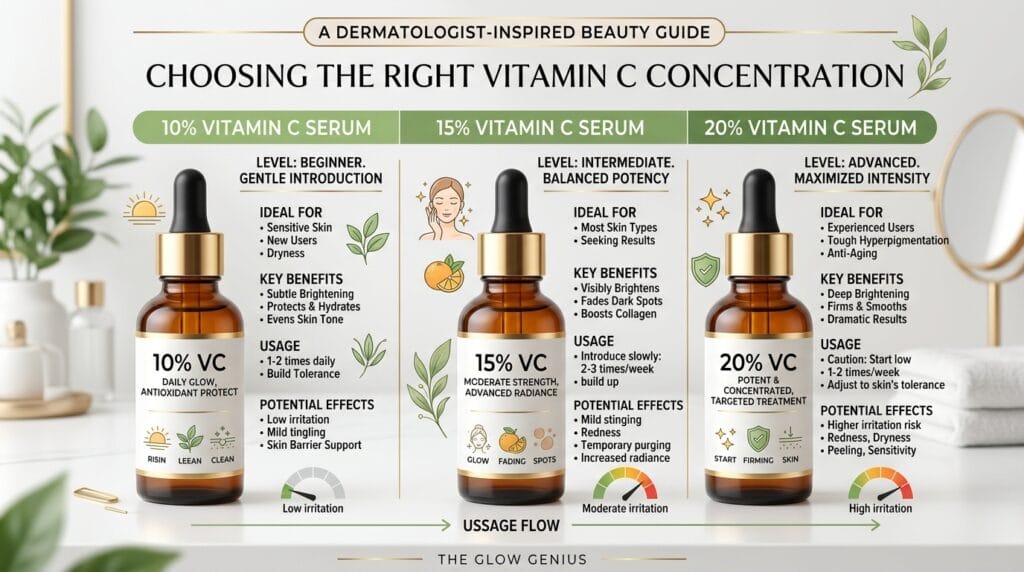
Ascorbic acid concentration in vitamin C serum matters significantly for both results and tolerability. Higher percentages produce faster results but also increase the chance of irritation, particularly on sensitive skin.
Begin at 10% if you are new to L-ascorbic acid or have reactive skin. This concentration delivers genuine brightening and antioxidant protection without the tingling that higher concentrations often cause. Because skin adapts over time, many people move to 15 to 20% after several months once their tolerance builds.
15 to 20% L-ascorbic acid suits experienced users who want stronger results for stubborn dark spots and more aggressive collagen stimulation. However, concentrations above 20% do not necessarily produce better results and significantly increase irritation risk. In addition, consider gentler vitamin C derivatives if L-ascorbic acid irritates your skin. Ascorbyl glucoside and sodium ascorbyl phosphate both deliver vitamin C for skin benefits with significantly less irritation potential, making them excellent alternatives for ongoing sensitive skin concerns.
How to Use Vitamin C Serum Correctly — Step by Step
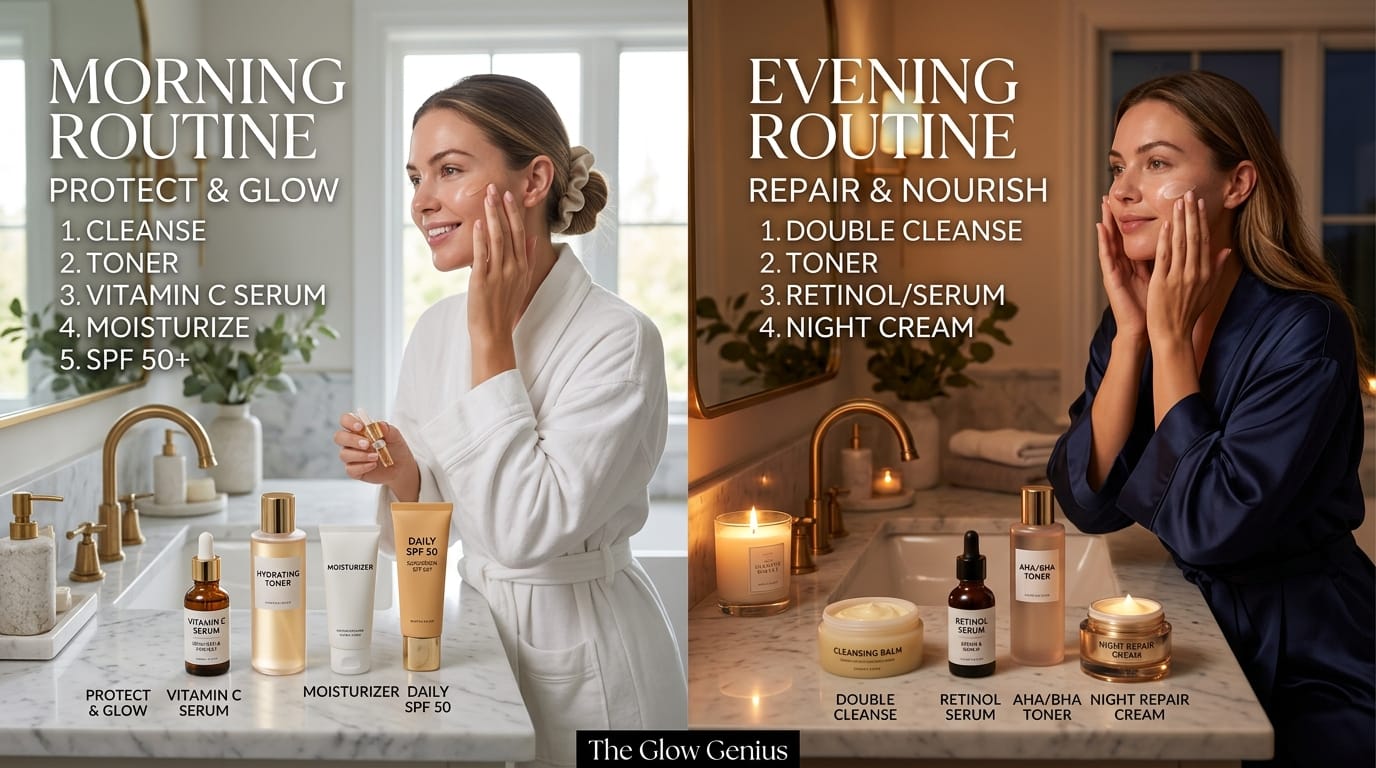
Using vitamin C serum in the right sequence ensures maximum absorption and effectiveness. These seven steps apply to a morning vitamin C serum routine.
- Step 1. Cleanse your face thoroughly. Start with completely clean skin. Surface oil, sunscreen, and residue block ascorbic acid from absorbing properly. Because this is the foundation of every routine step, cleansing is non-negotiable first.
- Step 2. Apply toner if you use one. Toner after cleansing restores the skin’s natural pH balance and prepares it to receive the serum most effectively. Allow it to absorb fully before moving to the next step.
- Step 3. Apply 2 to 3 drops of vitamin C serum to face and neck. Less product than most people expect covers the entire face and neck. The vitamin C serum for face application works best when spread evenly across damp skin, which aids absorption.
- Step 4. Gently pat the serum in — never rub. Patting increases absorption without disrupting the skin barrier the way rubbing does. Rubbing also generates friction that can cause irritation, particularly with a L-ascorbic acid formula.
- Step 5. Wait 60 seconds before applying the next product. This brief wait allows the antioxidant serum to begin absorbing into the skin. Layering immediately on top can dilute the formula before it settles.
- Step 6. Apply moisturiser to lock the serum in. A moisturiser seals the vitamin C serum against the skin barrier and prevents evaporation. Furthermore, it reduces any mild tingling that ascorbic acid sometimes causes on first use.
- Step 7. Apply SPF every single morning. This step elevates all vitamin C serum benefits significantly. Sunscreen blocks new UV damage while vitamin C neutralises the free radicals that SPF alone cannot fully address. Never skip SPF after applying a vitamin C product.

When to Apply Vitamin C in Your Skincare Routine
Most dermatologists recommend morning as the primary time for vitamin C serum application. The reason relates directly to how antioxidant protection works. Because UV exposure generates free radicals throughout the day, applying L-ascorbic acid before SPF in the morning creates a double-layer defence against oxidative damage.
However, vitamin C serum also supports skin repair at night, since collagen synthesis peaks during sleep. Using it twice daily, morning and evening, accelerates results for those whose skin tolerates the frequency. Many people find that a single morning application produces sufficient results without any additional evening irritation risk.
For beginners, start with morning use only. Assess how your skin responds over two to three weeks. If you experience no sensitivity, add a lighter evening application using a lower concentration or derivative form. Most importantly, never apply vitamin C serum to sun-exposed skin without following it with sunscreen afterward.
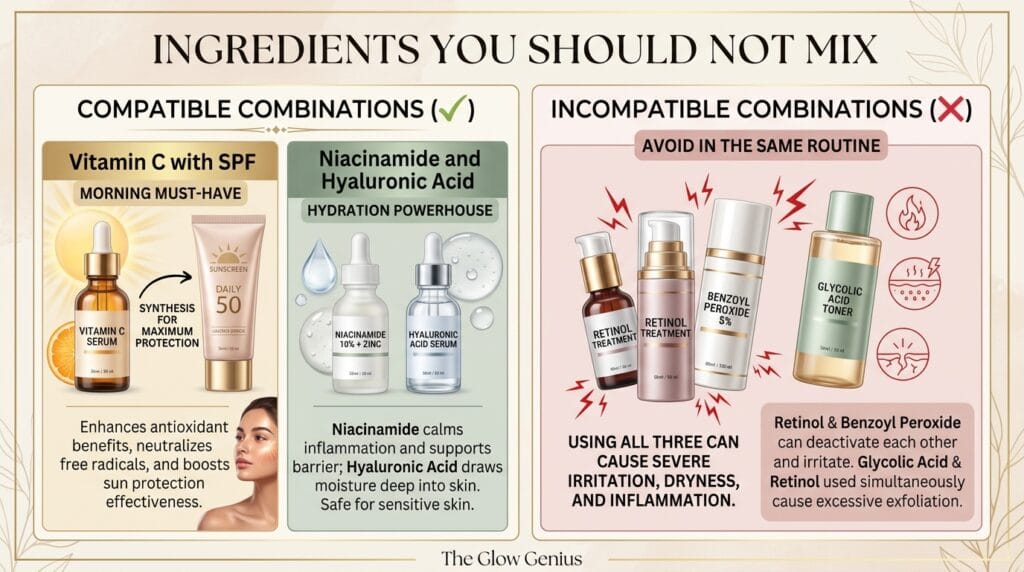
What NOT to Mix With Your Vitamin C Serum
Knowing what to avoid pairing with your vitamin C serum matters as much as knowing how to use it. Some combinations reduce effectiveness. Others cause irritation.
Do not layer vitamin C serum with retinol in the same session. Both are potent actives, and combining them increases the risk of irritation significantly. Instead, use vitamin C and retinol at different times — vitamin C in the morning and retinol at night. This separation allows both ingredients to work optimally without competing or irritating. Similarly, avoid layering vitamin C serum with glycolic acid or other AHAs (alpha hydroxy acids) in the same step, since the acidity of both can cause unnecessary sensitivity.
Do not combine vitamin C serum with benzoyl peroxide. Benzoyl peroxide oxidation deactivates ascorbic acid, making your vitamin C serum ineffective. However, the vitamin C and niacinamide concern is outdated — at normal skincare concentrations, these two ingredients do not cause the flushing reaction once feared. In fact, pairing them makes an excellent brightening combination. Similarly, hyaluronic acid pairs beautifully with vitamin C serum, adding moisture alongside the antioxidant protection.
How Vitamin C Serum Targets Dark Spots and Hyperpigmentation
Vitamin C serum for dark spots works by targeting melanin production at its source. Ascorbic acid inhibits the enzyme tyrosinase, which the skin requires to produce melanin. Less tyrosinase activity means less melanin reaches the surface, and existing dark spots fade gradually.
Both post-acne marks and sun-induced dark spots respond to consistent vitamin C use. However, the timeline differs slightly. Post-acne hyperpigmentation, which tends to sit closer to the skin’s surface, often fades faster than deeper sun damage. Visible fading typically begins at four to six weeks of daily use. Significant improvement in hyperpigmentation and skin tone becomes apparent at around three months.
Using vitamin C serum for glowing skin alongside daily SPF dramatically accelerates the fading process. Without sunscreen, sun exposure continuously creates new dark spots and melanin while the ascorbic acid attempts to fade existing ones. That is why SPF is not optional — it is the direct partner of every vitamin C serum result.
How Long Does Vitamin C Serum Take to Work — Honest Timeline
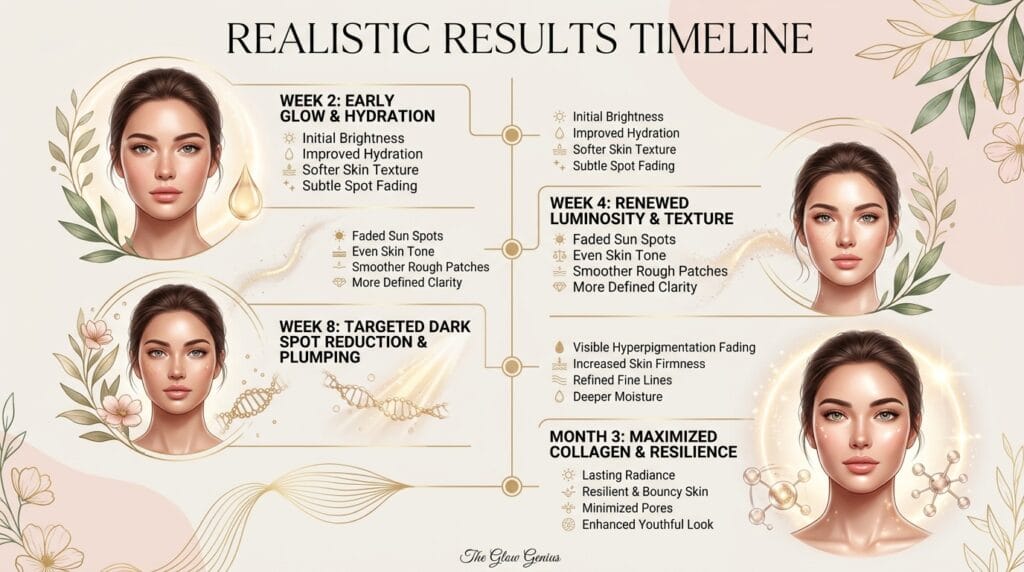
Vitamin C serum benefits develop gradually, not overnight. Understanding the realistic timeline prevents early abandonment of an ingredient that takes real consistency to deliver results.
Weeks one to two bring mild tingling during application. This is normal and usually disappears as skin adapts to the ascorbic acid. Weeks three to four deliver the first visible brightness improvement — skin looks more awake and less dull even in the early stages.
Weeks six to eight show the beginning of dark spot fading. This change is subtle but photographable. Month three marks significant cumulative improvement — fine lines appear softened, dark spots are noticeably lighter, and overall skin tone is more even. The Cleveland Clinic recommends photographing skin monthly during vitamin C serum use to track the gradual, hard-to-notice daily improvements that add up to dramatic results over time.
Vitamin C vs Other Brightening Ingredients — Quick Guide
Ingredient | Main Benefit | Best Used | Works With | Avoid Mixing With |
|---|---|---|---|---|
Vitamin C serum | Brightening, antioxidant, collagen | Morning | SPF, hyaluronic acid, niacinamide | Retinol, AHAs, benzoyl peroxide same session |
Niacinamide | Pore refining, oil control, brightening | Morning or evening | Vitamin C, hyaluronic acid | No major conflicts at normal concentrations |
Retinol | Anti-ageing, cell turnover, acne | Evening only | Moisturiser, peptides | Vitamin C, AHAs, benzoyl peroxide same session |
Glycolic acid | Exfoliation, texture, brightening | Evening | Hyaluronic acid after | Vitamin C, retinol same session |
Hyaluronic acid | Deep hydration, plumping | Morning and evening | Everything | Nothing — universally compatible |
You May Also Like
If you loved this guide, these articles were made for you:
- CeraVe vs The Ordinary
- 10 Best Drugstore Skincare Under £5 UK
- Best Facial Cleansers for Every Skin Concern
- Homemade Face Mask for Acne: 10 DIY Recipes
- Gua Sha for Face Slimming
FAQs
Your Skin Deserves This One Ingredient
Vitamin C serum is one of the most evidence-backed, dermatologist-recommended ingredients in skincare. The vitamin C serum benefits are real, measurable, and cumulative — but they require patience.
Give it three months of daily morning use paired with SPF. Photograph your skin monthly. Notice the gradual reduction in dark spots, the improved skin tone, the quiet glow that builds session by session. Most importantly, do not stop at week four because you cannot see dramatic results yet. The most significant changes happen between weeks eight and twelve.
This is not a miracle ingredient. It is a genuinely effective, scientifically supported one. That distinction matters when you are choosing where to invest your skincare effort.
Save this guide to your Pinterest boards and share it with a friend who is trying to choose her first antioxidant serum. Clear, bright skin starts with one correct daily habit. ✨