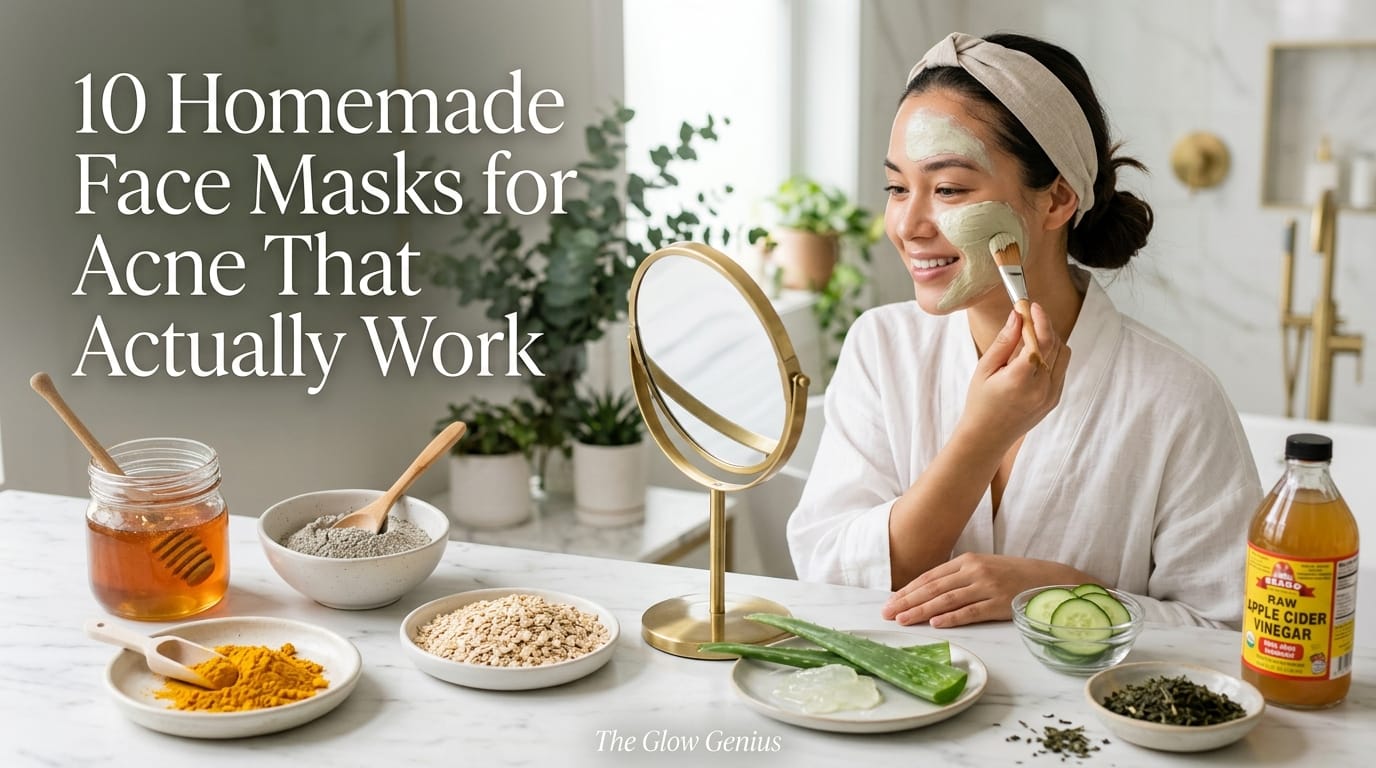
10 Homemade Face Mask for Acne That Clear Breakouts
A homemade face mask for acne works because many kitchen ingredients carry genuine antibacterial and anti-inflammatory properties. Honey kills bacteria. Bentonite clay draws out excess sebum. Turmeric reduces inflammation. These are not myths.
Natural ingredients suit acne-prone skin for another important reason. They rarely disrupt the skin barrier the way harsh chemical products sometimes do. Because the skin barrier protects against bacteria and moisture loss, keeping it intact matters enormously during breakout recovery.
The best part is that a DIY face mask for acne costs very little and requires almost no equipment. Most recipes mix in under two minutes. Most leave the skin visibly calmer within the first few uses. Here are 10 recipes that work.
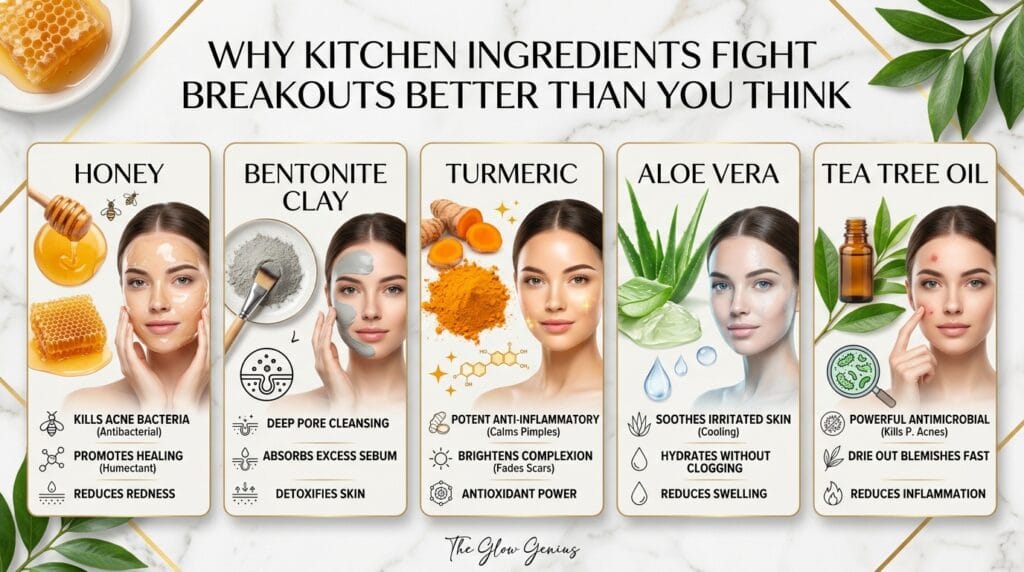
Why Kitchen Ingredients Fight Breakouts Better Than You Think
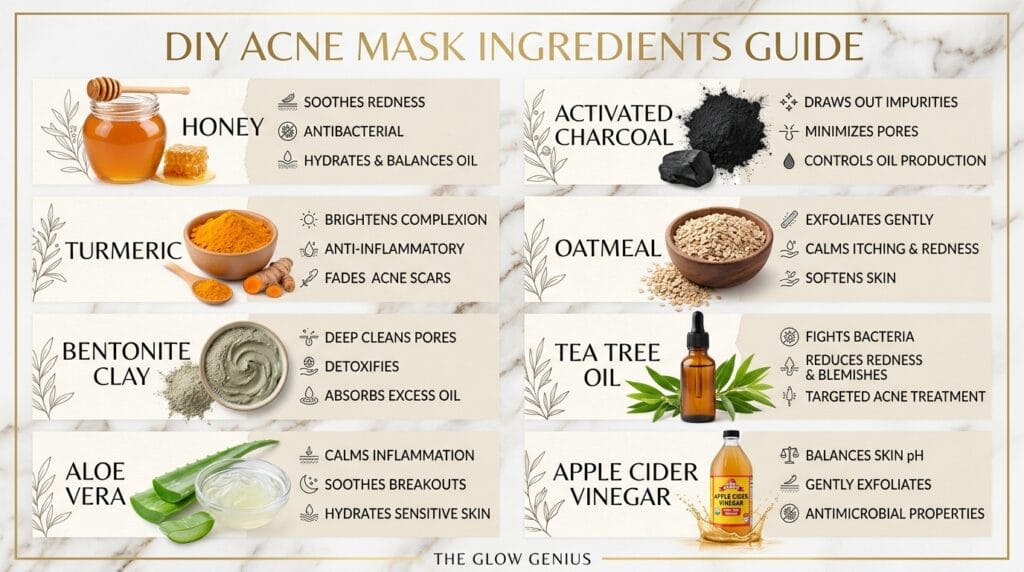
Raw honey is one of the most studied natural antibacterial ingredients available. It actively suppresses the bacteria responsible for acne and pimples while simultaneously soothing redness around active breakouts. Because it also attracts moisture, it never strips the skin barrier during use.
Bentonite clay works differently. It carries a natural electrical charge that pulls sebum, dirt, and impurities from deep within clogged pores. This physical drawing action makes it especially effective for oily skin and blackheads where surface cleansing alone falls short.
Turmeric contains curcumin, an active compound with powerful anti-inflammatory properties. It reduces the redness and swelling around acne lesions visibly and quickly. Aloe vera complements this by soothing irritated, reactive skin without adding any oil. In addition, tea tree oil provides targeted antibacterial action at the pore level, making it one of the most effective single-ingredient tools for clear skin.
What Causes Acne and Clogged Pores
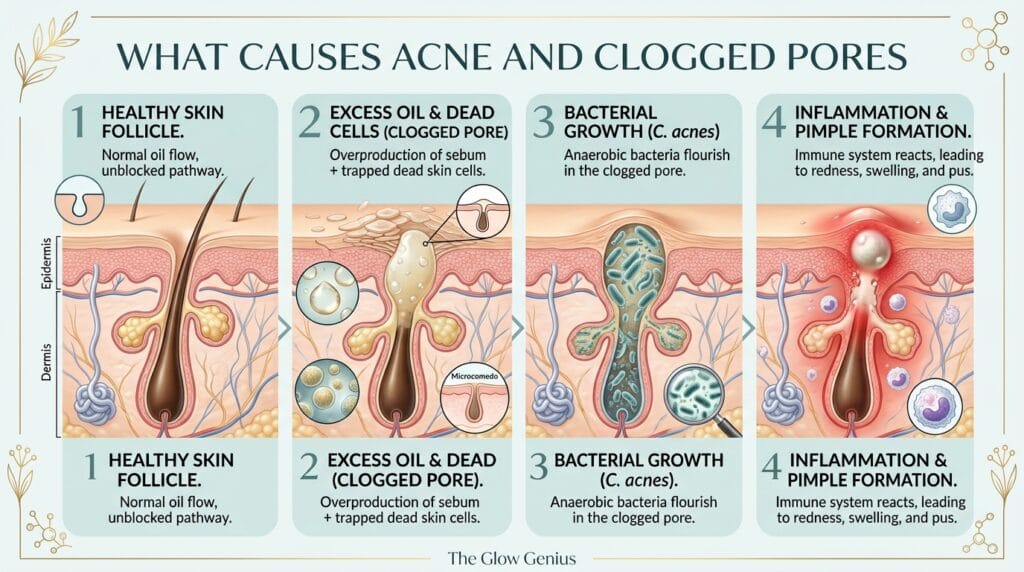
Acne starts when a combination of excess sebum, dead skin cells, and bacteria blocks the hair follicle. The body then sends white blood cells to fight the bacteria, which creates the redness, swelling, and pus associated with active pimples. Understanding this process shows exactly which ingredients target which stage.
Excess sebum production often links to hormonal fluctuations, particularly during puberty, the menstrual cycle, or times of high stress. Bentonite clay and activated charcoal absorb this excess oil before it blocks pores. Apple cider vinegar helps balance the skin’s natural pH, making it harder for acne-causing bacteria to thrive.
Dead skin cells play a major role in clogged pores too. When the skin does not exfoliate naturally at the right rate, cells build up and mix with sebum at the pore opening. Ingredients like oatmeal gently exfoliate while soothing inflammation simultaneously. Therefore, a well-chosen natural face mask for acne targets both oil and cell buildup in one step.
10 DIY Acne Mask Recipes to Make at Home Today
Before you start, remember that consistency matters more than using masks too often. Most of these DIY acne masks are gentle enough to use up to twice per week for best results. However, the Bentonite Clay and Apple Cider Vinegar Mask and the Egg White and Lemon Mask are more intensive treatments. Because these masks contain stronger ingredients that can dry out or irritate the skin, using them once per week is usually enough. Always monitor your skin and adjust the frequency if you experience redness, tightness, or discomfort.
Recipe 1: Honey and Cinnamon Mask
This honey face mask for acne combines two powerful antibacterial ingredients to reduce breakouts and calm redness simultaneously. Always do a patch test on your inner arm 24 hours before your first application. Cinnamon can irritate sensitive skin in some people.
Method:
- Combine 2 tablespoons raw honey 1 teaspoon cinnamon powder in a small bowl.
- Mix thoroughly until a smooth paste forms.
- Apply evenly to clean, dry skin.
- Leave for 10 to 15 minutes.
- Rinse with warm water and pat dry.
Recipe 2: Turmeric and Yoghurt Mask
A turmeric face mask for acne is one of the most effective recipes for reducing inflammation and fading post-acne marks left behind after breakouts heal. Complete a patch test first, since turmeric can temporarily stain skin. Use an old towel when rinsing.
Method:
- Mix 1 teaspoon turmeric powder 2 tablespoons plain yoghurt 1 teaspoon raw honey into a smooth paste.
- Apply to clean skin, avoiding the eye area.
- Leave for 10 to 15 minutes.
- Rinse thoroughly with warm water.
- Follow immediately with a light moisturiser.
Recipe 3: Bentonite Clay and Apple Cider Vinegar Mask
This acne face mask recipe is the most powerful deep-pore cleanser on this list. Bentonite clay draws excess sebum and impurities from deep within clogged pores, while apple cider vinegar balances the skin’s pH. Patch test on your inner arm before use.
Method:
- Combine 2 tablespoons bentonite clay and apple cider vinegar in a non-metal bowl.
- Mix to a smooth, spreadable paste.
- Apply to face in a thin, even layer.
- Leave for 10 to 15 minutes.
- Rinse completely with warm water.
Recipe 4: Aloe Vera and Tea Tree Oil Mask
For inflamed acne and sensitive skin, this gentle but effective face mask for acne at home soothes redness while fighting the bacteria causing the breakout. Always patch test first. Never apply undiluted tea tree oil directly to skin.
Method:
- Scoop fresh aloe vera gel from a leaf or use store-bought pure gel.
- Add exactly 2 drops of tea tree oil.
- Mix thoroughly to distribute the oil evenly.
- Apply to clean skin, focusing on breakout areas.
- Leave for 15 to 20 minutes and rinse gently.
Recipe 5: Activated Charcoal and Aloe Mask
Activated charcoal detoxifies clogged pores by binding to impurities and drawing them to the skin’s surface. This best face mask for acne and blackheads works especially well on congested oily skin. Patch test required before first use.
Method:
- Combine 1 tablespoon activated charcoal powder 1 tablespoon aloe vera gel 1 drop tea tree oil in a small bowl.
- Mix into a smooth, dark paste.
- Apply to clean skin in circular motions.
- Leave for 10 to 15 minutes.
- Rinse thoroughly with warm water.
Recipe 6: Oatmeal and Honey Soothing Mask
Oatmeal is one of the most underrated ingredients for sensitive skin acne. It absorbs excess sebum while simultaneously soothing the inflammation around active pimples without any irritation. This is one of the gentlest recipes on this list. A patch test is still recommended.
Method:
- Combine 3 tablespoons plain oatmeal and 1 tablespoon raw honey in a bowl.
- Add warm water one teaspoon at a time until a spreadable paste forms.
- Apply to clean skin and press gently rather than rubbing.
- Leave for 15 minutes.
- Rinse with lukewarm water and pat dry.
Recipe 7: Green Tea and Honey Mask
Brewed green tea contains antioxidants that fight the oxidative stress associated with hormonal acne. Combined with honey, this homemade acne mask calms redness and reduces breakout frequency with regular use. Patch test on inner arm before first use.
Method:
- Brew a cup of green tea and allow it to cool completely.
- Mix 2 tablespoons with honey until well combined.
- Apply to clean face with a brush or fingers.
- Leave for 15 to 20 minutes.
- Rinse with cool water and follow with moisturiser.
Recipe 8: Egg White and Lemon Mask
For oily skin with visibly large clogged pores, this face mask for pimples tightens and temporarily refines pore appearance while controlling excess sebum. Do not use this mask if you have an egg allergy. Always patch test first. Lemon juice increases sun sensitivity, so avoid sun exposure after use.
Method:
- Separate the egg white from the yolk carefully.
- Whisk the egg white until slightly frothy.
- Add lemon juice and mix well.
- Apply a thin, even layer to clean skin.
- Leave until fully dry, approximately 15 minutes.
- Rinse with cool water only.
Recipe 9: Cucumber and Yoghurt Calming Mask
This clear skin mask is the most cooling and hydrating recipe on the list. It calms reactive, inflamed sensitive skin without adding oil or disrupting the skin barrier. Patch test before full application. Choose full-fat plain yoghurt for the most soothing effect.
Method:
- Blend half a cucumber until completely smooth.
- Combine with 2 tablespoons plain yoghurt and mix well.
- Apply to clean face and neck if desired.
- Leave for 15 minutes.
- Rinse with cool water and pat skin gently dry.
Recipe 10: Banana and Turmeric Glow Mask
This homemade face mask for acne marks addresses the hyperpigmentation, meaning the dark spots, that acne leaves behind. Banana nourishes while turmeric fades discolouration gradually. Use this mask twice a week. Patch test before use. Turmeric may temporarily tint the skin yellow, so rinse thoroughly.
Method:
- Mash half a ripe the banana until no lumps remain.
- Add half teaspoon turmeric and 1 teaspoon raw honey and mix into a smooth paste.
- Apply to clean skin with your fingers.
- Leave for 15 minutes.
- Rinse with warm water and follow with moisturiser.
Which DIY Mask Suits Your Skin Type — Quick Guide
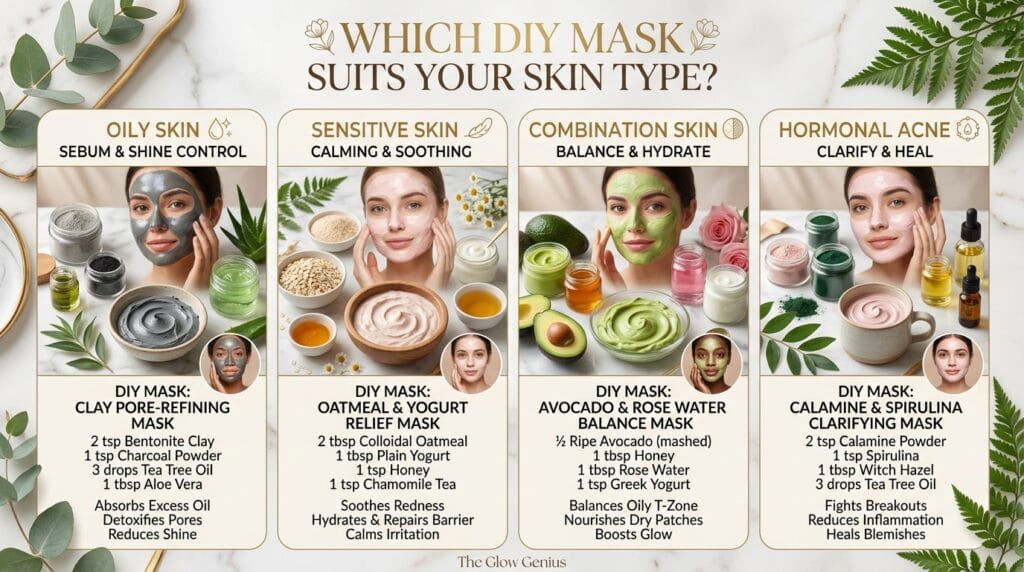
- Oily skin benefits most from the bentonite clay and apple cider vinegar mask or the activated charcoal and aloe vera combination. Both draw excess sebum from clogged pores without adding any oil back to an already oily surface. In addition, the egg white mask works well for oily skin dealing with enlarged pores.
- Sensitive skin needs the gentlest options from this list. The oatmeal and honey mask and the cucumber and yoghurt mask both suit sensitive skin without risk of irritation. These avoid acidic ingredients and strong antimicrobials that commonly trigger reactions. Therefore, always begin with these two before trying anything stronger.
- Combination skin does well with a targeted approach. Apply a clay-based mask to the oily T-zone only, while using the cucumber yoghurt mask on drier cheek areas simultaneously. This two-zone method treats both skin types in one session without over-drying the more delicate areas.
- Hormonal acne responds particularly well to the green tea and honey mask and the turmeric and yoghurt recipe. Both target the inflammation and redness that hormonal breakouts produce, without using ingredients that might further disrupt sebum regulation. Furthermore, both suit almost every skin barrier type without significant irritation risk.
How to Apply a Face Mask Correctly for Best Results
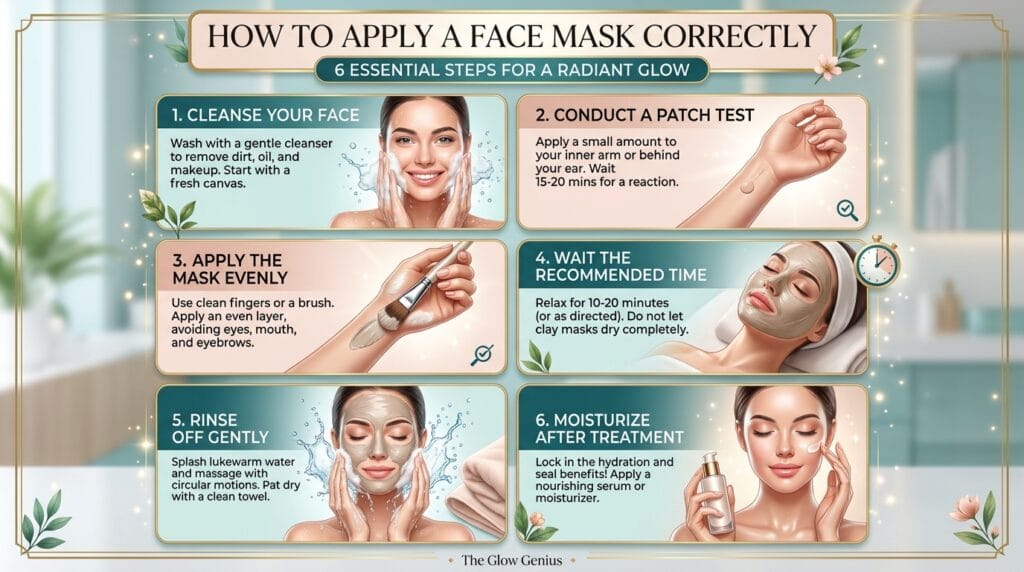
The application technique matters as much as the recipe itself. Follow these six steps every time for the best possible result from any homemade face mask for acne.
- Step 1. Cleanse your face before applying any mask. Start with clean skin so the mask ingredients reach the skin barrier directly rather than sitting on top of surface oil and makeup.
- Step 2. Always do a patch test on your inner arm 24 hours before your first use of any new recipe. Apply a small amount, wait 24 hours, and check for any redness or reaction before proceeding.
- Step 3. Apply the mask to your face using clean fingers or a brush, spreading evenly and avoiding the eye area entirely. Because the skin around the eyes is extremely thin and delicate, even gentle natural ingredients can irritate it.
- Step 4. Leave the mask on only for the recommended time in the recipe. Leaving clay or acid-based masks on longer than suggested does not improve results. In fact, it risks drying out or irritating the skin barrier.
- Step 5. Rinse with lukewarm water and pat skin dry with a clean towel. Never rub. Rubbing causes friction that can worsen existing inflammation and breakouts.
- Step 6. Apply a moisturiser immediately after rinsing. This step locks in skin barrier hydration and prevents the temporary dryness that follows most masks. Skipping moisturiser after a clay or charcoal mask often causes the skin to produce more sebum in response.
Quick Guide to DIY Acne Mask Ingredients
Ingredient | Key Benefit | Best Skin Type | How Often | Avoid If |
|---|---|---|---|---|
Honey | Antibacterial, soothing | All skin types | Up to 3x weekly | Bee product allergies |
Turmeric | Anti-inflammatory, brightening | All skin types | 1 to 2x weekly | Skin very prone to staining |
Bentonite clay | Deep pore cleansing, oil control | Oily, acne-prone | Once a week | Dry or sensitive skin alone |
Aloe vera | Soothing, hydrating, antibacterial | All, especially sensitive | Up to 3x weekly | Aloe allergy (rare) |
Activated charcoal | Draws impurities, detoxifies pores | Oily, congested | Once a week | Dry skin |
Oatmeal | Gentle exfoliator, soothes inflammation | Sensitive, combination | 2x weekly | Gluten sensitivity (topical, rare) |
Tea tree oil | Targeted antibacterial | Oily, acne-prone | 1 to 2x weekly | Open wounds, undiluted use |
Apple cider vinegar | pH balancing, antimicrobial | Oily, acne-prone | Once a week | Sensitive or broken skin |
You May Also Like
If you loved this guide, these articles were made for you:
- 5 Home Remedies for Acne
- 9 Islamic & Ayurvedic Skincare Hacks for Natural Glow
- how to get glass skin
- CeraVe vs The Ordinary — Which Is Better for Your Skin?
- 10 Best Drugstore Skincare Under £5 UK
- Best Facial Cleansers for Every Skin Concern
- DIY Coffee Scrub for Cellulite
- How to Repair Damaged Hair
FAQs
Your Clear Skin Journey Starts in Your Kitchen
The best homemade face mask for acne for you depends entirely on your skin type and your specific concern right now. However, the right starting point is usually simpler than you think.
If you have oily skin with blackheads, start with Recipe 3 (bentonite clay and apple cider vinegar). For inflammation and redness are your main concerns, start with Recipe 2 (turmeric and yoghurt). If your skin is sensitive and reactive, start with Recipe 6 (oatmeal and honey).
Give each recipe at least four consistent weeks before judging results. Use it twice a week without fail. Always follow with moisturiser. Because consistency is the one thing that separates good skin from great skin, the recipe matters less than showing up for your skin regularly.
Save this guide to your Pinterest boards and share it with a friend who is struggling with breakouts. Her kitchen already has the answer. 🌿